On this page
Germany’s nursing law for 2026, the Act to Expand Powers and Reduce Bureaucracy in Nursing (Gesetz zur Befugniserweiterung und Entbürokratisierung in der Pflege), lets registered nurses carry out some tasks that were previously reserved for doctors. It took effect on 1 January 2026 and also cuts paperwork, inspections, and forms in care.
Key points
- The law was passed by the Bundestag on 6 November 2025, dated 29 December 2025, and took effect on 1 January 2026.
- Registered nurses (Pflegefachpersonen) may now practise certain medical care independently, within their competence, including some tasks after a nursing diagnosis alone.
- Paperwork is limited by law to what is necessary, and high-quality home care services are now inspected every two years instead of every year.
What is the Germany nursing law 2026?
The law was first drafted as the Pflegekompetenzgesetz (Nursing Competence Act) in 2024, but it stalled when the previous coalition collapsed. The new government reintroduced an updated version, which the Bundestag passed on 6 November 2025, according to the Federal Ministry of Health (BMG).
The BMG law page lists 29 December 2025 as the law’s date and 1 January 2026 as its start. Health Minister Nina Warken summed up the aim: nurses “can do much more than they have been allowed to” (our translation).
What can nurses in Germany do now?
- Independent practice: registered nurses are authorised to practise Heilkunde (medical care) on their own responsibility, within their competence.
- After a doctor’s first diagnosis: nurses may provide some services that were previously reserved for doctors.
- After a nursing diagnosis: nurses may provide certain medical treatment services without a doctor’s diagnosis when they have identified the care need themselves.
- Prevention: nurses can give prevention advice and recommendations directly to people receiving care at home.
Exactly which tasks are covered is decided by the self-governing bodies of the health system together with nursing professional associations, and the law shortened their deadlines to decide. A scientific “scope of practice” description for nursing will follow, and national representation of the nursing professions will be regulated in one uniform way.
How does the law cut bureaucracy in care?
| Area | What changed |
|---|---|
| Care documentation | Limited by law to what is necessary, including for quality inspections |
| Quality inspections | Announced earlier by the Medical Service (MD), with fewer duplicate checks |
| Inspection interval | Two years instead of one for home care and day care services with a high quality rating |
| Forms | Applications for care benefits to be simplified |
| Counselling visits (care levels 4 and 5, cash benefit only) | Required every six months instead of every three months |
| Digital care apps (DiPA) | Simpler application and review process |
What it means for nurses
- Nurses already in Germany: expect your role to grow gradually as the list of transferred tasks is agreed; check with your employer which tasks apply in your setting.
- Filipino and international nurses planning to move: the job you arrive in is set to carry more clinical responsibility than before, so strong German and clinical skills matter even more.
- Home care nurses: fewer forms and less frequent inspections for good services should free more time for patients.
- Nurse leaders: the coming scope-of-practice work is a chance for professional associations to shape the role.
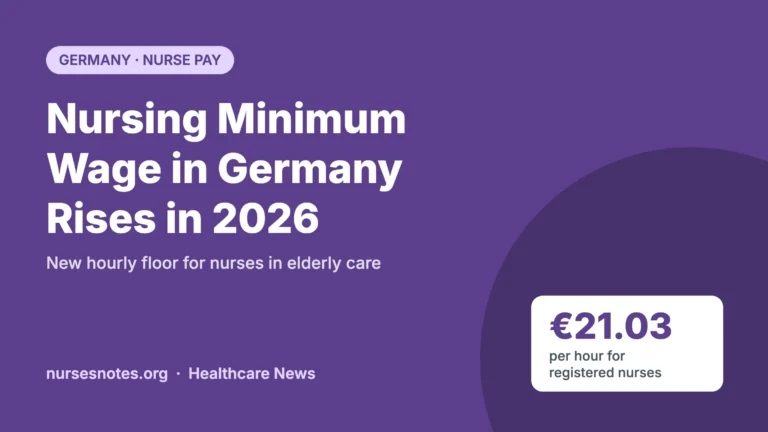
Pay matters too: see our guide to the nursing minimum wage in Germany 2026.
Frequently asked questions
When did the Germany nursing law 2026 take effect?
The Act to Expand Powers and Reduce Bureaucracy in Nursing took effect on 1 January 2026. The Bundestag passed it on 6 November 2025, and the Federal Ministry of Health lists 29 December 2025 as the date of the law. The exact list of tasks nurses may take over is set by the health system’s self-governing bodies, not written into the law itself.
Can nurses in Germany now treat patients without a doctor?
Partly. Registered nurses may provide certain medical treatment services without a doctor’s diagnosis when they have established the need through a nursing diagnosis. Which services are covered is set by the health system’s self-governing bodies with nursing associations, so the scope is defined in lists, not left open to each nurse.
What was the Pflegekompetenzgesetz?
Pflegekompetenzgesetz (Nursing Competence Act) was the earlier name of this law. The cabinet approved it in December 2024, but it never reached a Bundestag vote because the coalition broke up. An updated version was reintroduced in 2025 under the new name and passed in November 2025.
Related on Nurses Notes
- Nursing minimum wage in Germany 2026
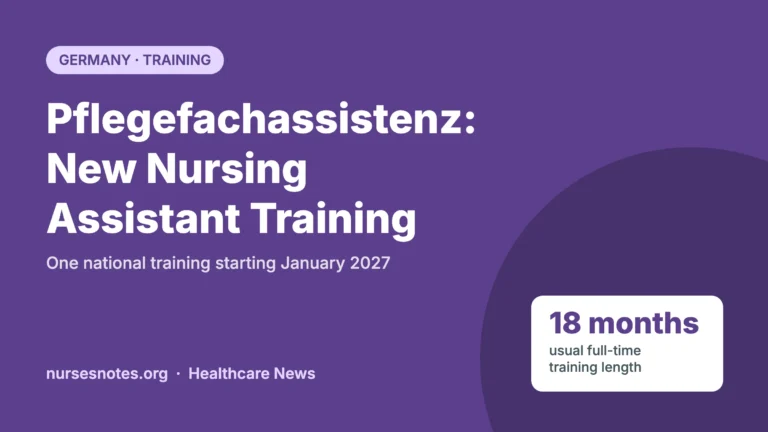
- Germany’s new Pflegefachassistenz nursing assistant training
- Germany’s commitment to WHO and key health priorities
- Nursing jobs and migration news
Sources
- Federal Ministry of Health (BMG): Bundestag verabschiedet Gesetz für weitere Befugnisse für Pflegekräfte und Entbürokratisierung in der Pflege (6 November 2025)
- Federal Ministry of Health (BMG): Gesetz zur Befugniserweiterung und Entbürokratisierung in der Pflege, law page (accessed 7 November 2026)
This summary is for information only and does not replace official guidance or advice from a qualified professional. It is not legal or immigration advice.