On this page
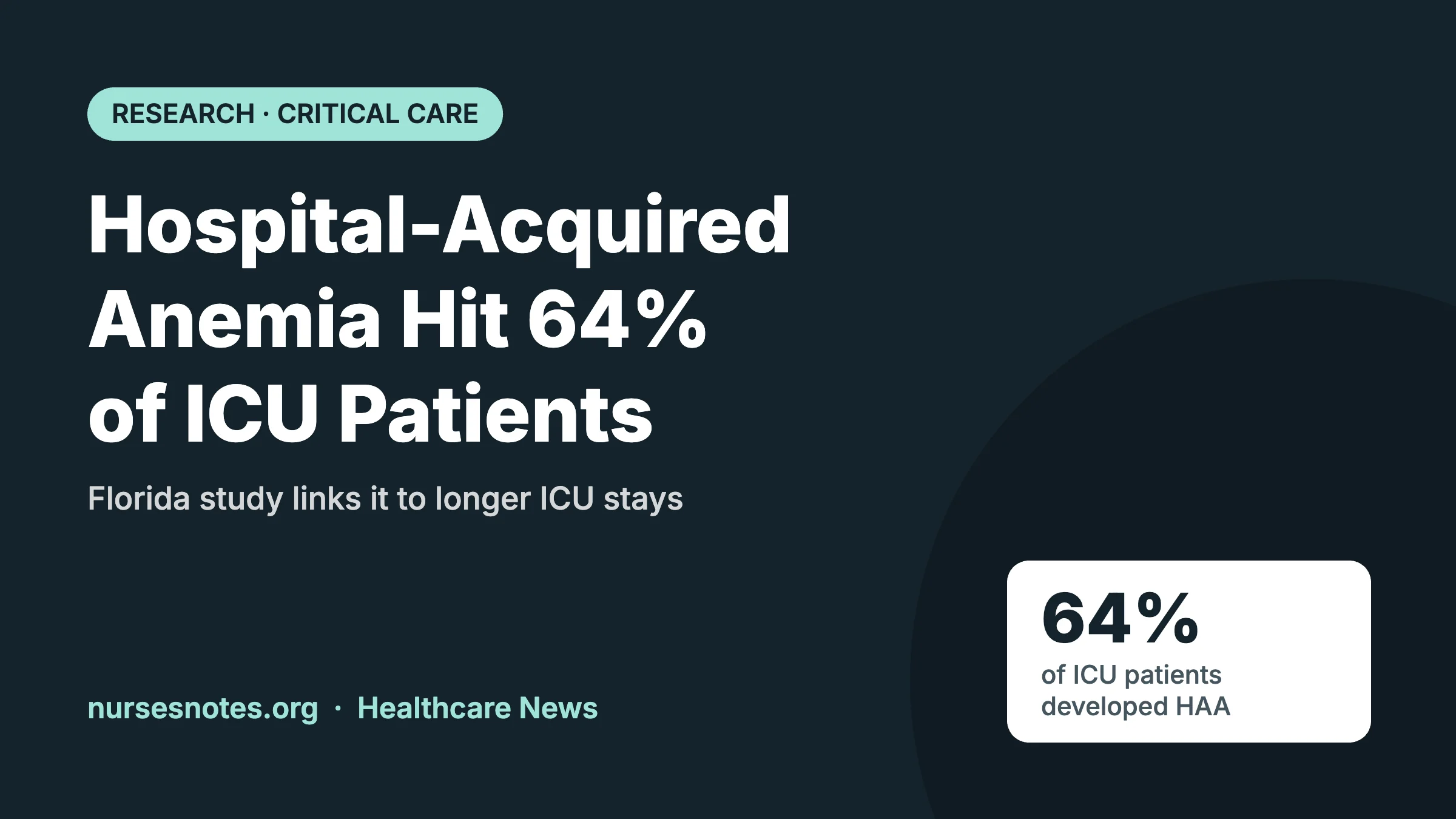
Hospital-acquired anemia in the ICU is common: a new study in the American Journal of Critical Care found that 64% of intensive care patients at one Florida hospital had a hemoglobin drop of 10% or more during their ICU stay. Those patients also stayed in the ICU longer, 5.9 days on average versus 3.3 days for patients without it.
Key points
- 64% of 108 ICU patients developed hospital-acquired anemia (HAA), defined as a hemoglobin decline of 10% or more while in the ICU.
- More than half of patients (55% of 49) who arrived with normal hemoglobin had fallen below anemia thresholds by the time they left the ICU.
- Mean ICU stay was 5.9 days with HAA versus 3.3 days without; the gap stayed significant (5.1 vs 2.8 days) after removing six extreme cases.
What is hospital-acquired anemia in the ICU?
Hospital-acquired anemia is a fall in hemoglobin that develops during a hospital stay. In critical care, a major cause is iatrogenic blood loss: blood drawn for routine lab tests, plus losses from procedures or trauma.
Because many critically ill patients, especially those over 65, already start with low hemoglobin, the researchers used a conservative definition: a decline of 10% or more from the ICU admission value.
How the study was done
The team reviewed medical records of 151 patients admitted to the ICU at Lee Memorial Hospital in Fort Myers, Florida, a 336-bed acute care hospital, between 1 January and 30 June 2024. After excluding patients who received packed red blood cells or lacked comparison lab values, 108 patients were analysed.
It was a single-site, observational study using a convenience sample, and co-author Darnella Adams, DNP, RN, PCCN, is a clinical nurse who chairs the hospital’s nursing research and evidence-based practice council, according to the AACN release published on Medical Xpress.
What the study found
| Measure | Result |
|---|---|
| Patients analysed | 108 |
| Anemic on ICU admission (ASH criteria) | 55% (59 of 108) |
| Not anemic on admission who became anemic in the ICU | 55% of 49 |
| Developed HAA (10% or greater hemoglobin drop) | 64% |
| Mean hemoglobin drop without HAA | 4% |
| Largest drops in the HAA group | Up to 30% |
| Mean ICU stay: HAA vs no HAA | 5.9 vs 3.3 days |
| Mean ICU stay after excluding six extreme cases | 5.1 vs 2.8 days |
“Drop by drop, vial by vial, nurses can lead blood-conservation initiatives,” Adams said. The authors recommend small-volume phlebotomy tubes, closed blood sampling systems, and fluid stewardship to avoid hemodilution.
What it means for nurses
- Question every draw: ask whether daily or repeat labs are still needed, and cluster draws where the protocol allows.
- Use less blood: small-volume (pediatric-size) tubes and closed sampling systems reduce waste from line draws.
- Watch the trend: track hemoglobin from admission, not just against normal ranges; a 10% fall can matter even when values still look acceptable. Review our CBC normal values guide.
- Lead the change: a clinical nurse co-authored this study, and blood-conservation projects are a practical evidence-based practice topic for unit councils.
Limitations
- It was a single hospital with a small sample (108 patients), so results may not apply to other ICUs.
- It used a convenience sample of medical records, and patients who received red cell transfusions were excluded.
- The design is observational, so it shows an association between HAA and longer ICU stays, not that anemia caused the longer stays; sicker patients may both stay longer and have more blood drawn.
- The release does not report how many lab draws or how much blood was taken per patient.
Frequently asked questions
What causes hospital-acquired anemia in ICU patients?
The main causes are iatrogenic blood loss from frequent blood sampling for lab tests, bleeding from procedures or trauma, and hemodilution from intravenous fluids. Critically ill patients may also start with low hemoglobin. The Florida study authors say blood conservation practices can reduce how much blood patients lose during their ICU stay.
How common is hospital-acquired anemia?
In this study, 64% of 108 ICU patients had a hemoglobin drop of 10% or more during their stay. More than half of those who arrived with normal hemoglobin left the ICU anemic. Rates in other hospitals may differ, because this was a single-site study with its own definition of anemia.
How can nurses reduce blood loss from lab draws?
The authors suggest using small-volume phlebotomy tubes, closed blood sampling systems that return the discard volume to the patient, and fluid stewardship to avoid hemodilution. Nurses can also review lab orders with the team, avoid unnecessary repeat tests, and follow their unit’s blood conservation protocol.
Related on Nurses Notes
- CBC normal values: complete blood count guide for nurses
- Blood transfusion reaction nursing interventions
- Nurse-initiated standing orders for sepsis study
- Latest healthcare news for nurses
Sources
- Adams D, et al. Determining the Prevalence of Hospital-Acquired Anemia in the Intensive Care Unit at a Florida Hospital. American Journal of Critical Care (2026), 35(6):418
- American Association of Critical-Care Nurses via Medical Xpress: Hospital-acquired anemia common among ICU patients (November 2026)
This summary is for information only and does not replace official guidance or advice from a qualified professional.