On this page
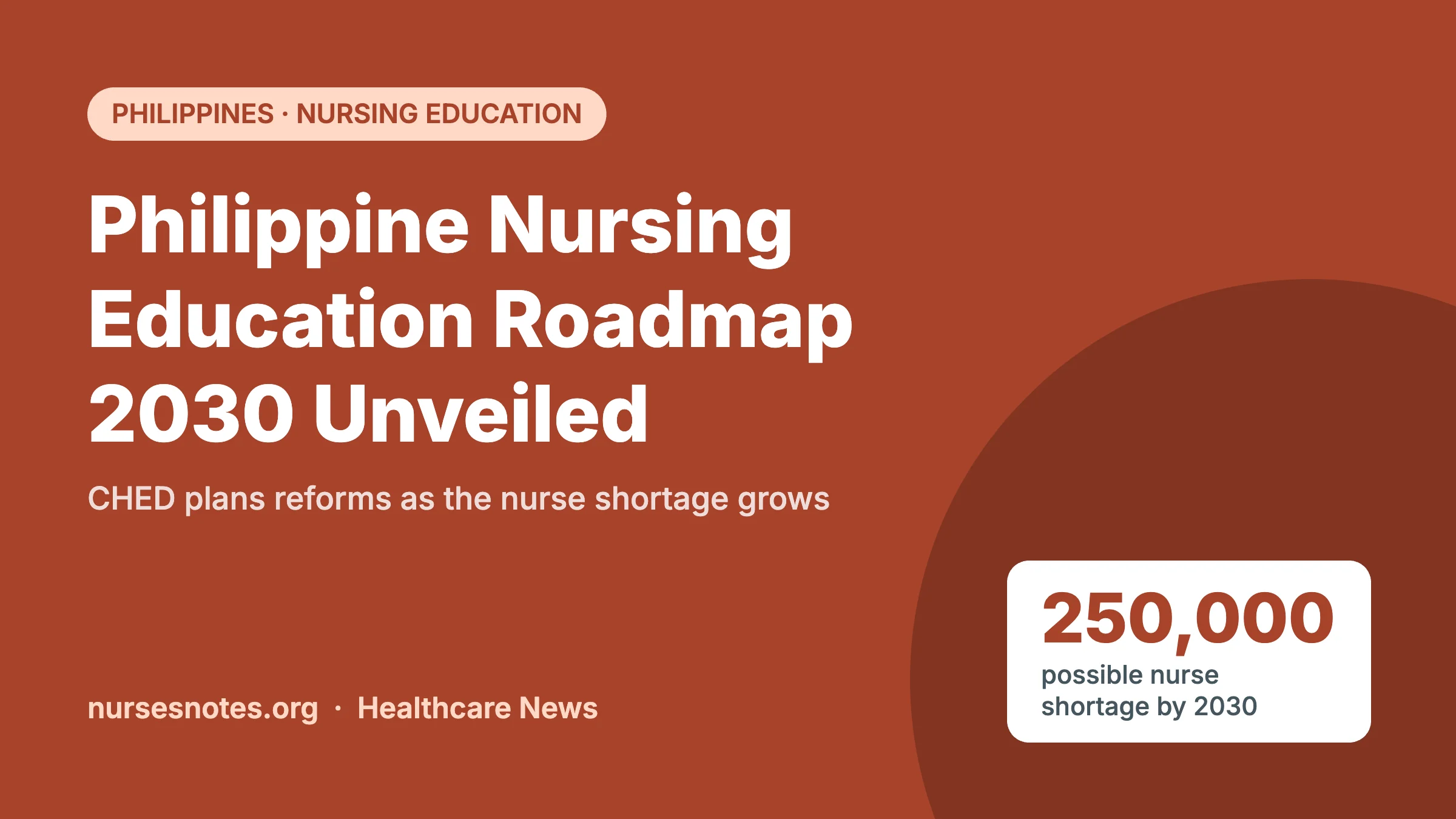
The Philippine Nursing Education Roadmap 2030 (PNER 2030) is the Commission on Higher Education’s (CHED) new national plan to reform how Filipino nurses are trained, covering curricula, clinical training, faculty development, student well-being, and nursing research. CHED launched it on 5 November 2026, warning that the country’s nurse shortage could reach 250,000 by 2030 if current trends continue.
Key points
- CHED estimates cited in the roadmap put the Philippine nurse shortage at 127,000 to 190,000 as of 2025, possibly rising to 250,000 by 2030.
- PNER 2030 was developed by the CHED Technical Panel for Nursing with the University of Santo Tomas (UST) and is aligned with CHED’s ACHIEVE Agenda 2030.
- There are 434 higher education institutions offering BS Nursing in the Philippines, and CHED says quality and clinical preparation still vary by region.
What is the Philippine Nursing Education Roadmap 2030?
PNER 2030 sets a national direction for nursing education up to 2030. CHED unveiled it during its National Directorate Meeting, according to BusinessMirror and PTV News, and held a ceremonial turnover in Ortigas the next day.
The roadmap was prepared by the CHED Technical Panel for Nursing in partnership with UST. CHED Chairperson Shirley Agrupis said nursing education must go beyond preparing graduates to pass the licensure exam. It should also build clinical skills, critical thinking, and compassion for patient care in complex settings.
How big is the nurse shortage in the Philippines?
Speaking at the turnover, Agrupis cited roadmap estimates of a shortage of 127,000 to 190,000 nurses as of 2025, The Philippine Star reported. If current trends continue, the gap could reach 250,000 by 2030.
| Measure | Figure |
|---|---|
| Estimated nurse shortage, 2025 | 127,000 to 190,000 |
| Possible shortage by 2030 if trends continue | 250,000 |
| Schools offering BS Nursing | 434 |
| Filipino nurses in the UK’s NHS (Philstar figure) | More than 35,000 |
| Nurse and careworker candidates training for Japan (19th batch) | 198 |
What will change in nursing education under PNER 2030?
According to CHED, the roadmap’s findings point to six areas that need work:
- Curriculum relevance and clinical preparedness.
- Faculty development.
- Student welfare and well-being.
- Institutional resources.
- Research capacity.
- Alignment with the country’s workforce needs.
CHED says the plan will also strengthen partnerships between nursing schools and healthcare providers, so that graduates’ competencies better match what hospitals and communities need. Agrupis also flagged differences in resources between regions, saying students everywhere should get quality education and adequate clinical preparation.
Does PNER 2030 affect Filipino nurses going abroad?
CHED does not frame the roadmap as a limit on migration. Agrupis said the country wants to keep preparing nurses for international opportunities while strengthening its own workforce, adding: “These priorities must go together.”
Deployment continues. The Philippine Star reported that 198 nurse and careworker candidates, the 19th batch under the Japan-Philippines Economic Partnership Agreement, began free Japanese language training on 4 November ahead of work in Japanese hospitals and care facilities. The debate over keeping nurses at home also links to the push for safer staffing; see our report on the nurse-to-patient ratio plan for Filipino nurses.
What it means for nurses
- Nursing students: expect more emphasis on clinical readiness, not just board exam results, as schools align with the roadmap.
- Clinical instructors and faculty: faculty development is a named priority, which may open training and research opportunities.
- Hospital nurses: stronger school-hospital partnerships could mean more structured preceptor and affiliation roles.
- Nurses planning to work abroad: CHED says global readiness remains a goal, so overseas pathways such as Japan’s EPA program continue.
Frequently asked questions
What is PNER 2030?
PNER 2030 is the Philippine Nursing Education Roadmap 2030, a national plan from the Commission on Higher Education. It was developed with the University of Santo Tomas and sets priority reforms in nursing curricula, clinical training, faculty development, student well-being, and nursing research, to better match graduates with the needs of the health system.
How many nurses does the Philippines need?
Estimates cited in the roadmap put the shortage at 127,000 to 190,000 nurses as of 2025. CHED Chairperson Shirley Agrupis warned that the gap could grow to about 250,000 by 2030 if current trends continue, which is why CHED says strengthening nursing education is now more urgent.
How many nursing schools are there in the Philippines?
According to CHED, 434 higher education institutions currently offer the Bachelor of Science in Nursing program nationwide. CHED says resources and capacity still differ between regions, and one aim of the roadmap is to make sure students everywhere receive quality teaching and adequate clinical preparation before they graduate.
Related on Nurses Notes
- Marcos nurse-to-patient ratio push for Filipino nurses
- Singapore-Philippines nurse educator scholarship
- Towne Nursing settlement for Filipino nurses
- Nursing jobs and migration news
Sources
- The Philippine Star: Nurse shortage could reach 250,000 by 2030 – CHED (7 November 2026)
- BusinessMirror: CHED unveils PNER 2030 to strengthen nursing education nationwide (5 November 2026)
- PTV News: CHED launches Nursing Education Roadmap 2030 to strengthen PH healthcare workforce (6 November 2026)
This summary is for information only and does not replace official guidance or advice from a qualified professional.