
On this page
The most common acid reflux symptoms are heartburn (a burning feeling in the chest) and a sour or bitter taste as stomach contents come back up into the throat. Occasional reflux is common and usually eases with simple changes, but frequent symptoms may mean gastro-oesophageal reflux disease (GERD) and are worth discussing with a doctor.
Key points
- Heartburn and regurgitation are the classic signs, but some people mainly have a cough, hoarse voice, or trouble swallowing.
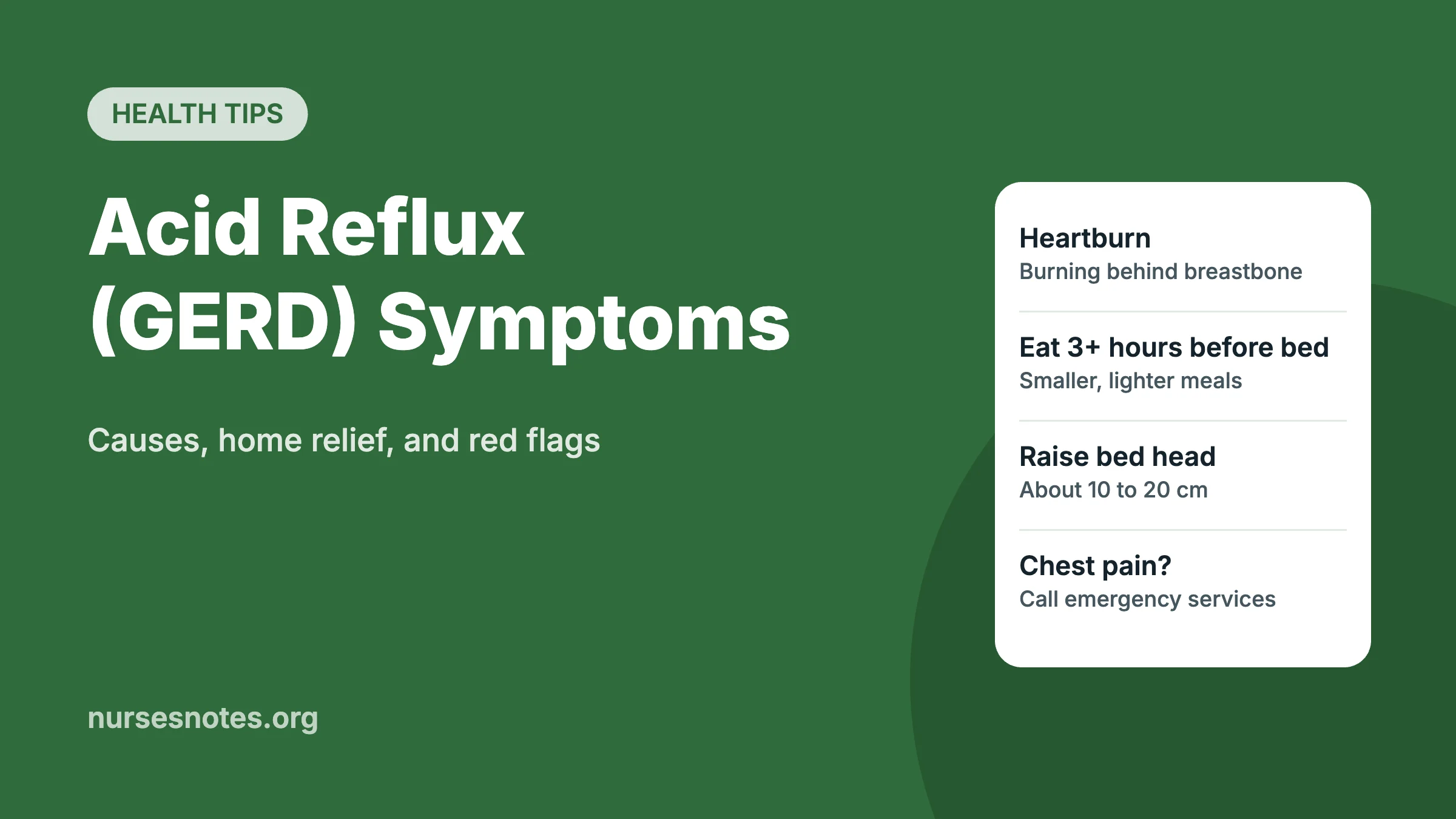
- Smaller meals, eating at least 3 hours before bed, raising the head of the bed, and avoiding your trigger foods help many people.
- Pharmacy medicines can ease symptoms, but they are not meant for regular long-term use without medical advice.
- Chest pain, especially with breathlessness or jaw or arm pain, needs emergency care because it may be a heart attack.
What is acid reflux (GER) and GERD?
Gastro-oesophageal reflux (GER) happens when stomach contents flow back up into the oesophagus (food pipe). Many people have it once in a while, especially after a big meal.
When reflux keeps happening over time, it can develop into GERD (called GORD in the UK). This often involves a weak or relaxed lower oesophageal sphincter, the ring of muscle that normally keeps stomach contents down.
Common acid reflux symptoms
- Heartburn: a burning feeling in the middle of the chest, often after eating and sometimes worse at night or when lying down
- A sour or unpleasant taste from stomach acid coming up into the mouth (regurgitation)
- Upper stomach or chest discomfort
- Bloating, nausea, or bad breath
- Pain or difficulty when swallowing, or a feeling of a lump in the throat
The NHS notes that symptoms are often worse after eating, when lying down, or when bending over.
Less obvious symptoms
Reflux does not always cause heartburn. Some people mainly notice a cough or hiccups that keep coming back, a hoarse voice, or laryngitis. Mayo Clinic adds that night-time reflux can cause a lasting cough and new or worsening asthma.
What causes acid reflux?
- Being overweight or pregnant
- Smoking, including secondhand smoke
- A hiatus hernia, where part of the stomach pushes up into the chest
- Large meals, late-night eating, and fatty, fried, or spicy foods
- Coffee, alcohol, chocolate, and tomatoes, which trigger symptoms for some people
- Some medicines, such as anti-inflammatory painkillers like ibuprofen and aspirin, certain asthma medicines, calcium channel blockers, and some antidepressants
- Stress and anxiety
Do not stop a prescribed medicine on your own. If you think one is causing reflux, ask your doctor or pharmacist about alternatives.
How to relieve acid reflux at home
- Eat smaller meals more often instead of large ones.
- Leave time before bed. NIDDK advises eating at least 3 hours before lying down, and the NHS suggests not eating within 3 or 4 hours of bedtime.
- Raise the head of your bed. The NHS suggests lifting it by around 10 to 20 cm, for example with blocks under the bed legs. NIDDK suggests 6 to 8 inches (about 15 to 20 cm), such as with a foam wedge. The NHS advises against just adding extra pillows.
- Know your triggers. Common ones include citrus fruit, tomatoes, coffee and other caffeine, alcohol, chocolate, mint, and high-fat or spicy foods. Cut back on the ones that bother you rather than everything at once.
- Lose weight if you are overweight, as extra weight puts pressure on the stomach.
- Stop smoking and limit alcohol.
- Avoid tight belts and waistbands, and find ways to manage stress.
Night-shift workers often eat their main meal late in the shift and then go straight to sleep. Try to have your larger meal earlier and keep the last snack light, so you are not lying down on a full stomach.
Medicines for acid reflux
A pharmacist can recommend antacids or alginates, which are usually taken with or soon after food. The NHS notes that they ease symptoms but do not cure the cause and should not be taken regularly for long periods.
Stronger acid-reducing medicines, such as H2 blockers and proton pump inhibitors (PPIs), are available over the counter in some countries or by prescription. Mayo Clinic advises seeing a doctor if you need non-prescription heartburn medicine more than twice a week. Pregnant women, children, and anyone on other medicines should check with a doctor or pharmacist before taking any reflux medicine.
When to see a doctor
- Heartburn most days, or symptoms that are severe or frequent
- No improvement after lifestyle changes and pharmacy medicines
- Food sticking in your throat, or pain or difficulty swallowing
- Frequent or persistent vomiting
- Weight loss without trying, or loss of appetite
When to get medical help urgently
Call your local emergency number or go to the emergency department if you have chest pain, especially with shortness of breath or pain in the jaw or arm, as this may be a heart attack rather than reflux. Get urgent help too if you vomit blood or something that looks like coffee grounds, or if you pass black, tarry, or bloody stools.
Heartburn and heart attack pain can feel alike. Learn the signs of a heart attack so you can act quickly if the pain is different from your usual reflux.
Frequently asked questions
What does acid reflux feel like?
Most people describe a burning feeling behind the breastbone that may rise towards the throat, often after eating or when lying down. You may also notice a sour or bitter taste, burping, bloating, or a hoarse voice. If the pain feels like pressure or spreads to your arm or jaw, seek emergency care.
Why is acid reflux worse at night?
When you lie flat, gravity no longer helps keep stomach contents down, so acid can flow back more easily. A late or large meal makes this more likely. Eating at least 3 hours before bed and raising the head of your bed, rather than piling up pillows, can help reduce night-time symptoms.
Can acid reflux go away on its own?
Occasional reflux after a heavy meal often settles on its own, and many people improve with smaller meals, weight loss, and avoiding triggers. Reflux that happens most days, keeps coming back, or needs regular medicine should be checked by a doctor, as long-term untreated GERD can damage the oesophagus.
Related on Nurses Notes
- Signs of a heart attack and what to do
- How to lower blood pressure naturally with healthy habits
- More health tips
Sources
- Symptoms & Causes of GER & GERD — National Institute of Diabetes and Digestive and Kidney Diseases (NIH), reviewed 2020
- Treatment for GER & GERD — NIDDK (NIH), reviewed 2020
- Eating, Diet, & Nutrition for GER & GERD — NIDDK (NIH), reviewed 2020
- Heartburn and acid reflux — NHS, reviewed 2023
- Gastroesophageal reflux disease (GERD) – Symptoms and causes — Mayo Clinic, 2025
This article is for education only and does not replace advice from your own doctor, nurse, or other qualified health professional.