On this page
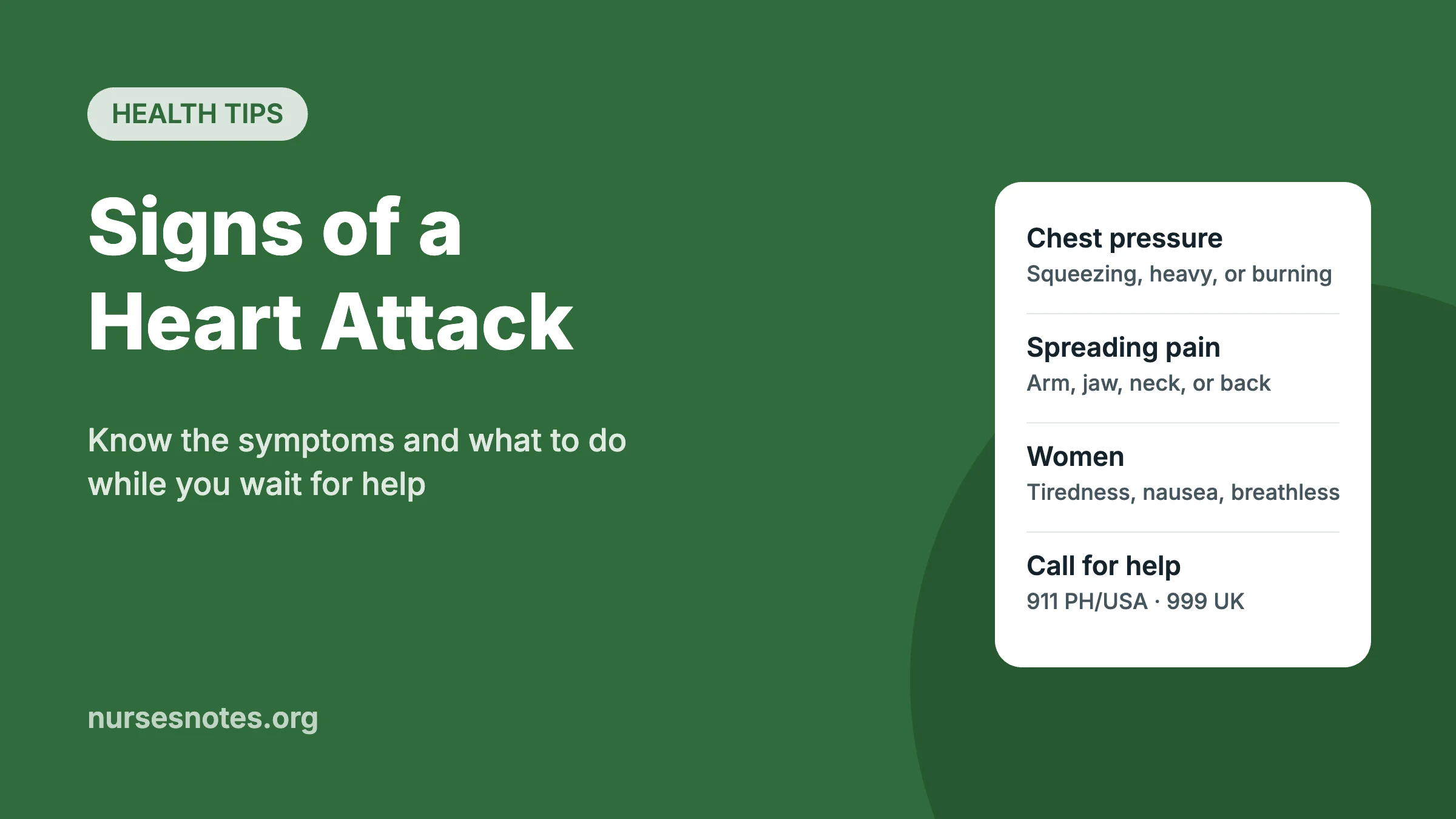
The most common signs of a heart attack are chest pain or pressure, pain spreading to the arm, jaw, neck, or back, shortness of breath, and a cold sweat. If you notice these signs in yourself or someone else, call your local emergency number straight away, because fast treatment saves heart muscle and lives.
Key points
- Chest discomfort is the classic sign, but it can feel like heaviness, squeezing, or burning indigestion.
- Women are more likely to have less obvious signs, such as unusual tiredness, nausea, or vomiting.
- Call emergency services at once: 911 in the Philippines and the USA, and 999 in the UK. Do not drive yourself to hospital.
- If the person stops responding and is not breathing normally, start CPR and use an AED if one is available.
What is a heart attack?
A heart attack happens when the blood supply to part of the heart muscle is suddenly blocked, usually by a blood clot in a coronary artery. Without oxygen, that part of the heart starts to die, so every minute counts.
According to the CDC, about half of American adults have at least one of the three key risk factors: high blood pressure, high cholesterol, or smoking.
Common signs of a heart attack
- Chest pain, pressure, tightness, or a squeezing or crushing feeling that does not go away
- Pain that spreads to one or both arms, the neck, jaw, back, shoulders, or stomach
- Shortness of breath, with or without chest pain
- A cold sweat, feeling sick or vomiting, or feeling light-headed or weak
- Pale, grey, or bluish skin or lips
- Sudden anxiety that feels like a panic attack, or heavy coughing or wheezing (less common)
Some heart attacks start suddenly and severely. Others begin with mild discomfort that comes and goes, and some people mistake it for indigestion.
Heart attack symptoms in women
Women can have chest pain too, but the British Heart Foundation (BHF) notes that women more often have lesser-known symptoms, and many play them down. That delay in getting help can be dangerous.
- Unusual tiredness or weakness
- Nausea, vomiting, or pain that feels like indigestion
- Breathlessness, sweating, or light-headedness
- Pain in the upper back, jaw, neck, or stomach
The BHF also notes that risk rises after menopause, and that a history of pre-eclampsia or gestational diabetes raises risk.
What to do if someone is having a heart attack
- Call for help first. Dial 911 in the Philippines or the USA, 999 in the UK, or your local emergency number. Do not wait to see if the pain goes away.
- Do not drive yourself. Wait for the ambulance unless the emergency operator tells you otherwise.
- Sit them down and keep them calm. A half-sitting position with the knees bent and the back supported is often most comfortable. Loosen tight clothing.
- Ask about medicines. If the person has prescribed chest pain medicine, such as a nitroglycerin (GTN) spray, help them use it as prescribed.
- Aspirin: emergency services may advise chewing an aspirin. Only give it if the operator or a doctor tells you to and the person is not allergic to aspirin.
- Stay with them. Keep checking that they are responding and breathing. Do not let them talk you out of calling for help.
- If they collapse: if they stop responding and are not breathing normally, start CPR and use an automated external defibrillator (AED) if one is nearby.
Some signs overlap with a stroke, which also needs emergency care. Learn the BE FAST signs of stroke so you can tell the operator what you see.
When to get medical help
Call emergency services immediately for any of these red flags:
- Chest pain or pressure that is tight, heavy, or squeezing, or lasts more than a few minutes
- Chest pain with sweating, breathlessness, nausea, or light-headedness
- Pain spreading to the arms, jaw, neck, or back
- Severe difficulty breathing, or grey or blue lips or skin
- Someone who collapses, is not responding, or is not breathing normally
Get urgent medical advice the same day if breathlessness suddenly gets worse, or if your heart feels like it is racing, very slow, or skipping beats.
How to lower your risk
- Know and manage your blood pressure, cholesterol, and blood sugar.
- Stop smoking and limit alcohol.
- Stay active, eat a balanced diet, and keep a healthy weight.
- Tell your doctor about family history, such as a father or brother with heart disease before 55, or a mother or sister before 65.
Small daily changes add up. Our guide on how to lower blood pressure naturally gives practical steps.
Frequently asked questions
Can you have a heart attack without chest pain?
Yes. Some people, especially women, have little or no chest pain, and the pain can feel mild rather than crushing. They may feel unusually tired, breathless, sick, or sweaty, or have pain in the jaw, back, or stomach. If these signs come on suddenly or feel unusual for you, call emergency services.
What is the difference between a heart attack and cardiac arrest?
A heart attack is a blockage of blood flow to the heart muscle; the person is usually awake and in pain. Cardiac arrest is when the heart suddenly stops pumping effectively; the person collapses, stops responding, and stops breathing normally. A heart attack can lead to cardiac arrest, which needs CPR and an AED straight away.
Should I take aspirin during a heart attack?
Call emergency services first. The operator or a doctor may advise chewing an aspirin if you are not allergic to it and have no condition that makes it unsafe. Do not delay the call to look for aspirin, and do not give it to someone who is allergic or who has been told to avoid it.
Related on Nurses Notes
- Signs of stroke: BE FAST and what to do right away
- How to lower blood pressure naturally
- Panic attack symptoms: what they feel like
- All health tips
Sources
- Heart attack. NHS, reviewed March 2026.
- About Heart Attack Symptoms, Risk, and Recovery. Centers for Disease Control and Prevention, October 2024.
- Women and heart attacks. British Heart Foundation, updated March 2026.
- Heart attack first aid. MedlinePlus Medical Encyclopedia, U.S. National Library of Medicine, reviewed October 2024.
- One Number for All Emergencies: Unified 911 to Launch Nationwide. Department of the Interior and Local Government (DILG) Region IV-A, September 2025.
This article is for education only and does not replace advice from your own doctor, nurse, or other qualified health professional.