On this page
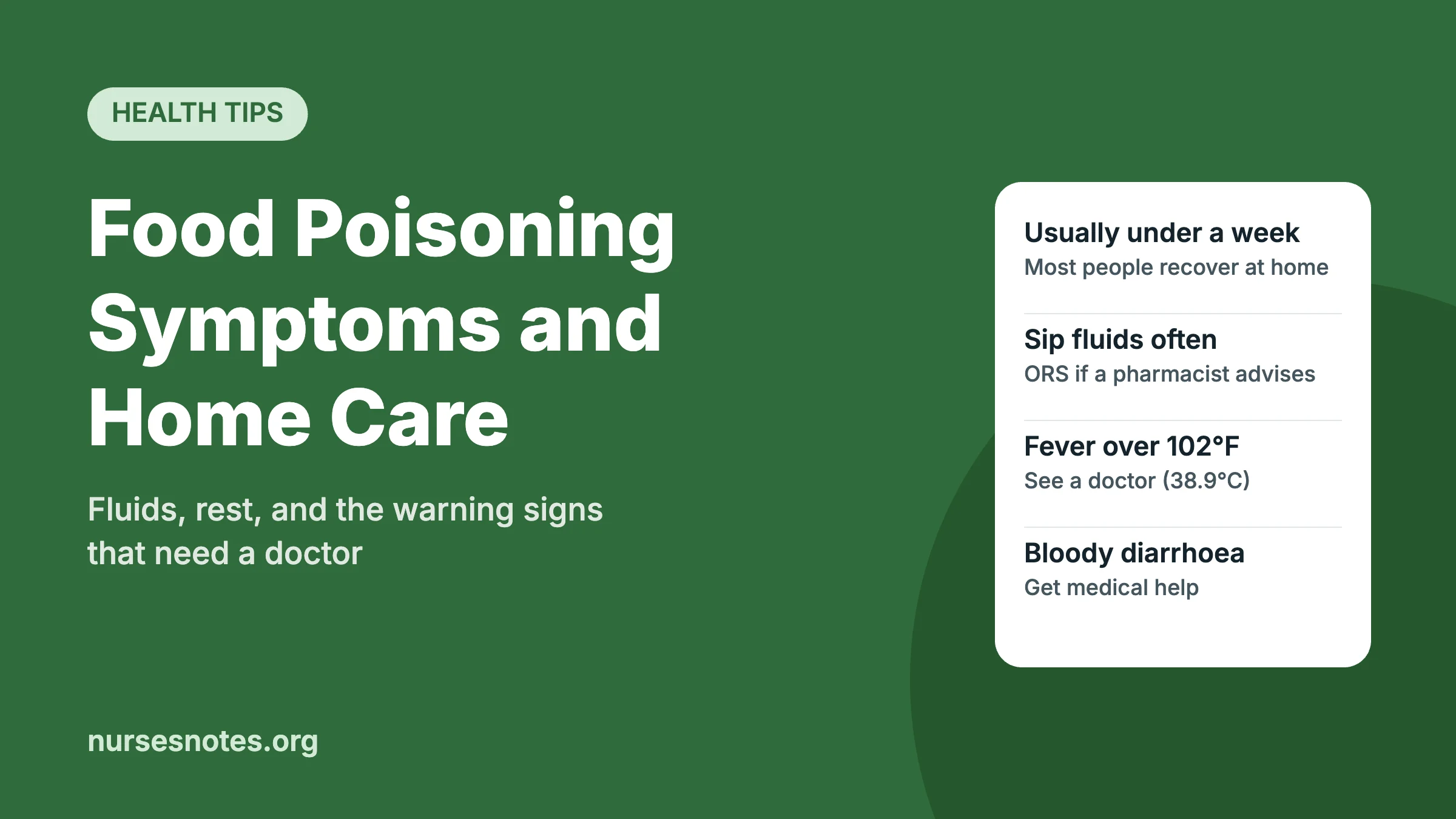
Food poisoning symptoms usually include feeling sick, vomiting, diarrhoea, stomach cramps, and sometimes a fever, starting within hours or days of eating contaminated food. Most people get better at home within a week with rest and plenty of fluids, but some warning signs mean you should see a doctor quickly.
Key points
- Symptoms often start within a few hours to a few days, and usually ease within a week.
- The main danger is dehydration, so sip fluids often and use oral rehydration solution if advised.
- See a doctor for bloody diarrhoea, a high fever, diarrhoea lasting more than 3 days, or vomiting that stops you keeping fluids down.
- Babies, young children, pregnant women, older adults, and people with weak immunity are at higher risk.
What is food poisoning?
Food poisoning (foodborne illness) happens when you eat or drink something contaminated with germs such as bacteria, viruses, or parasites, or with toxins they make. Common culprits include norovirus, Salmonella, Campylobacter, E. coli, and Staphylococcus aureus.
WHO notes that unsafe food causes illness in people of all ages, but infants, young children, older people, and those who are already sick are hit hardest.
Common food poisoning symptoms
- Nausea and vomiting
- Diarrhoea, which may be watery or, with some germs, bloody
- Stomach pain or cramps
- Fever or a high temperature
- Feeling generally unwell, tired, or achy, with loss of appetite
Mayo Clinic notes that some less common types of food poisoning affect the nerves, causing blurred or double vision, tingling, or weakness. These need urgent medical care.
How soon do symptoms start and how long do they last?
According to the NHS, symptoms usually start within a few hours or a few days of eating the food, and occasionally not for a few weeks. Most people feel better within a week.
| Germ | Typical time to symptoms |
|---|---|
| Staphylococcus aureus | 30 minutes to 8 hours |
| Norovirus | 12 to 48 hours |
| Salmonella | 6 hours to 6 days |
| E. coli | Most often 3 to 4 days (sometimes 1 to 10 days) |
How to treat food poisoning at home
- Rest at home. Stay off work or school while you are unwell so you do not spread the infection, and follow your workplace or school rules on when to return.
- Drink plenty of fluids. Water or diluted squash is fine; take small, frequent sips if you are vomiting.
- Use oral rehydration solution (ORS) if a pharmacist or doctor recommends it, especially for older adults and people with long-term conditions (see signs of dehydration in adults).
- Avoid fruit juice and fizzy drinks, which the NHS says can make diarrhoea worse.
- Eat when you feel able. Small, plain meals are easier; avoiding fatty or spicy food may help.
- Wash your hands well with soap and water after using the toilet and before handling food, and do not cook for others until you are better.
Ask a pharmacist before using medicines to stop diarrhoea. The NHS advises not to give these to children under 12, and not to give aspirin to anyone under 16. For a child with diarrhoea or vomiting, see our guide to diarrhoea in children and ORS, and check any medicine dose with the label, a pharmacist, or a doctor, because it depends on the child’s weight and the product.
Who is at higher risk?
- Babies and young children
- Pregnant women
- Older adults
- People with weakened immunity or long-term health conditions
CDC advises anyone who is pregnant and has a fever and flu-like symptoms to see a doctor. Mayo Clinic notes that some foodborne infections can also affect the unborn baby.
When to get medical help
See a doctor or call your health hotline if you have:
- Bloody diarrhoea
- Diarrhoea that lasts more than 3 days (CDC)
- A high fever, which CDC defines as a temperature over 102°F (38.9°C)
- Vomiting so often that you cannot keep liquids down
- Signs of dehydration, such as passing little urine, a very dry mouth and throat, or dizziness when standing
- Any concern about a baby under 12 months, or a child under 5 who seems dehydrated
Go to emergency care or call your local emergency number if you have:
- Vomit containing blood, or vomit that looks like ground coffee or is green
- A sudden, severe headache or stomach pain
- A stiff neck or pain when looking at bright lights
- Blue, grey, pale, or blotchy skin, lips, or tongue
- Severe difficulty breathing, confusion, or unusual drowsiness
- Blurred or double vision, tingling, or muscle weakness
- A possibility that you have been poisoned
How to prevent food poisoning
WHO’s Five Keys to Safer Food are a simple checklist for every kitchen:
- Keep clean: wash hands with soap for at least 20 seconds and keep surfaces clean.
- Separate raw and cooked: use different boards and knives for raw meat, poultry, and seafood.
- Cook thoroughly: Mayo Clinic lists safe internal temperatures of 165°F (74°C) for poultry, 160°F (71°C) for ground meat, and 145°F (63°C) for whole cuts and fish, plus a 3-minute rest.
- Keep food at safe temperatures: refrigerate leftovers promptly and reheat them until steaming hot (165°F or 74°C).
- Use safe water and raw materials: wash fruit and vegetables in safe water and avoid food past its use-by date.
Frequently asked questions
How long does food poisoning last?
Most cases last from a few hours to several days, and the NHS says symptoms usually get better within a week. How long it lasts depends on the germ and your health. If diarrhoea continues for more than 3 days, or you feel worse instead of better, see a doctor to check for dehydration or another cause.
What should I eat after food poisoning?
Start with fluids and add food once you feel able. Small portions of plain, easy-to-digest foods are usually best, and it may help to avoid fatty, spicy, or heavy meals for a day or two. Avoid fruit juice and fizzy drinks while you still have diarrhoea, and go back to your normal diet gradually.
Is it food poisoning or stomach flu?
Both can cause vomiting, diarrhoea, and cramps, and norovirus can spread through food or from person to person. Food poisoning is more likely if several people who shared a meal become ill. Home care is similar for both, so focus on fluids, hand washing, and watching for the warning signs above.
Related on Nurses Notes
- Signs of dehydration in adults: what to do
- Diarrhoea in children: home care, ORS, and warning signs
- All Health Tips on Nurses Notes
Sources
- Food poisoning. NHS; reviewed December 2024.
- Food Poisoning Symptoms. Centers for Disease Control and Prevention (CDC); updated November 2025.
- Food poisoning (foodborne illness) – Symptoms and causes. Mayo Clinic; July 2026.
- Food safety. World Health Organization (WHO) fact sheet; June 2026.
- Five keys to safer food. World Health Organization (WHO).
This article is for education only and does not replace advice from your own doctor, nurse, or other qualified health professional.