On this page
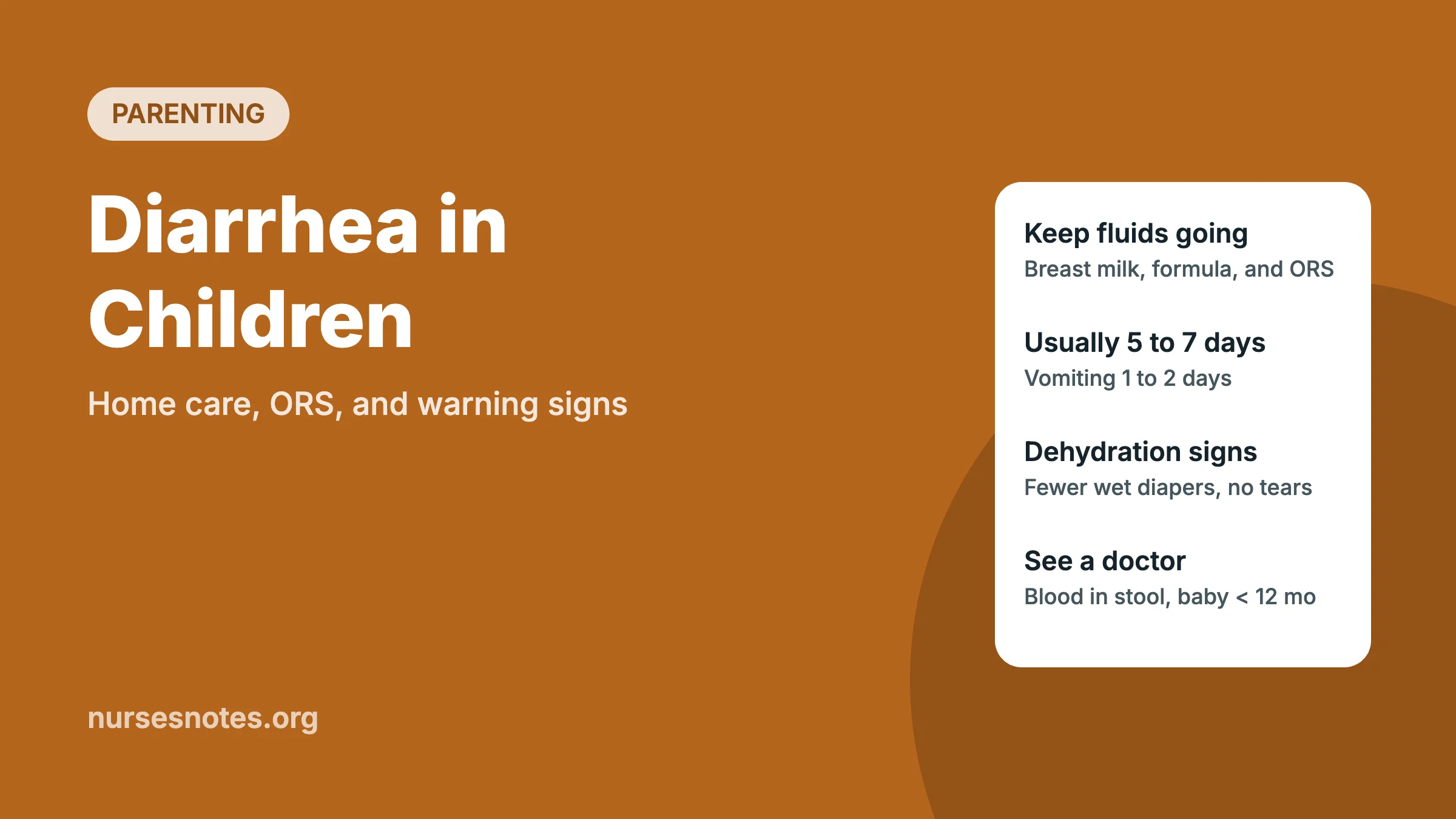
Diarrhea in children is usually caused by a stomach infection and gets better on its own within 5 to 7 days, but the main danger is dehydration. Keep your child drinking, keep breastfeeding or formula feeding, use oral rehydration solution (ORS) if advised, and know the warning signs that mean your child needs a doctor quickly.
Key points
- Diarrhea means 3 or more loose or watery stools in a day, or more often than is normal for your child.
- The most important treatment is replacing lost fluids with breast milk, formula, water, and ORS.
- Do not give anti-diarrhea medicines to children unless a doctor tells you to.
- Get help quickly for a baby under 12 months, fewer wet diapers, blood in the stool, or a child who is very sleepy or hard to wake.
What counts as diarrhea in a child?
The World Health Organization (WHO) defines diarrhea as passing 3 or more loose or liquid stools a day, or more often than is usual for that person. Frequent formed stools are not diarrhea, and breastfed babies often have soft, pasty stools that are normal for them.
Most cases are caused by viruses, bacteria, or parasites spread through contaminated food or water, or from person to person when hands are not washed. Diarrhea often comes with vomiting, which can make dehydration happen faster.
Signs of dehydration in children
Watch for these signs from the American Academy of Pediatrics (AAP) and WHO:
- Little or no urine for more than 8 hours, fewer wet diapers, or dark yellow urine
- Dry mouth, tongue, or lips
- Few or no tears when crying
- A sunken soft spot on the head in babies
- Sunken eyes
- Unusual tiredness, fussiness, or weakness
- Skin that goes back slowly when gently pinched
How to care for a child with diarrhea at home
- Keep up the fluids. Offer small sips often, especially if your child is also vomiting.
- Keep breastfeeding. Breast milk is the best fluid for a breastfed baby. Offer feeds more often than usual.
- Keep formula at normal strength. The NHS advises against making formula weaker.
- Use ORS if advised. Oral rehydration solution is a mix of clean water, salt, and sugar that helps replace what the body loses. Mix it exactly as the packet says, and ask your doctor, nurse, or pharmacist how much to give.
- Ask about zinc. WHO recommends a 10 to 14 day course of zinc for children with diarrhea, which can shorten the illness. Your doctor or health worker will advise the right product and dose for your child.
- Keep feeding. Offer your child’s usual food once they can eat. Avoid fruit juice and fizzy or soft drinks, which can make diarrhea worse.
- Avoid anti-diarrhea medicines. The NHS says not to give medicine to stop diarrhea to children under 12. Do not give aspirin to anyone under 16.
For fever or discomfort, a doctor may suggest paracetamol (acetaminophen). The dose depends on your child’s weight and the product, so follow the label or ask your doctor or pharmacist. Our guide on how to bring down a child’s fever explains more.
Stopping the spread at home
- Wash hands with soap and water after changing diapers, using the toilet, and before preparing food.
- Wash soiled clothes and bedding separately on a hot wash.
- Clean toilet seats, flush handles, taps, and door handles every day.
- Do not share towels, cups, or cutlery.
- Keep your child home from school or daycare until there has been no diarrhea or vomiting for at least 2 days, as the NHS advises.
How to prevent diarrhea in children
- Exclusive breastfeeding for the first 6 months
- Rotavirus vaccination (ask your health centre about your child’s vaccine schedule)
- Safe drinking water and good sanitation
- Handwashing with soap
- Clean, safe food preparation and storage
When to get medical help
Go to the emergency room or call your local emergency number now if your child:
- Is very sleepy, hard to wake, confused, or too weak to stand
- Vomits blood, vomits green bile, or has vomit that looks like coffee grounds
- Has pale, blue, gray, or blotchy skin or lips
- Has a sudden, severe tummy ache or a stiff neck
- Is breathing fast or with difficulty
- May have swallowed something poisonous
See a doctor the same day if your child:
- Is a baby under 12 months and you are worried, or a baby under 12 weeks who has vomited 2 or more times
- Stops breastfeeding or bottle feeding
- Shows signs of dehydration, such as fewer wet diapers
- Keeps vomiting and cannot keep fluids down
- Has blood in the stool
- Has diarrhea for more than 7 days or vomiting for more than 2 days
- Has a weakened immune system
Frequently asked questions
How long does diarrhea last in children?
According to the NHS, diarrhea usually stops within 5 to 7 days, and vomiting usually stops within 1 or 2 days. If diarrhea lasts more than 7 days, or your child has blood in the stool, see a doctor. WHO classes diarrhea lasting 14 days or longer as persistent diarrhea.
What should I feed my child with diarrhea?
Keep breastfeeding or giving normal-strength formula, and offer your child’s usual food once they feel like eating. WHO advises continuing nutrient-rich foods during diarrhea. Avoid fruit juice and fizzy drinks, which can make diarrhea worse, and avoid very fatty or spicy food.
Is ORS safe for babies?
Yes, ORS is designed to treat dehydration from diarrhea in babies and children, and WHO calls it a key treatment. Use a proper ORS product, mix it exactly as the packet says, and keep breastfeeding. Ask your doctor, nurse, or pharmacist how much your baby needs, especially if they are under 12 months.
Related on Nurses Notes
- How to bring down a child’s fever safely at home
- Hand, foot, and mouth disease in children
- Signs of dehydration in adults
- All Parenting articles on Nurses Notes
Sources
- Diarrhoeal disease. World Health Organization fact sheet, 7 March 2024.
- Diarrhoea and vomiting. NHS, reviewed 21 December 2023.
- Vomiting With Diarrhea. HealthyChildren.org, American Academy of Pediatrics, Barton Schmitt MD, FAAP.
This article is for education only and does not replace advice from your own doctor, nurse, or other qualified health professional.