On this page
The most common signs of dehydration in adults are thirst, dark yellow and strong-smelling urine, peeing less often, a dry mouth, tiredness, headache, and dizziness. Most mild cases get better with extra fluids at home, but confusion, fainting, cold or blotchy skin, or fast breathing need emergency care.
Key points
- Dehydration happens when your body loses more fluid than it takes in.
- Pale, straw-coloured urine through the day is a simple sign you are drinking enough.
- For vomiting or diarrhoea, oral rehydration solution replaces lost salts and sugar better than plain water alone.
- Older adults, babies, young children, and people with diabetes are at higher risk.
What is dehydration?
Dehydration means your body has lost so much fluid that it cannot work normally. Fluid is lost through sweat, urine, vomiting, diarrhoea, and even breathing, and it has to be replaced through drinks and food.
Common causes include not drinking enough when you are busy or unwell, vomiting and diarrhoea, fever, heavy sweating in hot weather or during exercise, alcohol, and medicines that make you pass more urine, such as diuretics. Poorly controlled diabetes can also cause it.
Signs of dehydration in adults
| Mild to moderate | Severe (emergency) |
|---|---|
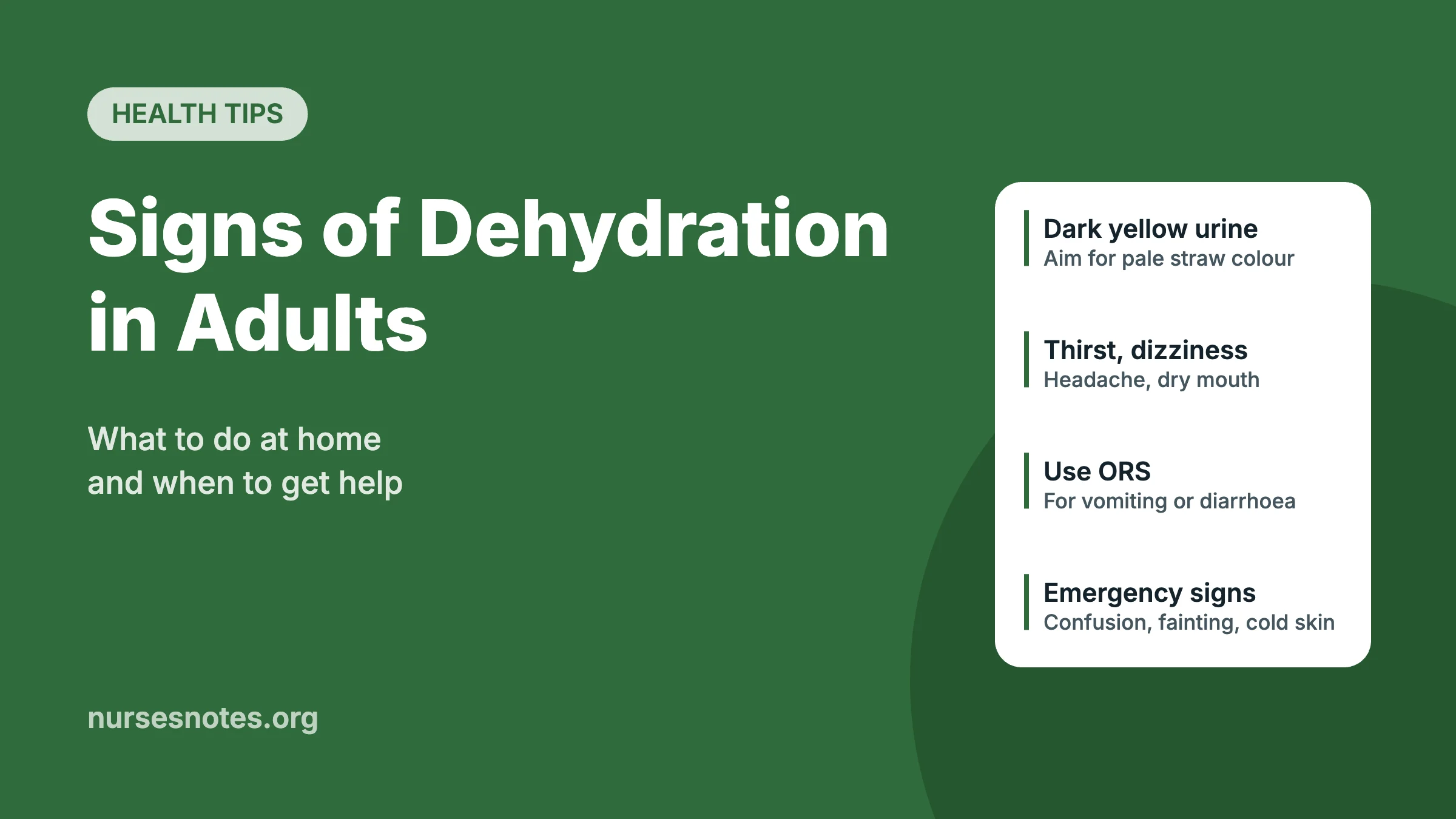
| Thirst | Confusion or unusual sleepiness |
| Dark yellow, strong-smelling urine; peeing less | Fainting or seizures |
| Dry mouth, lips, and tongue | Blue, grey, pale, or blotchy skin or lips |
| Tiredness, headache | Cold skin |
| Dizziness or light-headedness | Rapid, shallow breathing or difficulty breathing |
| Muscle cramps, constipation | Rapid pulse |
Thirst is not always reliable, especially in older adults, who tend to feel less thirsty and have smaller fluid reserves. Skin that is slow to flatten after a gentle pinch and sunken eyes are other clues.
Who is most at risk?
- Babies and young children, who cannot always say they are thirsty (see our guide on how to bring down a child’s fever for related warning signs).
- Adults aged 65 and over.
- People with diabetes, dementia, or other long-term conditions, and anyone who relies on others to give them drinks.
- People taking diuretics.
- Anyone working or exercising in heat, or with vomiting, diarrhoea, or fever.
How to rehydrate at home
- Drink little and often. If you feel sick, start with small sips and build up gradually.
- Use oral rehydration solution (ORS) for vomiting or diarrhoea. These powders are mixed with water and replace the salts, sugar, and minerals you have lost. A pharmacist can help you choose one.
- Skip alcohol and limit caffeine until you feel better, as they can make dehydration worse.
- Go easy on fruit juice and sugary drinks. Juice can have too much sugar and too little sodium and may upset the stomach.
- Check your urine. Aim for pale yellow. Dark urine means you need more.
How to prevent dehydration
- Drink regularly through the day; water is a good first choice. Water-rich fruit and vegetables count too.
- Drink before you feel very thirsty, and drink more in hot or humid weather, at altitude, and when you are ill.
- For exercise, start hydrating beforehand, drink during activity, and continue afterward. Water is usually enough for about an hour of light to moderate activity; longer sessions may need an electrolyte drink.
- For nurses and shift workers: keep a labelled water bottle where you can reach it, and use breaks to drink and pass urine. Long shifts in warm wards make it easy to go hours without a drink.
- Check on older relatives in hot weather and offer drinks regularly.
When to get medical help
See a doctor or get urgent advice if:
- You feel unusually tired, or dizziness on standing does not go away.
- Your urine stays dark or you are passing very little.
- You cannot keep fluids down, or diarrhoea has lasted 24 hours or more.
- You notice bloody or black stools.
- Your heart rate or breathing is fast.
Call your local emergency number or go to the emergency department if someone has confusion, fainting, a seizure, unusual sleepiness or difficulty waking, cold skin, blue, grey, pale, or blotchy skin or lips, or difficulty breathing. These can be signs of shock, a serious complication. Do not drive yourself; ask someone else to take you or call an ambulance.
Frequently asked questions
How long does it take to recover from mild dehydration?
Mild dehydration usually improves once you drink more fluids and deal with the cause, such as heat, heavy sweating, or long hours without a drink. If you are vomiting, have diarrhoea, or still feel dizzy, tired, or are passing little urine after a day, contact a doctor or pharmacist for advice.
Is water or an electrolyte drink better for dehydration?
For everyday mild dehydration, water is usually enough. When you have lost a lot of fluid through vomiting, diarrhoea, or long, heavy sweating, an oral rehydration solution or electrolyte drink helps replace sodium and potassium as well. Sugary sodas and energy drinks are not good choices.
What colour should my urine be?
Pale yellow or straw-coloured urine through the day is a good sign that you are drinking enough. Dark yellow, strong-smelling urine, or passing urine much less often than usual, suggests you need more fluids. Some medicines and vitamins can change urine colour, so ask a pharmacist if unsure.
Related on Nurses Notes
- Electrolytes made simple: sodium, potassium, calcium, and magnesium
- How to bring down a child’s fever safely at home
- More health tips from Nurses Notes
- How to lower blood pressure naturally
- New: Dengue cases in the Philippines in 2026: latest DOH figures
Sources
- NHS. Dehydration. NHS (UK), accessed October 2026.
- Mayo Clinic. Dehydration: symptoms and causes. Mayo Clinic, accessed October 2026.
- Cleveland Clinic. Dehydration. Cleveland Clinic, 2023.
This article is for education only and does not replace advice from your own doctor, nurse, or other qualified health professional.