
On this page
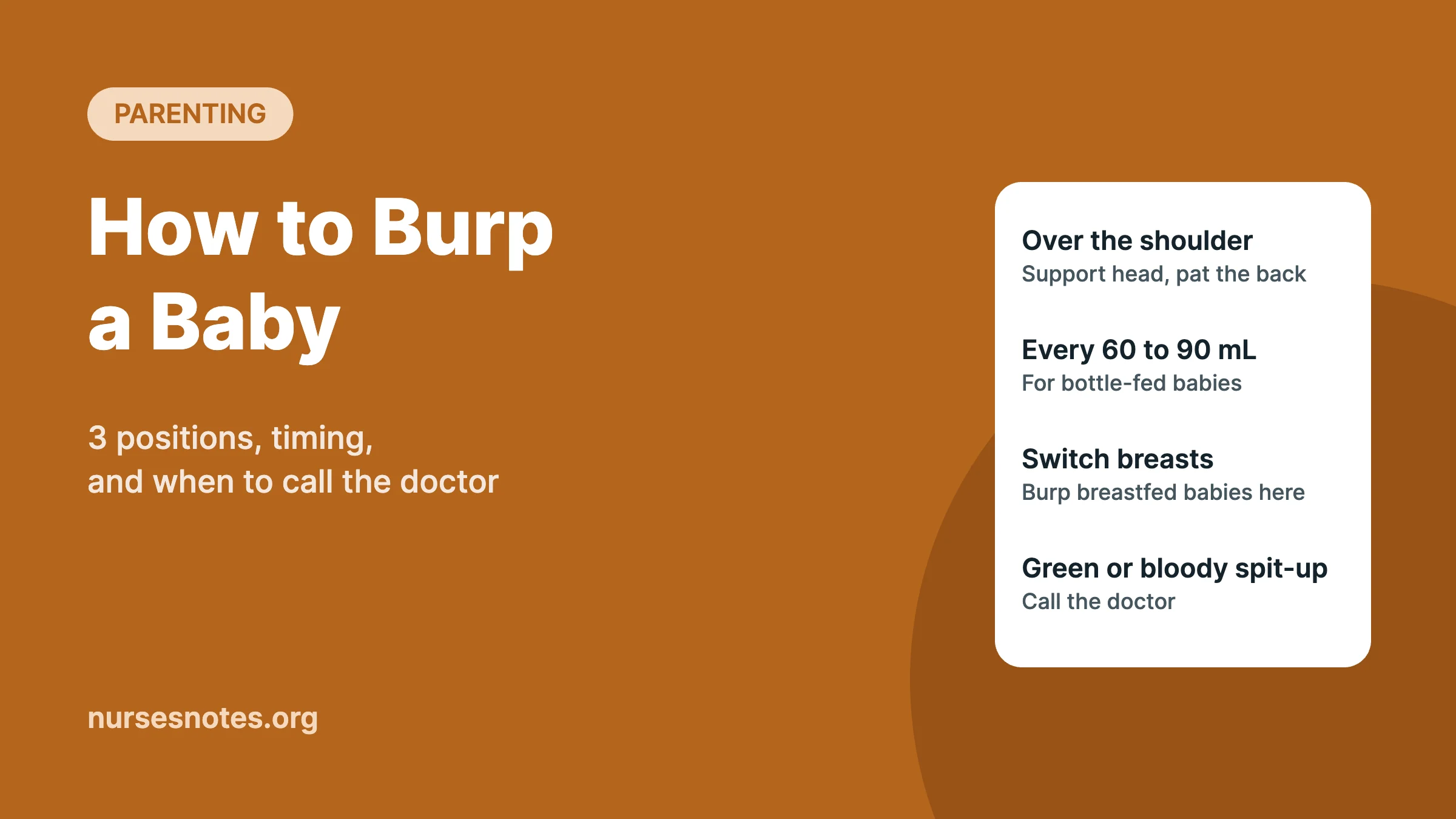
To burp a baby, hold them upright against your shoulder, sit them on your lap, or lay them face down across your knees, support their head, and gently pat or rub their back for a minute or two. Burping during and after feeds lets out swallowed air, which can help a baby feel more comfortable and feed better.
Key points
- There are three common burping positions: over the shoulder, sitting on your lap, and lying across your lap.
- Burp bottle-fed babies after every 2 to 3 ounces (60 to 90 mL), and breastfed babies when they switch breasts.
- If no burp comes after a few minutes, it is fine to carry on feeding.
- Call your baby’s doctor for forceful, green, yellow, bloody, or black spit-up, or poor weight gain.
Why babies need burping
Babies swallow air while they feed, especially if they gulp quickly or feed from a bottle. Trapped air can make them feel full before they have had enough milk, and it may make them fussy or spit up more. Some breastfed babies swallow very little air and may not burp much, which is normal.
Signs a baby may need to burp include fussiness, crying, squirming, arching their back, pulling their legs up to their tummy, or pulling away from the breast or bottle.
How to burp a baby: 3 positions
Whichever position you use, support your baby’s head and neck, keep a cloth under their chin, and use gentle, repeated pats or circular rubs. Cleveland Clinic suggests aiming for the middle to lower back rather than between the shoulder blades.
1. Over the shoulder
- Hold your baby upright with their chin resting on your shoulder.
- Support their bottom with one arm and their head and back as needed.
- Gently pat or rub their back with your free hand. A slightly cupped hand works well.
2. Sitting on your lap
- Sit your baby on your lap, facing sideways, and lean them forward a little.
- Support their chest with your palm and cradle their chin with your thumb and finger, keeping your fingers off their throat.
- Pat or rub their back with your other hand. This position suits young babies who cannot yet hold up their head.
3. Face down across your lap
- Lay your baby on their tummy across your knees, with their head turned to one side.
- Keep their head slightly higher than their chest.
- Gently pat or rub their back in circles.
When to burp your baby
- Bottle-feeding: the American Academy of Pediatrics (AAP) suggests burping after every 2 to 3 ounces (60 to 90 mL), and again at the end of the feed.
- Breastfeeding: burp when your baby switches from one breast to the other, and at the end of the feed.
- Any time your baby seems uncomfortable, fussy, or pulls away during a feed.
UNICEF points out there are no strict rules: some babies need burping in the middle of a feed and others only afterwards. Most babies need burping from the newborn days until about 9 months, sometimes a little longer.
How long to try and what if baby won’t burp
Try for a minute or two. If no burp comes after a few minutes, your baby may not need one, so carry on feeding. After the feed, try again and keep your baby upright for 10 to 15 minutes, which the AAP says can help reduce spit-up.
If your baby still seems gassy, UNICEF suggests laying them on their back and gently massaging their tummy or moving their legs in a slow bicycle motion. If gas seems to bother them often, talk to their doctor or nurse.
Spit-up and hiccups
Spitting up a little milk while burping is very common and usually harmless if your baby is feeding well and gaining weight. Our guide to baby spitting up explains what is normal.
Hiccups are also common. Try changing your baby’s position, burping them, or helping them calm down. If hiccups do not stop within 5 to 10 minutes, offering a few more minutes of feeding often helps.
Even if your baby spits up a lot, always put them to sleep on their back on a flat, firm mattress. Read more in our safe sleep for babies guide.
When to get medical help
Call your baby’s doctor straight away, or seek urgent care, if your baby:
- Spits up forcefully or projectile vomits
- Has spit-up that is green, bright yellow, bloody, or black
- Brings up large amounts after feeds
- Is extremely fussy or seems to be in pain
- Is not gaining weight, or seems to be feeding poorly
Trust your instincts. If your baby seems unwell, has trouble breathing, or you are worried, get medical help without delay.
Frequently asked questions
Do I need to burp my baby if they fall asleep?
You can try gently burping a sleepy baby by holding them upright on your shoulder for a few minutes. If they do not burp and seem comfortable, there is no need to wake them. Always lay them down to sleep on their back on a flat, firm surface, even if they have not burped.
At what age do babies stop needing to be burped?
Cleveland Clinic says most babies need help burping from the first days of life until about 9 months, as they gradually become better at feeding. Some babies still benefit from the occasional burp up to their first birthday. Once your baby can sit up and feeds comfortably, burping usually becomes less important.
Is it normal for my baby to spit up when burping?
Yes. A small amount of milk often comes up with a burp, and this is usually nothing to worry about if your baby is feeding and gaining weight well. Keep a cloth handy. Contact your baby’s doctor if the spit-up is forceful, green, yellow, bloody, or black, or if your baby is not gaining weight.
Related on Nurses Notes
- Baby spitting up: what is normal and when to worry
- Colic in babies: signs and soothing tips
- How much should a newborn eat?
- Safe sleep for babies
- All Parenting articles
Sources
- Baby Burping, Hiccups & Spit-Up, American Academy of Pediatrics, HealthyChildren.org (updated December 2024)
- Baby basics: How to burp your baby, UNICEF Parenting
- Burping Your Baby: Techniques, Tips and Timing, Cleveland Clinic (August 2025)
This article is for education only and does not replace advice from your own doctor, nurse, or other qualified health professional.