On this page
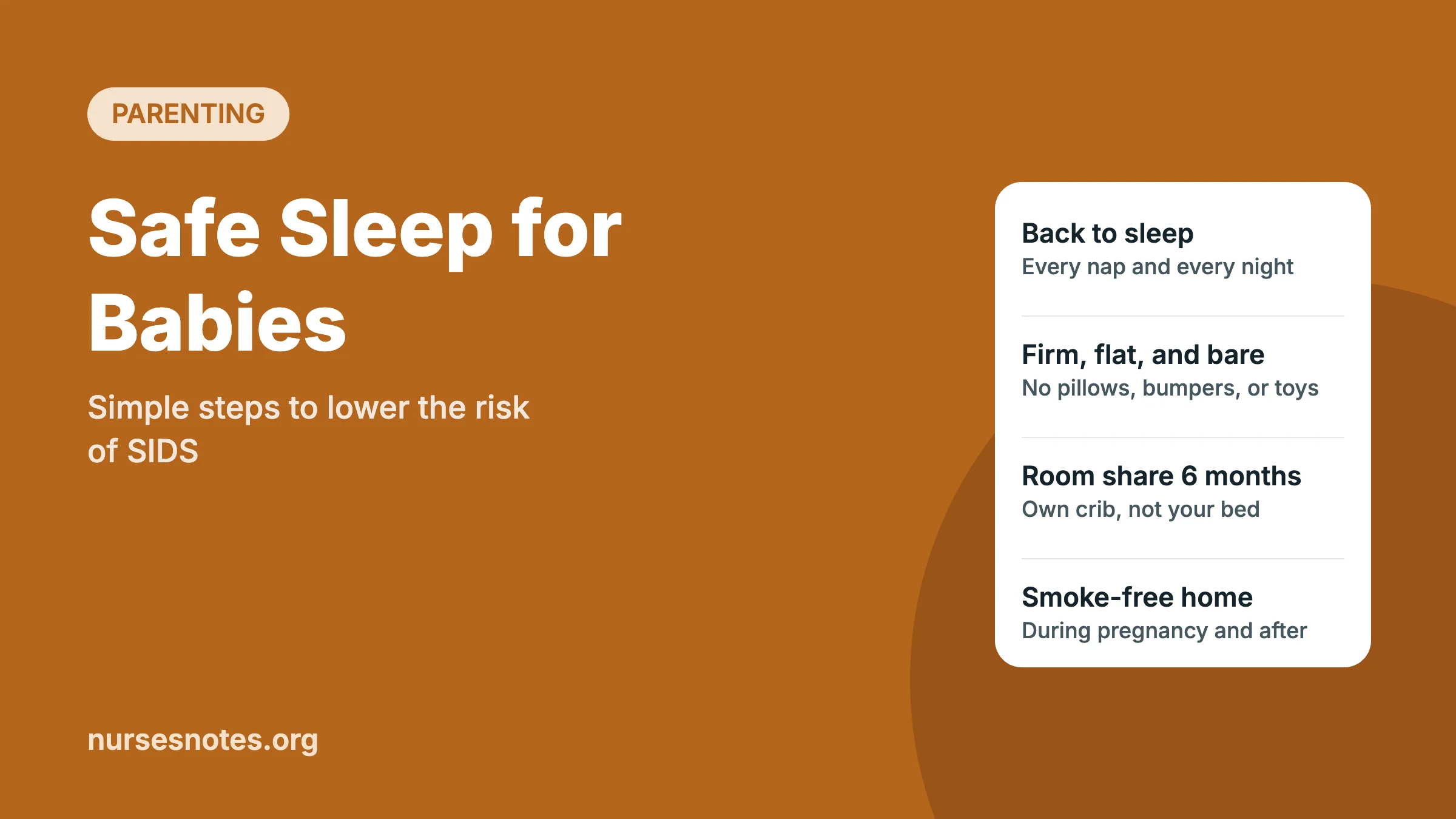
Safe sleep for babies means placing your baby on their back, on a firm and flat surface, in their own crib or bassinet with nothing else in it, for every nap and every night. These simple habits lower the risk of sudden infant death syndrome (SIDS) and other sleep-related deaths in the first year of life.
Key points
- Always put your baby to sleep on their back, on a firm, flat, non-inclined surface.
- Keep the sleep space bare: no pillows, blankets, bumpers, soft toys, or nests.
- Share a room, not a bed: keep your baby’s crib in your room, ideally for at least the first 6 months.
- Never sleep with your baby on a sofa or armchair, and keep your baby away from smoke.
What is safe sleep for babies?
Safe sleep is a set of evidence-based steps that reduce the chance of a baby dying suddenly and unexpectedly during sleep. The American Academy of Pediatrics (AAP) estimates there are about 3,500 sleep-related infant deaths each year in the United States alone.
The advice below follows the AAP’s 2022 recommendations, along with NHS and CDC guidance. It applies to babies up to 1 year old.
The ABCs of safe sleep
Many nurses teach parents a simple memory aid: babies should sleep Alone, on their Backs, and in a Crib (or bassinet).
Alone
Your baby should have their own sleep space with nothing else in it. Soft bedding, pillows, quilts, bumpers, and soft toys can block a baby’s breathing.
Back
Place your baby on their back for every sleep, including naps. If your baby rolls onto their tummy, gently turn them back until they can roll both ways on their own.
Crib
Use a crib, bassinet, or portable play yard with a firm, flat mattress and a fitted sheet. Choose one that meets safety standards where you live.
How to set up a safe sleep space
- Use a firm, flat mattress that fits the crib snugly, covered only by a fitted sheet.
- Place your baby with their feet at the foot of the crib, so they cannot wriggle down under covers.
- Dress your baby in a baby sleeping bag or light layers instead of loose blankets.
- Keep the room comfortably cool. The NHS suggests about 16 to 20°C. In hot weather, dress your baby in fewer, lighter layers instead of adding covers.
- Avoid inclined sleepers, pods, nests, and weighted sleep sacks or swaddles.
- Do not let your baby sleep for long in a car seat, swing, stroller, or carrier. If they fall asleep in one, move them to a flat sleep surface when you can.
To check if your baby is too hot, feel their chest or the back of their neck. Sweating or a hot chest means you should remove a layer; cool hands and feet are normal.
Room sharing and bed sharing
The AAP recommends keeping your baby in your room, on a separate sleep surface, ideally for at least the first 6 months. This makes night feeds easier and helps you keep watch.
The AAP does not recommend bed sharing at any time. The risk is especially high if:
- You sleep with your baby on a sofa, couch, or armchair
- An adult in the bed is very tired, smokes, has drunk alcohol, or has taken drugs or medicines that cause drowsiness
- Your baby is under 4 months old, was born early, or had a low birth weight
- There are pillows, heavy blankets, other children, or pets in the bed
If you feed your baby in your bed, put them back in their own crib before you fall asleep.
Other ways to lower the risk of SIDS
- Breastfeed if you can. Breast milk feeding is linked to a lower risk of SIDS.
- Offer a pacifier at sleep time. If you are breastfeeding, you can wait until feeding is well established.
- Keep a smoke-free home. Avoid smoking, vaping, alcohol, and drugs during pregnancy and around your baby.
- Keep up with check-ups and vaccines. Routine well-baby visits and immunisations are part of safe care.
- Stop swaddling once your baby shows signs of rolling, usually around 3 to 4 months. If you swaddle, always place your baby on their back.
When to get medical help
Call your local emergency number straight away if your baby:
- Stops breathing or is struggling to breathe
- Will not wake up, or is limp or unresponsive
- Turns blue, grey, or very pale
- Has a seizure (fit)
Contact your doctor or health centre urgently if you are worried that your baby is unwell. For other newborn concerns, see our guides to newborn jaundice and bringing down a child’s fever safely.
Frequently asked questions
When can a baby sleep with a blanket?
The AAP advises keeping blankets, pillows, and other soft bedding out of the sleep area for the whole first year. Instead, dress your baby in a wearable blanket or baby sleeping bag that fits well and is right for the room temperature. Talk with your child’s doctor about moving to a light blanket after 12 months.
What if my baby rolls onto their tummy while sleeping?
Always start every sleep on the back. If your baby rolls onto their tummy, gently turn them back. Once your baby can roll confidently both ways (front to back and back to front) by themselves, you can let them stay in the position they choose, as long as the crib is still flat and bare.
Is it safe for my baby to sleep in a car seat or swing?
Car seats, swings, strollers, and slings are not safe for routine sleep, especially for babies under 4 months, according to the AAP. It is fine for a baby to doze in a car seat while travelling, but move them to a flat crib once you arrive.
Related on Nurses Notes
- Newborn jaundice: signs, when to worry, and treatment
- Teething symptoms: signs and safe relief
- How to bring down a child’s fever safely
- All parenting articles
Sources
- Safe Sleep: Back is Best, Avoid Soft Bedding, Inclined Surfaces, and Bedsharing – American Academy of Pediatrics (HealthyChildren.org), 2022
- Reduce the risk of sudden infant death syndrome (SIDS) – NHS, reviewed November 2025
- Helping Babies Sleep Safely – Centers for Disease Control and Prevention, 2024
This article is for education only and does not replace advice from your own doctor, nurse, or other qualified health professional.