On this page
To get rid of head lice, check your child’s whole head with a fine-toothed lice comb, then treat with a head lice product or regular wet combing, and repeat the checks over the next two to three weeks. Head lice are common in school-aged children, are not a sign of dirty hair, and can be treated safely at home after checking with your child’s doctor.
Key points
- Head lice spread mainly through close head-to-head contact, not through pets or poor hygiene.
- Itching behind the ears or at the back of the neck is the most common sign, but it can take weeks to start.
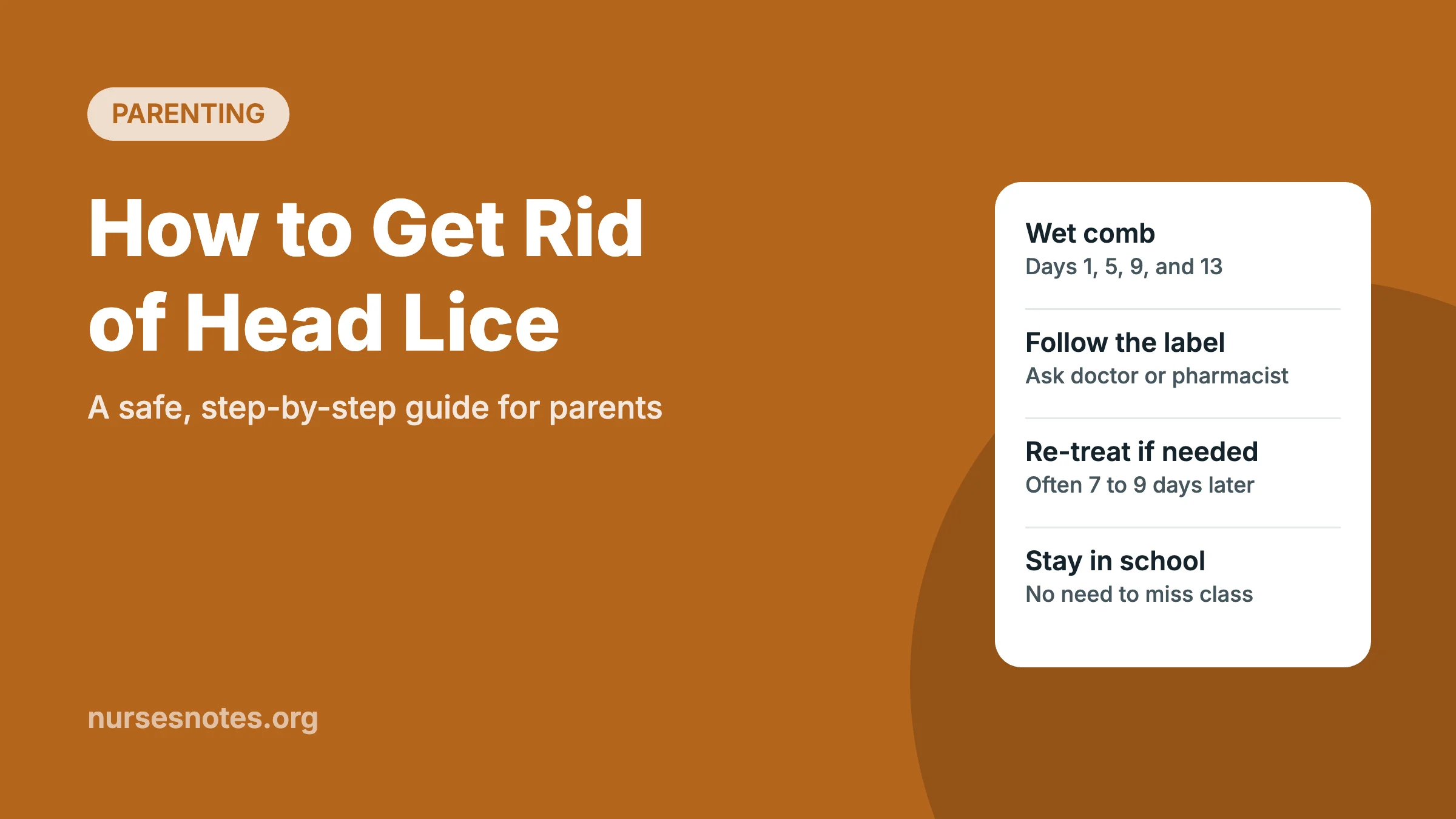
- Use lice products exactly as the label says, and ask the doctor or pharmacist which product suits your child’s age.
- Your child does not need to miss school because of head lice.
What are head lice and nits?
Head lice are tiny insects, up to about 3 mm long, that live on the scalp and feed on small amounts of blood. Nits are their eggs, glued firmly to the hair close to the scalp.
Eggs hatch in about 7 to 12 days, and the young lice become adults within about two weeks.
How do children get head lice?
Lice cannot jump or fly. They crawl from one head to another during close, prolonged contact, such as playing, hugging, or sleeping next to each other.
- Lice are found in clean and dirty hair alike, in every country, and in rich and poor homes.
- Sharing combs, brushes, hats, or helmets carries only a very small risk.
- Dogs, cats, and other pets do not get or spread head lice.
Signs and symptoms of head lice
- Itching of the scalp, especially behind the ears and at the back of the neck
- Itching that starts 4 to 6 weeks after lice arrive, and may last for weeks after they are gone
- Small white or yellow-brown specks stuck firmly to the hair near the scalp (nits)
- Tiny moving insects in the hair, which avoid light and move quickly
Nits can look like dandruff, dirt, or hair spray droplets. The difference is that nits stay firmly stuck to the hair, while dandruff brushes off easily.
How to check for head lice (wet combing)
- Sit your child in a brightly lit spot.
- Wash the hair with ordinary shampoo, then apply plenty of conditioner.
- Using a fine-toothed lice detection comb, comb section by section from the roots to the tips, wiping the comb on a tissue after each stroke.
- Go over the whole head twice. This takes about 10 minutes for short hair and 20 to 30 minutes for long, curly, or thick hair.
The NHS suggests wet combing on days 1, 5, 9, and 13, then a final check on day 17. Only finding a live louse confirms an active infestation.
How to get rid of head lice
Option 1: Medicated head lice products
- Talk to your child’s doctor or pharmacist before starting, especially for babies and young children.
- Some products are only for children over a certain age or weight. How much to use depends on the product and your child’s hair length, so follow the label exactly.
- Do not use a combination shampoo and conditioner, or conditioner, before applying lice medicine.
- Do not wash the hair for 1 to 2 days after rinsing out the product, and dress your child in clean clothes.
- If the product does not kill eggs, a second treatment is usually needed about 7 to 9 days later. Check the label for timing.
- If lice are still moving 8 to 12 hours after treatment but look slower, comb them out rather than re-treating. If they seem as active as before, ask your doctor before trying another product.
Option 2: Wet combing only
Careful wet combing on days 1, 5, 9, and 13 can clear lice without medicine. It takes patience but avoids chemical products.
Treat everyone at the same time
Check everyone in the household. Treat only those who have live lice or nits, but treat them all on the same day so lice are not passed back and forth.
Do I need to clean the house?
Lice do not survive long off the head. The CDC suggests these simple steps:
- Wash bedding, towels, hats, and clothes used in the 2 days before treatment in hot water (at least 130°F or 54°C) and dry on high heat.
- Seal items that cannot be washed, such as soft toys, in a plastic bag for 2 weeks.
- Soak combs and brushes in hot water for 5 to 10 minutes.
- Vacuum floors and furniture where your child sat or lay.
- Do not use insecticide sprays or fogs; they can be harmful if breathed in.
The NHS notes that hot washing all your laundry is not necessary, so focus on items that touched your child’s head recently.
Remedies to avoid
- Never use kerosene, gasoline, or products made for animals. These are dangerous.
- Home remedies such as mayonnaise, olive oil, petroleum jelly, margarine, or essential oils have no proven benefit.
Can my child go to school?
Yes. The American Academy of Pediatrics and the National Association of School Nurses discourage “no-nit” policies. Your child can finish the school day, start treatment at home, and return the next day.
When to get medical help
Call your child’s doctor if:
- Your child is a baby, or you are unsure which product is safe for your child’s age
- Lice are still active after two correct treatments
- The scalp looks red, swollen, crusted, or is oozing, which can mean a skin infection from scratching
- Your child has a fever, swollen glands, or seems unwell
- The itchy rash spreads beyond the scalp (other conditions, such as chickenpox, can also cause itching)
Frequently asked questions
How long does it take to get rid of head lice?
Most families clear head lice within two to three weeks. Lice products often need a second treatment about 7 to 9 days after the first, and wet combing works best on days 1, 5, 9, and 13. Keep checking every few days for two to three weeks so any newly hatched lice are caught early.
Can head lice live on pillows and furniture?
Head lice need human blood to survive, so they do not live long away from the scalp. The risk of catching lice from pillows, sofas, or carpets is very small. Washing recently used bedding and hats, bagging soft toys for two weeks, and vacuuming where your child rested is enough.
Do I need to cut my child’s hair to get rid of lice?
No. Cutting or shaving the hair is not needed to treat head lice. Careful combing with a fine-toothed lice comb and, if needed, a medicated product used as the label directs will clear lice in hair of any length. Long or curly hair simply takes more time to comb, so set aside 20 to 30 minutes.
Related on Nurses Notes
- Chickenpox in children: symptoms and care
- Hand, foot, and mouth disease in children
- All Parenting articles on Nurses Notes
Sources
- Treatment of Head Lice, Centers for Disease Control and Prevention (CDC), 2024
- Providing Care for Individuals with Head Lice, Centers for Disease Control and Prevention (CDC), 2024
- Head lice and nits, NHS, reviewed April 2024
- Head Lice: What Parents Need to Know, American Academy of Pediatrics (HealthyChildren.org), 2022
This article is for education only and does not replace advice from your own doctor, nurse, or other qualified health professional.