On this page
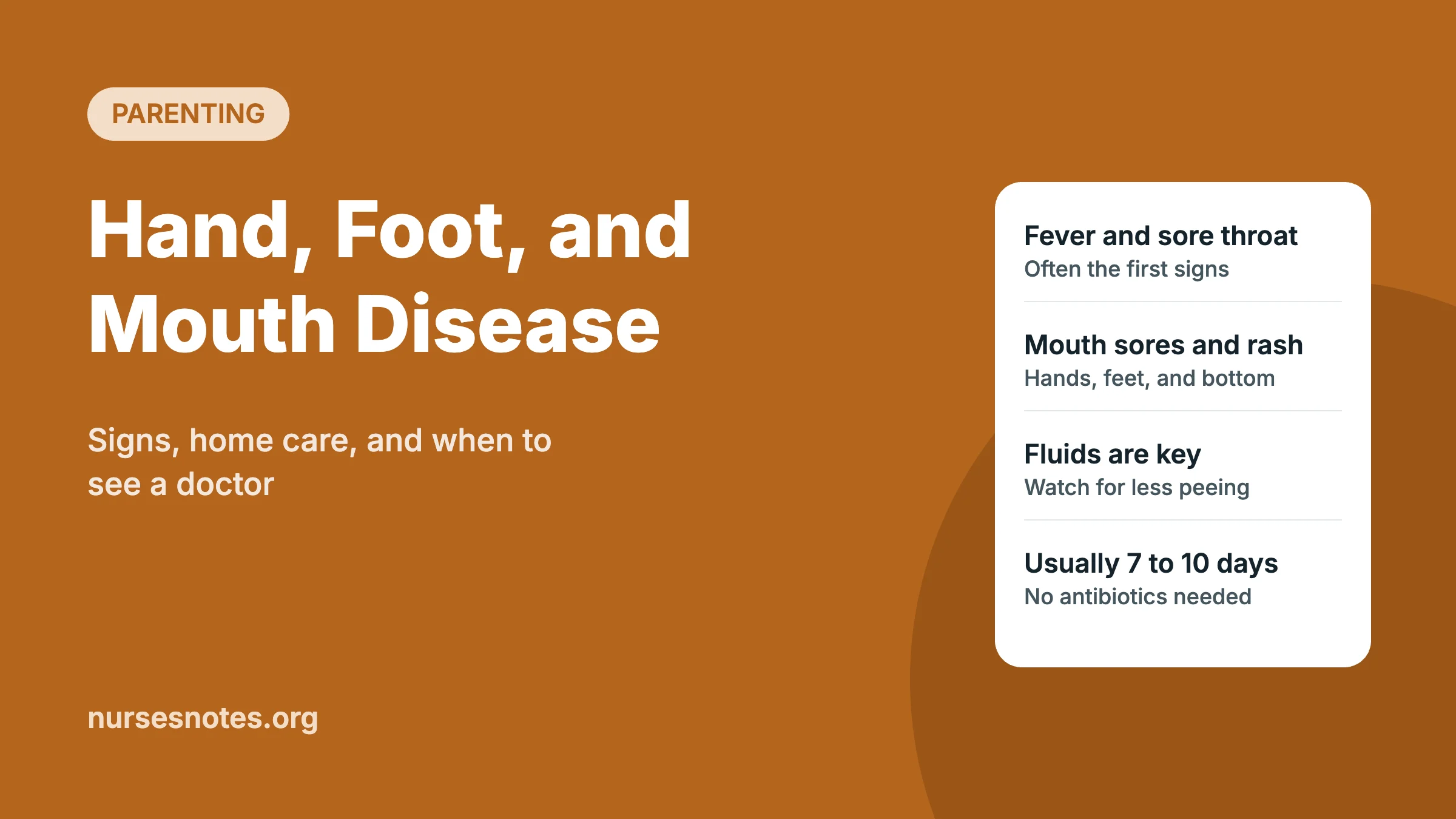
Hand, foot, and mouth disease (HFMD) is a common viral infection in young children that causes fever, painful mouth sores, and a spotty rash on the hands and feet. Most children get better at home in 7 to 10 days, but you need to watch closely for dehydration, because sore mouths can make drinking hard.
Key points
- HFMD is most common in children under 5, but older children and adults can catch it too.
- There is no medicine that cures it; care focuses on fluids, comfort, and rest.
- The biggest risk is dehydration, so watch how much your child drinks and pees.
- Handwashing, cleaning toys, and not sharing cups help stop it spreading.
What is hand, foot, and mouth disease?
HFMD is caused by several viruses from the enterovirus family. Mayo Clinic notes that coxsackievirus A16 is the most common cause. It is not related to foot-and-mouth disease in farm animals, and pets do not spread it.
It spreads easily through coughs and sneezes, saliva, fluid from blisters, and stool, as well as through touching contaminated toys and surfaces. That is why it often moves quickly through nurseries, day care centres, and families.
Signs and symptoms
Symptoms usually start 3 to 6 days after a child is exposed. They often come in two stages:
| Stage | What you may see |
|---|---|
| First 1 to 2 days | Fever, sore throat, poor appetite, runny nose, and fussiness in babies and toddlers |
| A day or two later | Painful sores or ulcers in the mouth and throat |
| At the same time | A rash of flat or raised spots, sometimes with small blisters, on the palms, soles, and sometimes the bottom or groin |
| 1 to 2 weeks later | Some children have harmless peeling of the fingers and toes |
The rash is usually not itchy. On darker skin, the spots and blisters may look grey or lighter than the surrounding skin rather than red.
How to care for your child at home
- Offer fluids often. Small, frequent sips of water or milk are easier than big drinks. Keep breastfeeding or bottle-feeding babies. Cool drinks can soothe the mouth.
- Avoid acidic drinks such as fruit juice, and salty, spicy, or very hot foods, which can sting mouth sores.
- Choose soft foods such as yoghurt, porridge, or mashed food. It is fine if your child eats less for a few days, as long as they keep drinking.
- Ease pain and fever. Paracetamol (acetaminophen) or ibuprofen can help. The dose depends on your child’s weight and the product, so follow the label exactly or ask your doctor or pharmacist. Never give aspirin to children.
- Ask before using mouth gels or sprays. A pharmacist can tell you which products suit your child’s age. Avoid regular mouthwashes, which sting.
- Let them rest and keep them comfortable. Antibiotics do not work against HFMD, because it is caused by a virus.
For more on handling a high temperature, see our guide on how to bring down a child’s fever.
When to get medical help
Call your doctor or health centre if:
- Your baby is under 6 months old
- Your child has a weakened immune system
- The fever lasts more than 3 days
- Mouth sores make it too painful to drink
- Symptoms are not getting better after 7 to 10 days
- You are pregnant and have been in contact with HFMD
Go to emergency care straight away if your child:
- Shows signs of dehydration, such as peeing much less than usual or far fewer wet nappies
- Refuses to drink at all
- Has a very high temperature, or feels hot, cold, or shivery and seems very unwell
- Is unusually sleepy, floppy, or hard to wake
- Seems to be getting worse, or you are worried about them
Serious problems are rare. Mayo Clinic notes that, very occasionally, the virus can cause viral meningitis or encephalitis, which need urgent hospital care.
How long is it contagious?
A child can spread HFMD from a few days before symptoms appear and is most contagious in the first week. AAP explains that the virus can stay in stool for weeks after the child feels better, so keep up good handwashing, especially after nappy changes.
Can my child go to school or day care?
The CDC says children can usually attend once they have no fever, feel well enough to join in, and are not drooling uncontrollably from mouth sores. The NHS adds that they do not need to wait for the blisters to heal. Your school or local health office may have stricter rules during an outbreak, so check with them.
How to prevent hand, foot, and mouth disease
- Wash hands with soap and water for at least 20 seconds, especially after nappy changes, using the toilet, and before eating.
- Teach children to cover coughs and sneezes and to keep fingers and toys out of their mouths.
- Clean and disinfect toys, door handles, and other shared surfaces.
- Do not share cups, cutlery, towels, or toothbrushes.
- Avoid kissing and hugging a child or adult who has HFMD.
Frequently asked questions
Is hand, foot, and mouth disease dangerous?
For most children, HFMD is mild and clears up on its own within 7 to 10 days. The most common problem is dehydration, because painful mouth sores make drinking difficult. Rarely, the virus affects the brain or its lining. Get medical help quickly if your child stops drinking, becomes very sleepy, or seems seriously unwell.
Can a child get hand, foot, and mouth disease more than once?
Yes. Several different viruses cause HFMD, so having it once does not protect your child from catching it again from another virus, or sometimes even the same one. This is why handwashing and cleaning shared toys remain important, even in families who have already been through an episode.
Can adults catch hand, foot, and mouth disease from children?
Yes, adults can catch it, although many have some immunity from childhood infections. Some adults carry and spread the virus without any symptoms. If you are pregnant and have been exposed, the CDC and NHS advise speaking to your doctor or midwife, even though the risk to the baby is usually low.
Related on Nurses Notes
- How to bring down a child’s fever safely
- Teething symptoms: signs, safe relief, and when to worry
- 5 moments for hand hygiene
- All Parenting articles on Nurses Notes
Sources
- About Hand, Foot, and Mouth Disease, Centers for Disease Control and Prevention (CDC), accessed October 2026
- Hand, foot and mouth disease, NHS, accessed October 2026
- Hand-foot-and-mouth disease: Symptoms and causes, Mayo Clinic, accessed October 2026
- Hand, Foot, and Mouth Disease, American Academy of Pediatrics, HealthyChildren.org, accessed October 2026
This article is for education only and does not replace advice from your own doctor, nurse, or other qualified health professional.