On this page
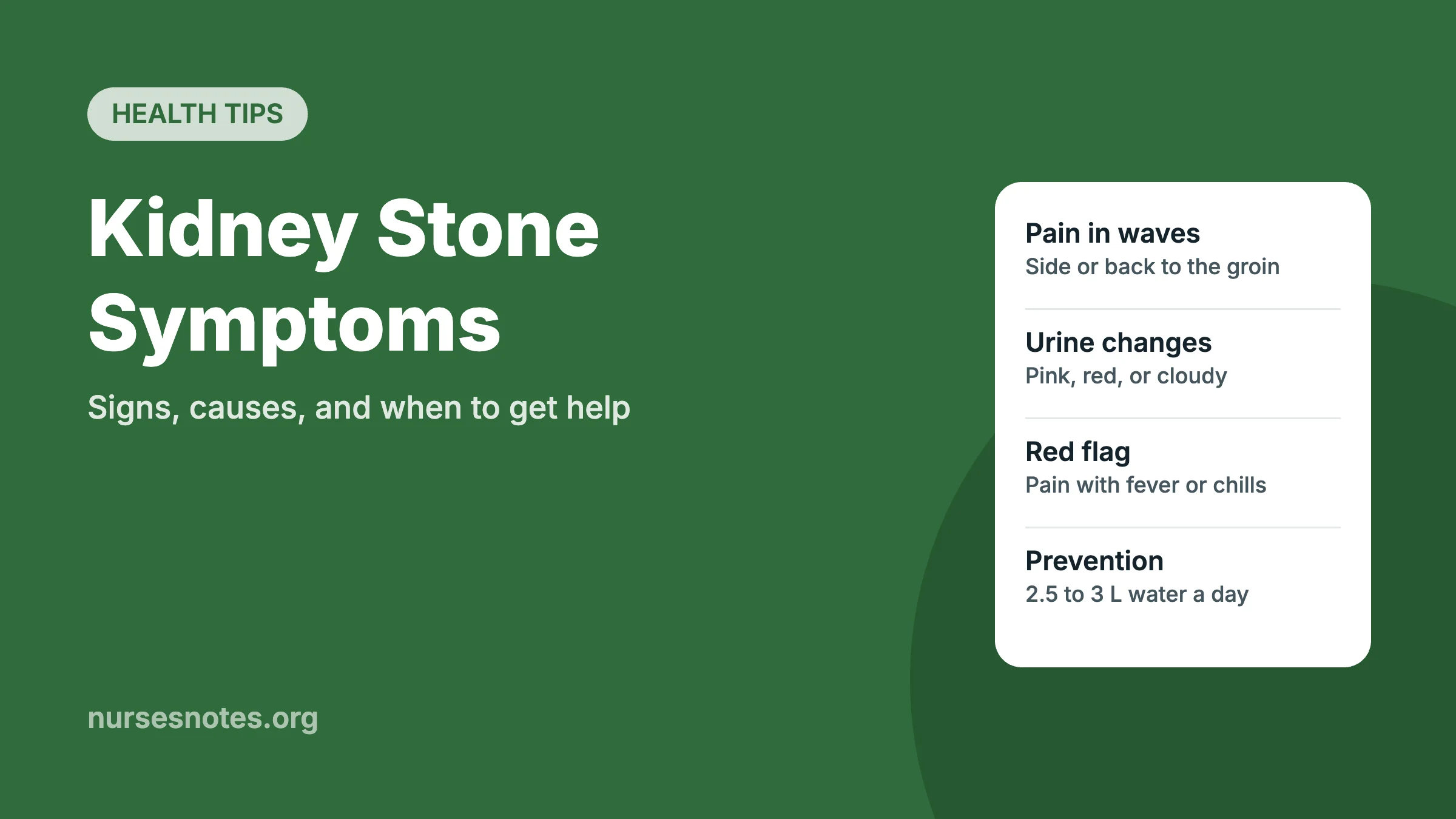
The most common kidney stone symptoms are sharp pain in the side or lower back that comes in waves and can spread to the groin, often with nausea, vomiting, or changes in your urine. Small stones may pass without any symptoms, but severe pain, fever, or being unable to pass urine needs urgent medical care.
Key points
- Kidney stone pain usually starts in the side or back below the ribs and can move to the lower belly and groin.
- Other signs include pink, red, or brown urine, cloudy or smelly urine, and needing to urinate often.
- Pain with fever and chills can mean an infection and needs care the same day.
- Drinking enough water is the most important way to lower your risk, especially in hot climates.
What are kidney stones?
Kidney stones are hard deposits that form inside the kidneys when urine contains high levels of minerals such as calcium, oxalate, and phosphorus. They can be as small as a grain of sand or much larger.
Many small stones cause no symptoms and leave the body in the urine without being noticed. Symptoms usually start when a stone moves into the ureter, the narrow tube between the kidney and the bladder.
Kidney stone symptoms
- Sharp, severe pain in the side and back, below the ribs
- Pain that spreads to the lower belly and groin, and in men to the testicles
- Pain that comes in waves and changes in strength (so bad that some people cannot sit still)
- Pain or a burning feeling when urinating
- Pink, red, or brown urine (blood in the urine)
- Cloudy or bad-smelling urine
- Needing to urinate often, or passing only small amounts
- Feeling sick (nausea) or vomiting
- Fever, chills, or feeling hot and shivery, which can point to an infection
Some of these signs overlap with a urinary tract infection. Our guide to UTI symptoms explains the differences, but only a health professional can tell which problem you have.
What causes kidney stones?
Anyone can get kidney stones, but some things raise the risk:
- Not drinking enough fluids, especially in hot, dry weather or after heavy sweating (a real concern for people working long shifts in the Philippines or the Middle East)
- A diet high in salt, sugar, animal protein, or oxalate
- Obesity, and conditions such as metabolic syndrome, inflammatory bowel disease, or long-term diarrhoea
- A family history or a previous kidney stone
- Repeated urinary tract infections
- Some medicines and supplements, for example certain diuretics, calcium-based antacids, or high doses of vitamin C
Types of kidney stones
| Type | Notes |
|---|---|
| Calcium oxalate | The most common type |
| Calcium phosphate | Also calcium-based; linked to some medical conditions |
| Uric acid | More likely with dehydration or a diet high in animal protein |
| Struvite | Linked to urinary tract infections; can grow quickly |
| Cystine | Rare; caused by an inherited condition (cystinuria) |
How kidney stones are diagnosed and treated
A doctor can often suspect a kidney stone from your symptoms, then confirm it with urine tests, blood tests, or imaging such as a CT scan or ultrasound.
Most small stones can be managed at home with pain relief, anti-sickness medicine, medicine to help the stone pass, and plenty of water, as advised by your doctor. Passing a stone can take a few weeks. Larger stones may need a procedure such as shock-wave lithotripsy or a thin telescope passed through the urinary tract.
How to lower your risk of kidney stones
- Drink enough water. The NHS suggests 2.5 to 3 litres of water a day for adults. Pale urine is a good sign; dark urine means you need more fluids (see our guide to signs of dehydration in adults).
- Cut down on salt. The NHS advises adults to have less than 6 g of salt a day.
- Keep calcium from food. Calcium in food does not raise your risk, so do not cut out milk, yoghurt, or cheese unless your doctor tells you to. Ask before taking calcium supplements.
- Choose more plant protein, such as beans and lentils, instead of large portions of meat and fish.
- Limit sugary, fizzy, and caffeinated drinks, and keep alcohol low.
- Bring a water bottle to work. Nurses and other shift workers often go hours without drinking; set reminders to sip during breaks.
If you have had a stone before, your doctor may give you a personal fluid target or test the stone to tailor advice to its type.
When to get medical help
See a doctor promptly if you think you have kidney stone symptoms. Go to the emergency department or get urgent care if you have:
- Pain so severe that you cannot sit still or get comfortable
- Pain with nausea and vomiting that stops you keeping fluids down
- Pain with fever, chills, or shivering
- Blood in your urine
- Trouble passing urine, or being unable to pass any
Fever with a blocked kidney can lead to a serious infection, so do not wait to see if it settles.
Frequently asked questions
Where do you feel kidney stone pain?
Kidney stone pain is usually felt in the side or back, just below the ribs. As the stone moves, the pain may spread to the lower belly and groin, and in men to the testicles. It often comes in waves that build and ease. Pain from a stone can be severe, so get checked if it is intense or does not settle.
Can a kidney stone pass on its own?
Yes, many small stones pass in the urine without treatment, sometimes without any symptoms. Passing a stone can take a few weeks, and your doctor may give pain relief and medicine to help it move. Larger stones, or stones causing infection or blockage, may need a procedure. Always follow up with a doctor to confirm the stone has passed.
How much water should I drink to prevent kidney stones?
The NHS suggests adults drink about 2.5 to 3 litres of water a day to help prevent stones. Mayo Clinic notes that people who have had stones may be asked to drink enough to pass about 2 litres of urine a day. Light, clear urine usually means you are drinking enough. Ask your doctor if you have heart or kidney conditions.
Related on Nurses Notes
- UTI symptoms and when to see a doctor
- Signs of dehydration in adults
- All Health Tips on Nurses Notes
Sources
- Kidney stones, NHS, reviewed September 2026
- Symptoms & Causes of Kidney Stones, National Institute of Diabetes and Digestive and Kidney Diseases (NIH), 2017
- Kidney stones – Symptoms and causes, Mayo Clinic, 2025
This article is for education only and does not replace advice from your own doctor, nurse, or other qualified health professional.