
On this page
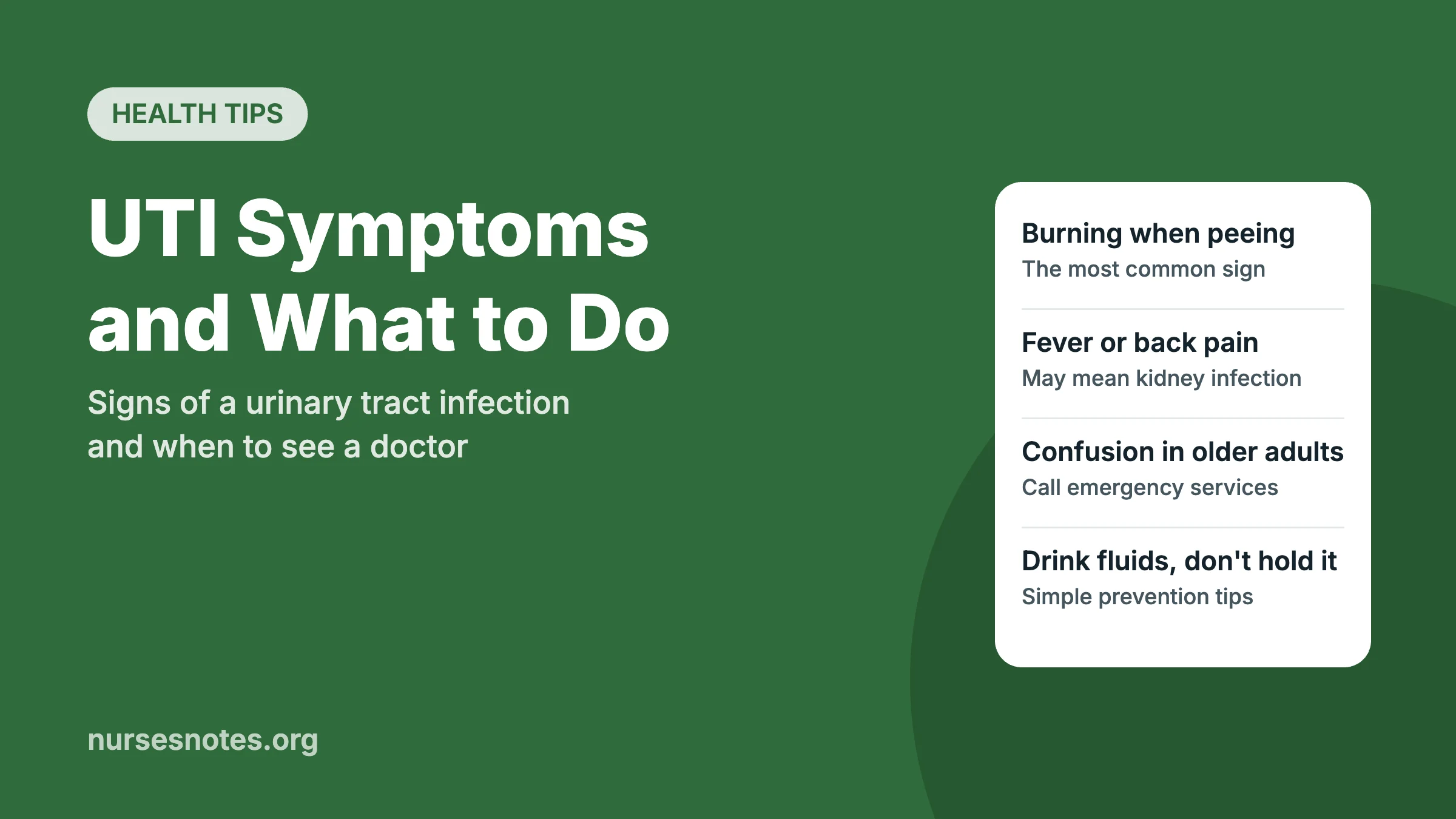
The most common UTI symptoms are pain or burning when you pee, needing to pee often or urgently, and cloudy or bloody urine. Most bladder infections are easy to treat, but fever, back pain, or confusion can mean the infection is more serious and needs a doctor quickly.
Key points
- A urinary tract infection (UTI) usually affects the bladder (cystitis); a kidney infection is less common but more serious.
- Older adults may show confusion or new incontinence instead of the usual burning and frequency.
- See a doctor urgently for fever, back or side pain, blood in the urine, pregnancy, or symptoms in a man, child, or older adult.
- Drinking enough fluids, peeing after sex, and not holding in urine can help prevent UTIs.
What is a urinary tract infection?
A UTI is an infection anywhere in the urinary system: the kidneys, ureters, bladder, or urethra. MedlinePlus notes that UTIs are among the most common infections in the body and that women get them about four times as often as men.
The CDC describes two main types. A bladder infection (cystitis) is the most common, while a kidney infection (pyelonephritis) is less common but more serious.
UTI symptoms in adults
According to the NHS and the CDC, a bladder infection often causes:
- Pain or burning when peeing
- Needing to pee more often, including at night
- A sudden, urgent need to pee, even when little comes out
- Cloudy urine or blood in the urine
- Pressure, cramping, or pain in the lower tummy
- Feeling tired, weak, or generally unwell
Dark or smelly urine on its own is often a sign of not drinking enough rather than an infection. If that sounds familiar, our guide to signs of dehydration in adults can help.
Kidney infection symptoms
An infection that spreads up to the kidneys tends to make people feel much more unwell. Watch for:
- Fever, chills, or shivering
- Pain in the lower back or side, just under the ribs
- Nausea or vomiting
- A very low temperature (below 36°C), which the NHS also lists as a warning sign
UTI symptoms in children and older adults
UTIs do not always look the same. In babies and young children, the NHS lists fever, irritability, not feeding or drinking well, wetting themselves or the bed, and vomiting.
In older or frail adults, people with dementia, and people with a urinary catheter, a UTI may show up as new confusion or agitation, worse-than-usual leaking of urine, or new shivering or shaking. For carers, a sudden change in behaviour is a reason to call a doctor or nurse.
Who is more likely to get a UTI?
The CDC lists these common risk factors:
- Being female, because the urethra is shorter and closer to the rectum
- Recent sexual activity (a UTI is not a sexually transmitted infection)
- Changes in vaginal bacteria, such as after menopause or with spermicide use
- Pregnancy
- Being an older adult or a young child
- Problems in the urinary tract, such as an enlarged prostate
- A previous UTI
MedlinePlus adds that people with diabetes, people who need a catheter to drain the bladder, and people with a spinal cord injury are also at higher risk.
How to ease UTI symptoms at home
Self-care can make you more comfortable while you arrange to see a doctor, nurse, or pharmacist:
- Rest and drink enough fluid to pass pale urine regularly.
- Use a simple painkiller such as paracetamol if it is safe for you, following the label.
- Cut down on drinks that can irritate the bladder, such as coffee, alcohol, and fruit juice.
- Do not rely on cranberry drinks or cystitis sachets to treat an infection; the NHS says there is no evidence they ease symptoms.
How UTIs are treated
A doctor may test a urine sample, although the NHS says this is not always needed. Treatment is usually a short course of antibiotics, and some people with mild symptoms may be advised to wait a day or two first.
If you are prescribed antibiotics, the CDC advises taking every dose as directed, not sharing or saving them, and contacting your provider if symptoms get worse, do not improve, or you have side effects. Never use leftover antibiotics from a previous illness.
How to prevent UTIs
- Drink plenty of fluids during the day.
- Pee as soon as you feel the need, and do not rush.
- Pee soon after sex.
- Wipe from front to back after using the toilet, and teach girls to do the same when potty training.
- Avoid scented soaps, douches, sprays, and powders around the genitals.
- Wear cotton underwear, and change soiled nappies or pads promptly.
For people who keep getting UTIs, the NHS says cranberry or D-mannose products may help some people. Check with a doctor first if you are pregnant, and avoid cranberry products if you take warfarin.
When to get medical help
Go to emergency care or call your local emergency number if you or someone you care for has a urinary infection with new confusion, drowsiness, or difficulty speaking. Do not drive yourself.
See a doctor urgently (the same day) if:
- There is fever, shivering, or back or side pain under the ribs
- There is blood in the urine
- The person is a man, a child, pregnant, or aged 65 or older
- The person has diabetes, a catheter, or a weakened immune system
- Symptoms get worse quickly or do not improve within 48 hours
- A baby under 3 months has a temperature of 38°C (100.4°F) or higher
You should also see a doctor if UTIs keep coming back, which the NHS defines as 2 in 6 months or 3 in 12 months.
Frequently asked questions
Can a UTI go away on its own?
Some mild bladder infections in otherwise healthy women improve on their own, and a doctor may suggest waiting 48 hours before starting antibiotics. However, a UTI should not be ignored. If symptoms worsen, or fever, back pain, or blood in the urine appears, see a doctor promptly because the infection may be spreading.
How do I know if a UTI has spread to my kidneys?
A kidney infection usually makes you feel much more unwell than a bladder infection. Warning signs include fever, chills or shivering, pain in your back or side under the ribs, and nausea or vomiting. These symptoms need a doctor the same day, because kidney infections can become serious if they are not treated.
Does cranberry juice cure a UTI?
No. The NHS says cranberry drinks have no evidence of easing symptoms or treating an infection that has already started. Cranberry products may help some people with repeated UTIs reduce how often they happen, but they can be high in sugar and should be avoided by people taking warfarin.
Related on Nurses Notes
- Signs of dehydration in adults and when to worry
- How to bring down a child’s fever safely at home
- More health tips
Sources
- Urinary tract infections (UTIs) (NHS, reviewed July 2025)
- Urinary Tract Infection Basics (Centers for Disease Control and Prevention, updated September 2026)
- Urinary Tract Infections (MedlinePlus, U.S. National Library of Medicine, updated June 2025)
This article is for education only and does not replace advice from your own doctor, nurse, or other qualified health professional.