On this page
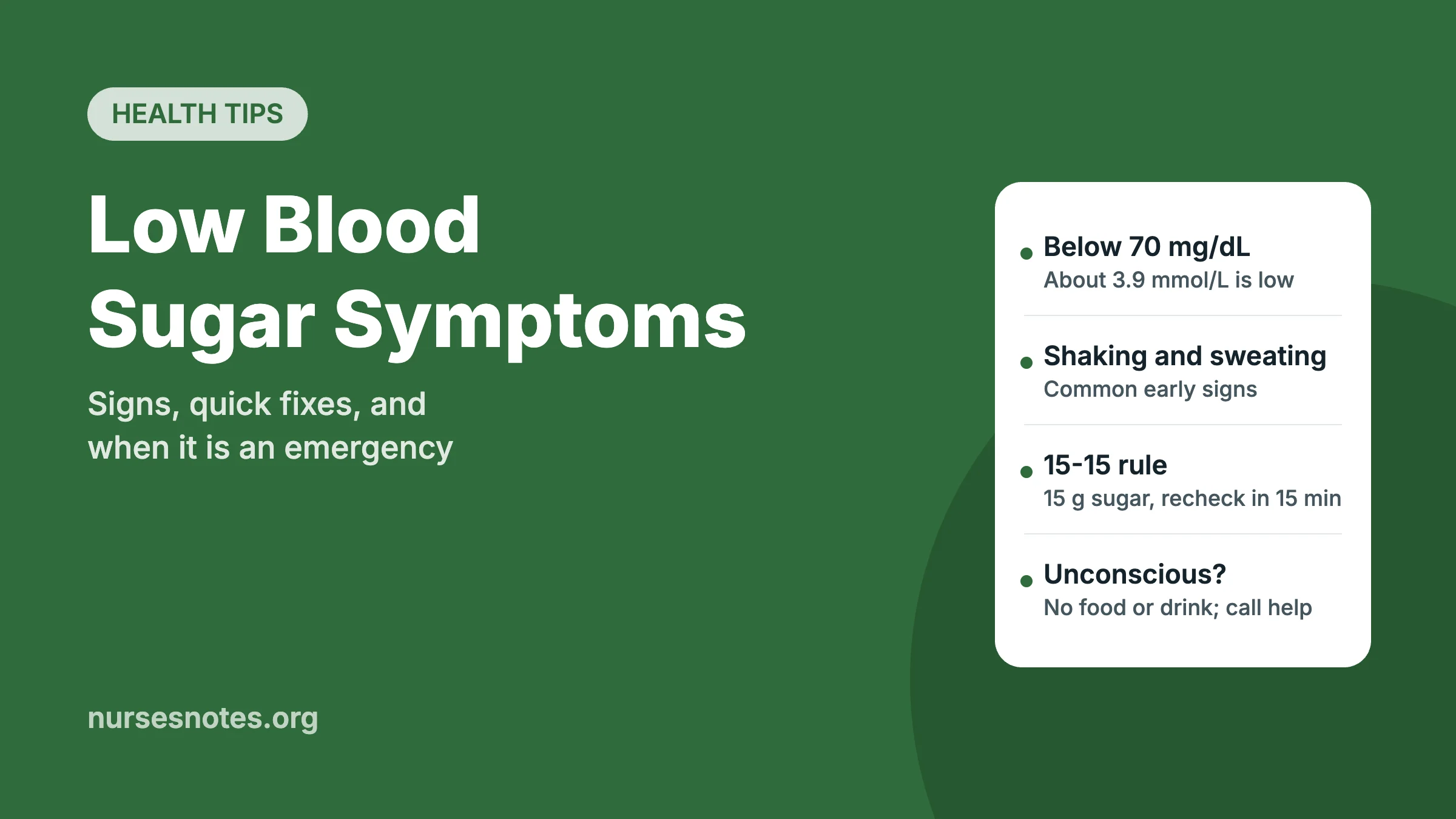
Low blood sugar symptoms usually start with shaking, sweating, a fast heartbeat, hunger, and feeling anxious or irritable, and they can progress to confusion, seizures, or fainting if the low is not treated. For most people with diabetes, low blood sugar (hypoglycemia) means a reading below 70 mg/dL (about 3.9 mmol/L), and it needs fast-acting sugar straight away.
Key points
- For people with diabetes, below 70 mg/dL (3.9 mmol/L) is low, and the CDC calls below 54 mg/dL severe.
- Early signs include shaking, sweating, a fast heartbeat, hunger, dizziness, and irritability.
- Treat with the 15-15 rule: 15 grams of fast-acting carbohydrate, wait 15 minutes, and recheck.
- Never give food or drink to someone who is unconscious; call your local emergency number.
What is low blood sugar?
Hypoglycemia happens when the glucose in your blood drops below the level your body and brain need to work well. It is most common in people with diabetes who use insulin or tablets that make the body release more insulin, such as sulfonylureas (for example gliclazide and glimepiride).
It can also happen in people without diabetes, but this is less common. Cleveland Clinic uses a cut-off of below 55 mg/dL (3.1 mmol/L) for people who do not have diabetes.
Low blood sugar levels
| Level | Blood sugar reading | Source |
|---|---|---|
| Low (people with diabetes) | Below 70 mg/dL (3.9 mmol/L) | CDC, Cleveland Clinic |
| Severe low | Below 54 mg/dL | CDC |
| UK guidance | Below 4 mmol/L | NHS |
| People without diabetes | Below 55 mg/dL (3.1 mmol/L) | Cleveland Clinic |
Signs and symptoms of low blood sugar
Early symptoms
- Shaking or trembling
- Sweating or chills
- Fast or pounding heartbeat
- Hunger
- Dizziness or light-headedness
- Anxiety, irritability, or confusion
- Tingling lips, blurred vision, or tiredness
Severe symptoms
- Weakness and trouble walking or seeing clearly
- Strange behaviour, slurred speech, or disorientation
- Seizures (fits)
- Passing out or being hard to wake
Symptoms at night
Lows can happen during sleep. Signs include nightmares or crying out, sweating enough to dampen pyjamas or sheets, and waking up tired, irritable, or confused.
Some people, especially those who have had diabetes for many years or have frequent lows, stop noticing the warning signs. This is called hypoglycemia unawareness, and it makes regular checks even more important.
Common causes
- Taking too much insulin, or insulin at the wrong time for your meal
- Not eating enough carbohydrate for your medicine dose
- Skipping or delaying a meal
- More physical activity than usual, which can lower glucose for up to 24 hours
- Drinking alcohol, especially without food
- Being sick, or changes to your usual routine
How to treat low blood sugar: the 15-15 rule
If you have diabetes and feel the signs of a low, act quickly. The NIDDK and Cleveland Clinic describe these steps:
- Check your blood sugar with a meter if you can.
- Eat or drink 15 grams of fast-acting carbohydrate (the NIDDK says 15 to 20 grams).
- Wait 15 minutes, then check again.
- If you are still below 70 mg/dL, have another 15 grams and recheck after 15 minutes. Repeat until you are back in range.
- Once your level is back up, have a snack such as crackers or fruit if your next meal is more than an hour away.
Examples of about 15 grams of fast-acting carbohydrate from the NIDDK:
- 4 glucose tablets or 1 tube of glucose gel
- Half a cup (4 ounces) of fruit juice, not a reduced-sugar type
- Half a can (4 to 6 ounces) of regular soda, not diet
- 1 tablespoon of sugar, honey, or corn syrup
People with kidney disease should choose apple, grape, or cranberry juice instead of orange juice because of its potassium. If you take medicines that slow carbohydrate digestion, use glucose tablets or gel. Children may need smaller amounts, so follow the plan from their diabetes team.
If someone is unconscious or very drowsy
- Do not give them anything to eat or drink.
- Put them in the recovery position.
- Give glucagon (injection or nasal form) if they have it and you have been shown how.
- Call your local emergency number.
- If they wake up and can swallow safely, give them a sugary drink or snack and stay with them until they have fully recovered.
How to prevent low blood sugar
- Eat regular meals and snacks, and do not skip meals.
- Always carry fast-acting sugar such as glucose tablets or a small juice box.
- Eat food whenever you drink alcohol.
- Check your blood sugar before, during, and after exercise, and before driving.
- Wear a medical ID and teach family, friends, or co-workers how to help.
- Ask your care team whether a continuous glucose monitor (CGM) or a change in medicine timing could help, especially if you work night shifts.
If you are still learning how different insulins behave, our types of insulin chart explains onset, peak, and duration.
When to get medical help
Call your local emergency number if the person:
- Is unconscious, cannot be woken, or has a seizure
- Does not improve within about 10 minutes of glucagon, or no glucagon is available
- Has been drinking alcohol and is not responding normally
See your doctor soon if you have frequent lows, lows at night, lows without warning signs, or symptoms of low blood sugar when you do not have diabetes.
Frequently asked questions
What blood sugar level is too low?
For most people with diabetes, a reading below 70 mg/dL (3.9 mmol/L) is low, and below 54 mg/dL is considered severe by the CDC. UK guidance uses below 4 mmol/L. Your own target may be different, so ask your doctor or diabetes team what level should prompt you to treat.
What should I eat when my blood sugar is low?
Choose something with fast-acting sugar, such as glucose tablets, glucose gel, half a cup of regular fruit juice, half a can of regular soda, or a tablespoon of sugar or honey. Recheck after 15 minutes and repeat if needed. Once you are back in range, have a snack if your next meal is more than an hour away.
Can you have low blood sugar without diabetes?
Yes, but it is much less common, and Cleveland Clinic uses a lower cut-off of 55 mg/dL (3.1 mmol/L) for people without diabetes. Heavy drinking without food is one possible trigger. If you get shaking, sweating, or confusion that eases after eating and you do not have diabetes, see a doctor so the cause can be checked properly.
Related on Nurses Notes
- Type 2 diabetes symptoms: early signs and when to see a doctor
- Types of insulin chart: onset, peak, and duration
- More health tips
Sources
- Low Blood Sugar (Hypoglycemia). Centers for Disease Control and Prevention (CDC), 2024.
- Low Blood Glucose (Hypoglycemia). National Institute of Diabetes and Digestive and Kidney Diseases (NIDDK), 2021.
- Low blood sugar (hypoglycaemia). NHS, 2023.
- Hypoglycemia (Low Blood Sugar). Cleveland Clinic, 2026.
This article is for education only and does not replace advice from your own doctor, nurse, or other qualified health professional.