On this page
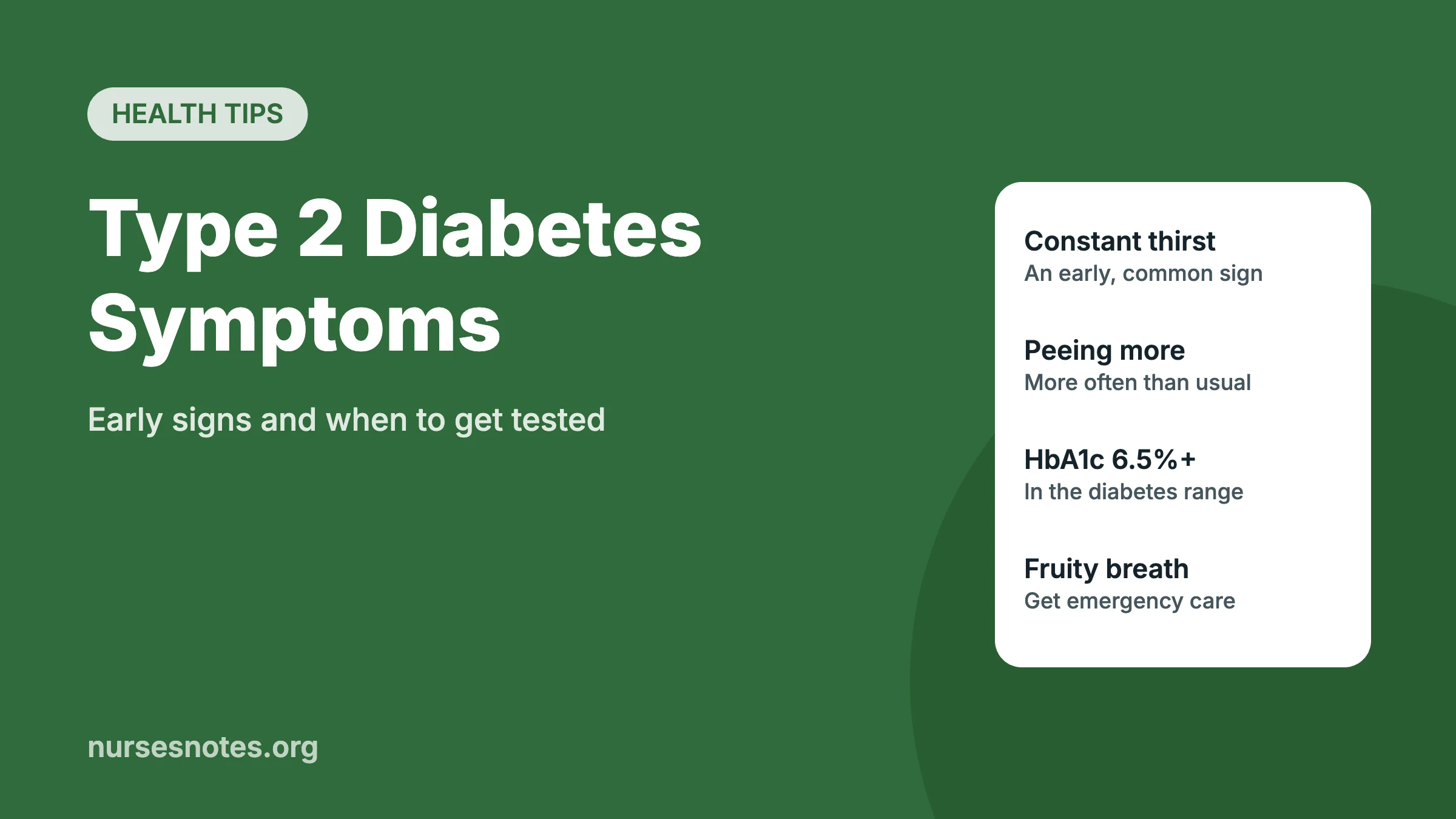
The most common type 2 diabetes symptoms are feeling very thirsty, passing urine more often than usual, feeling very tired, and losing weight without trying. Because these signs often build slowly over years, and some people have no symptoms at all, a simple blood test is the only reliable way to know.
Key points
- Type 2 diabetes often develops gradually, so many people miss the early signs.
- Watch for thirst, frequent urination, tiredness, blurred vision, slow-healing cuts, and repeated infections.
- Diabetes is confirmed with blood tests such as HbA1c or fasting glucose, usually repeated on a second day.
- Very high blood sugar with vomiting, fruity breath, or fast breathing needs emergency care.
What is type 2 diabetes?
Type 2 diabetes is a long-term condition in which blood sugar (glucose) stays too high because the body does not use insulin well or does not make enough of it. It usually starts in adulthood, but the CDC notes that more children and teens are now being diagnosed.
Common type 2 diabetes symptoms
The NHS lists four main symptoms:
- Feeling very tired
- Peeing more than usual
- Feeling thirsty all the time
- Losing weight without trying
Other early signs of diabetes
- Blurred vision
- Cuts, sores, or wounds that take longer to heal
- Itching around the genitals, or repeated thrush (yeast infections)
- Frequent urinary tract, gum, or skin infections
- Feeling hungrier than usual, or feeling irritable
- Dark, velvety patches of skin on the neck, armpits, or groin
- Numbness or tingling in the hands or feet
If you keep getting bladder infections, read our guide to UTI symptoms and mention any thirst or tiredness to your doctor too.
Who is at higher risk?
You are more likely to develop type 2 diabetes if you:
- Are over 40, or over 25 if you are from a South Asian, Chinese, Black African, or Black Caribbean background (NHS)
- Have a parent, brother, or sister with diabetes
- Are overweight and not very physically active
- Have high blood pressure
Mayo Clinic also notes a higher risk in people of Black, Hispanic, American Indian, and Asian American backgrounds. If you are at higher risk, ask about testing even if you feel well.
How type 2 diabetes is diagnosed
Diagnosis needs a blood test, not symptoms alone. A result in the diabetes range is usually repeated on a second day before a diagnosis is made.
| Test | Normal | Prediabetes | Diabetes |
|---|---|---|---|
| HbA1c | Below 5.7% | 5.7% to 6.4% | 6.5% or higher |
| Fasting plasma glucose | Below 100 mg/dL (about 5.6 mmol/L) | 100 to 125 mg/dL (about 5.6 to 6.9 mmol/L) | 126 mg/dL or higher (about 7.0 mmol/L) |
| 2-hour glucose (OGTT) | Below 140 mg/dL (about 7.8 mmol/L) | 140 to 199 mg/dL (about 7.8 to 11.0 mmol/L) | 200 mg/dL or higher (about 11.1 mmol/L) |
| Random plasma glucose | – | – | 200 mg/dL or higher with classic symptoms |
What to do if you notice symptoms
- Book a check-up. See your doctor or local health centre and say which symptoms you have noticed and for how long.
- Ask for a blood test. A home glucose meter cannot diagnose diabetes; fasting and OGTT tests should be done by a laboratory.
- Bring your history. Mention family members with diabetes, past high blood pressure, or diabetes in pregnancy.
- Start healthy changes now. They help whatever the result.
How to lower your risk
- Aim for about 150 minutes of moderate activity a week, such as brisk walking.
- Eat more vegetables, fruit, and whole grains, and fewer high-fat, high-calorie foods.
- If you are overweight, Mayo Clinic notes that losing even 7% of your body weight can lower your risk.
- If you have prediabetes, have your blood sugar checked at least once a year.
- Keep your blood pressure in check too; see how to lower blood pressure naturally.
When to get medical help
See a doctor soon if you have any of the symptoms above or are in a higher-risk group. Go to the emergency department or call your local emergency number right away if you or someone with diabetes has:
- Blood sugar that stays at 300 mg/dL (about 16.7 mmol/L) or above
- Breath that smells fruity
- Vomiting and cannot keep food or fluids down
- Fast, deep breathing or trouble breathing
- Several signs at once, such as extreme thirst, very frequent urination, stomach pain, and extreme tiredness
These can be signs of diabetic ketoacidosis (DKA), a medical emergency.
Frequently asked questions
What are the first signs of type 2 diabetes?
The first signs are often mild: feeling thirsty, passing urine more often, and feeling unusually tired. Some people notice blurred vision, slow-healing cuts, or repeated thrush. Many people have no symptoms at first, which is why people at higher risk should ask their doctor about a blood test even when they feel well.
Can you have type 2 diabetes without symptoms?
Yes. The CDC explains that type 2 diabetes symptoms often take several years to develop, and some people never notice any. That means blood sugar can stay high for a long time without you realising. Regular check-ups and blood tests are the best way to find it early, especially if you have risk factors.
What HbA1c level means diabetes?
An HbA1c of 6.5% or higher is in the diabetes range, while 5.7% to 6.4% suggests prediabetes and below 5.7% is considered normal. A diagnosis is usually confirmed with a repeat test. Laboratories and countries may use slightly different methods, so always discuss your own result with your doctor.
Related on Nurses Notes
- Types of insulin chart: onset, peak, and duration
- How to lower blood pressure naturally: 9 evidence-based steps
- UTI symptoms: signs of a urinary tract infection and what to do
- More health tips
Sources
- Symptoms of type 2 diabetes and how it’s diagnosed – NHS, reviewed 2025
- Symptoms of Diabetes – Centers for Disease Control and Prevention (CDC), 2024
- Diabetic Ketoacidosis – CDC, 2024
- Diabetes – Symptoms and causes – Mayo Clinic, 2026
- Diabetes & Prediabetes Tests – NIDDK, National Institutes of Health, 2020
- Diabetes Diagnosis – American Diabetes Association
This article is for education only and does not replace advice from your own doctor, nurse, or other qualified health professional.