
On this page
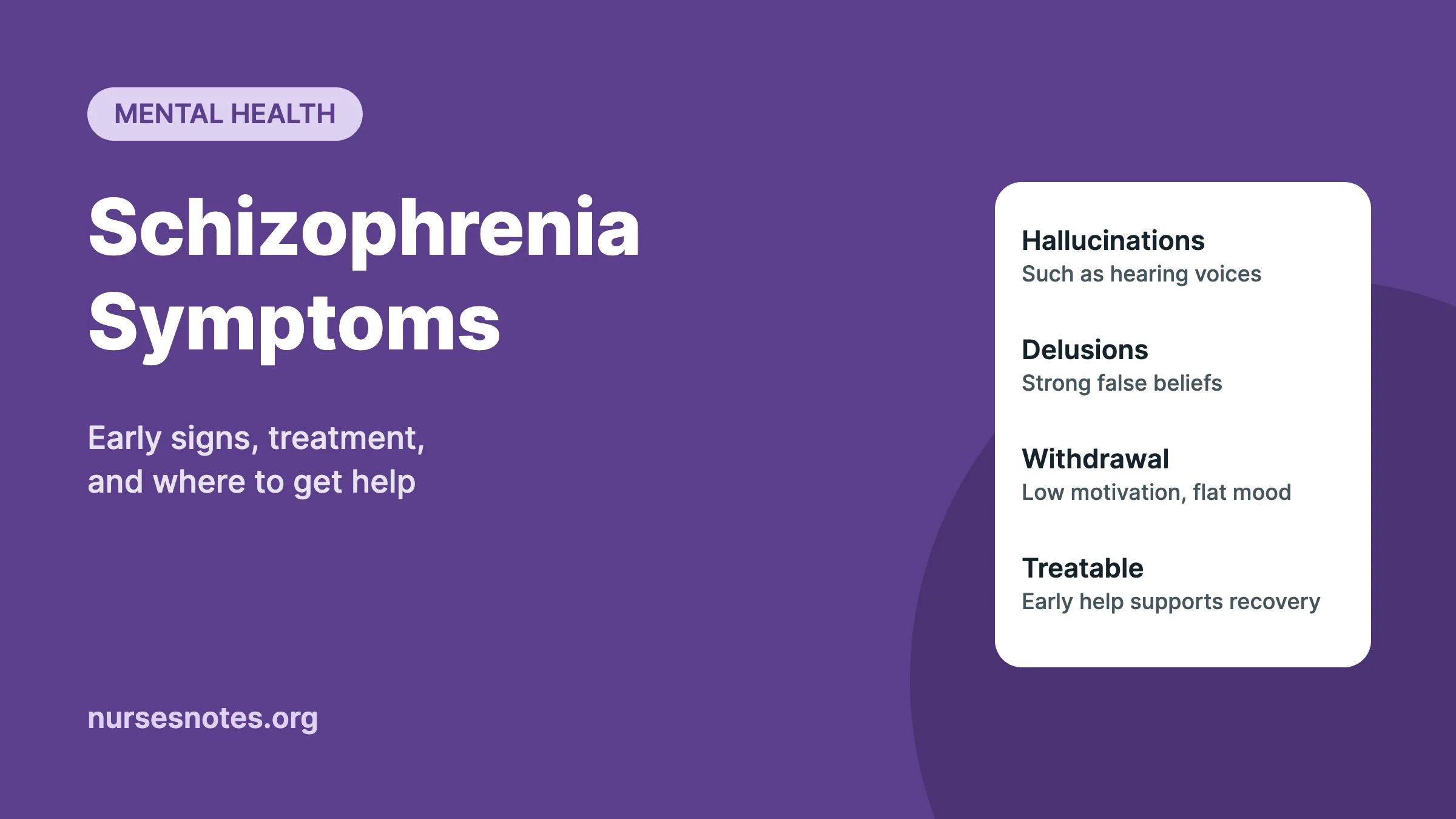
Schizophrenia symptoms fall into three groups: psychotic symptoms such as hallucinations, delusions, and confused thinking; negative symptoms such as low motivation, flat emotions, and withdrawing from others; and cognitive symptoms such as trouble with memory and concentration. Schizophrenia is a serious but treatable mental illness, and with the right care many people go on to study, work, and live full lives.
Key points
- Hearing voices and holding fixed false beliefs (delusions) are common psychotic symptoms.
- Early changes, such as withdrawal, poor sleep, and falling behind at school or work, can appear months or years before a first episode.
- It is usually diagnosed between the ages of 16 and 30.
- Treatment with medicine, talking therapies, and family support works best when it starts early.
What is schizophrenia?
Schizophrenia is a mental illness that affects how a person thinks, feels, and behaves. During an episode, a person may seem to lose touch with reality, which doctors call psychosis.
It is not rare. The World Health Organization estimates that about 1 in 300 people worldwide (around 27 million) live with schizophrenia. It is usually diagnosed between the ages of 16 and 30, and tends to start earlier in men than in women.
Schizophrenia is not the same as having a “split personality,” and most people with the condition are not violent.
Psychotic (positive) symptoms
These are experiences or beliefs that add to a person’s usual way of thinking. They can feel completely real to the person.
- Hallucinations: hearing, seeing, or feeling things that are not there. Hearing voices is the most common, and the NHS notes the voices are often critical or unkind.
- Delusions: strong beliefs that are not based on reality, such as believing you are being watched, followed, or poisoned, or that the TV is sending you special messages.
- Disorganised thinking and speech: jumping between unrelated ideas, stopping mid-sentence, or speech that is hard to follow.
- Feeling controlled: a sense that thoughts or actions are being controlled by someone or something else.
Negative symptoms
Negative symptoms describe a loss of usual abilities and interests. They can be mistaken for depression or laziness.
- Loss of motivation and interest in everyday activities
- Trouble starting or finishing routine tasks, such as shopping or self-care
- A flat voice and limited facial expression
- Pulling away from friends, family, and social life
- Very low energy and speaking very little
Cognitive symptoms
Many people have problems with attention, concentration, and memory. They may find it hard to take in information, make decisions, or use what they have just learned. NIMH notes that these thinking problems are one of the best predictors of how well a person manages day to day.
Early warning signs
Schizophrenia often develops gradually. Before a first episode of psychosis, there is often a period of months or even years when changes slowly build up. Signs can include:
- Withdrawing from friends, family, and activities
- Changes in sleep
- Losing interest in school, work, or personal hygiene
- Trouble thinking clearly or concentrating
- Feeling flat or disconnected from emotions
Because these signs often start in the teenage years, they can be mistaken for a “phase.” If changes like these last or get worse, it is worth talking to a doctor early.
How schizophrenia is treated
Treatment helps reduce symptoms and supports recovery. A doctor or mental health team will tailor care to the person, and it usually combines:
- Antipsychotic medicines to reduce the intensity and frequency of psychotic symptoms. NIMH advises never stopping a medicine without first talking to a health care provider.
- Talking therapies such as cognitive behavioural therapy (CBT).
- Skills training, supported employment, and education support to help with daily life, work, and study.
- Family education and support so loved ones can understand the illness and help.
- Coordinated specialty care for a first episode of psychosis, where a team works together with the person on treatment and goals.
The outlook is hopeful. WHO notes that at least one in three people with schizophrenia will fully recover, and many others manage their symptoms well with ongoing support.
How to support someone with schizophrenia
- Encourage them to get help and to stay in treatment. Offer to help book or attend appointments.
- Remember that their voices or beliefs feel very real to them. Stay calm and respectful rather than arguing.
- Be kind and supportive, while still being clear about behaviour that is unsafe.
- Look after yourself too. Family support groups and education programmes can help, and our article on caregiver burnout has practical tips.
When to get help
See a doctor if you or someone you care about notice possible schizophrenia symptoms, especially new hallucinations, unusual beliefs, or a big change in behaviour. Our guide on how to talk to your doctor about mental health can help you start that conversation.
Get urgent help straight away if someone is in danger of harming themselves or others, is very distressed, or cannot look after their basic needs.
Where to get help
If you or someone you love is in crisis or thinking about suicide, you are not alone, and help is available right now.
- Philippines: NCMH Crisis Hotline 1553 or 0917-899-8727, available 24/7
- USA: call or text 988 (988 Suicide & Crisis Lifeline), or chat at 988lifeline.org
- UK: Samaritans 116 123, free and open 24 hours a day
- Anywhere: call your local emergency number if someone is in immediate danger
Frequently asked questions
What are the first signs of schizophrenia?
The first signs are often subtle and come on slowly. They may include pulling away from friends and family, changes in sleep, falling behind at school or work, losing interest in self-care, and trouble concentrating. These signs can have many causes, so a doctor’s assessment is the best next step.
Can schizophrenia be cured?
There is no single cure, but schizophrenia is treatable, and recovery is possible. WHO notes that at least one in three people will fully recover, while others have periods with few or no symptoms. Medicine, talking therapies, and practical support work best when started early and continued with the guidance of a mental health team.
Is schizophrenia the same as split personality?
No. Schizophrenia does not mean having two or more personalities. That is a different and much rarer condition called dissociative identity disorder. Schizophrenia affects how a person perceives reality, thinks, and feels, and it can involve hallucinations, delusions, and low motivation. Using accurate words helps reduce stigma and encourages people to seek help.
Related on Nurses Notes
- Bipolar disorder symptoms
- How to talk to your doctor about mental health
- Caregiver burnout: signs and coping tips
- What is cognitive behavioural therapy?
- All Mental Health articles
Sources
- Schizophrenia, National Institute of Mental Health (revised 2024)
- Schizophrenia, National Institute of Mental Health (reviewed December 2024)
- Symptoms – Schizophrenia, NHS (reviewed April 2023)
- Schizophrenia, World Health Organization (September 2026)
- DOH, Sin Tax Coalition urge alcohol control as over 27,000 related deaths were recorded, Department of Health Philippines (2024)
- DOH: Mind your mental health; health organizations offer remote care services, Department of Health Philippines (2020)
- 988 Suicide & Crisis Lifeline, 988 Lifeline
- Contact a Samaritan, Samaritans
This article is for education only and does not replace advice from your own doctor, nurse, or other qualified health professional.