
On this page
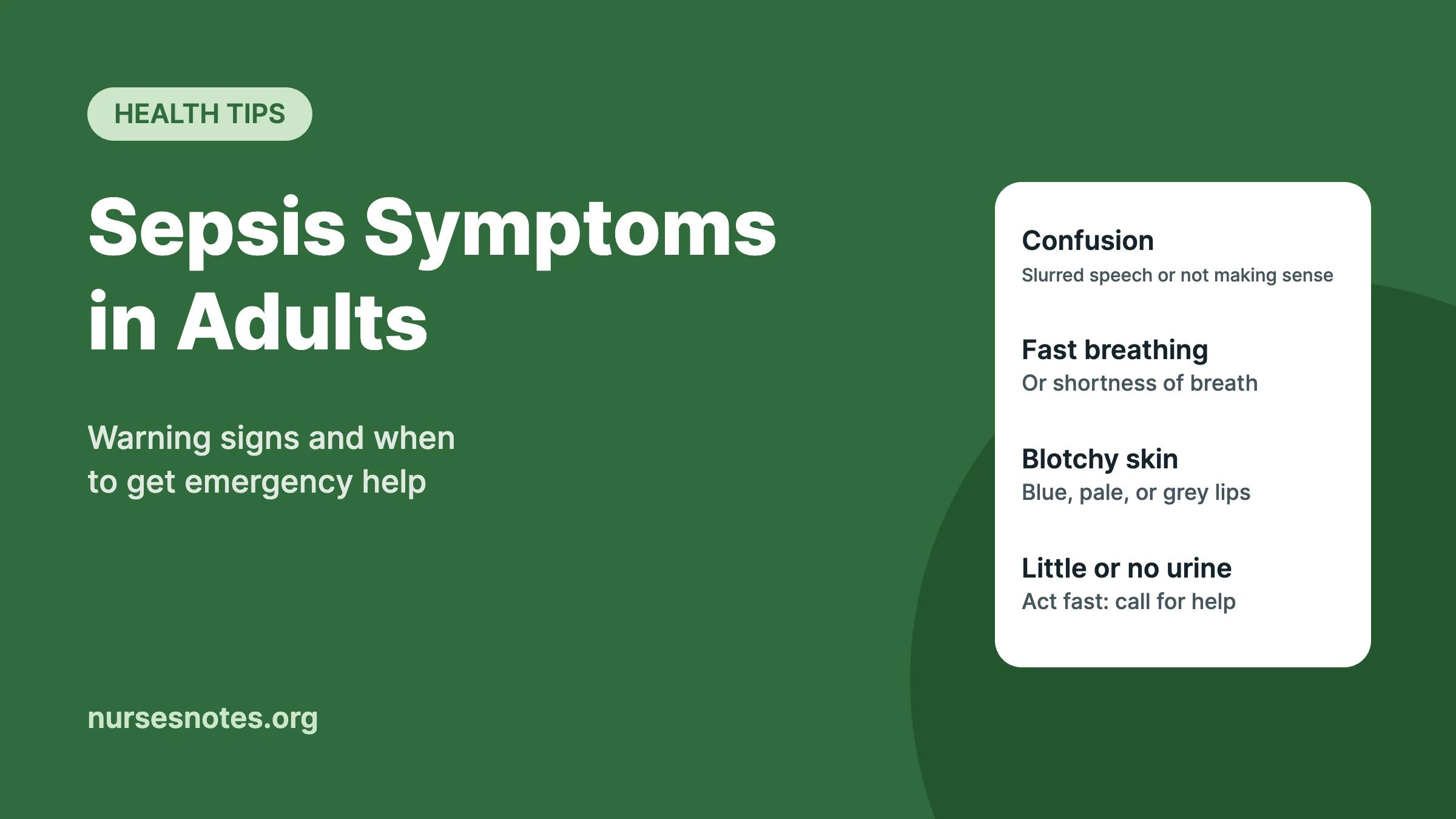
Sepsis symptoms in adults include confusion or slurred speech, fast breathing or breathlessness, a very high or very low temperature with shivering, clammy, pale, or blotchy skin, a racing heart or weak pulse, and passing little or no urine. Sepsis is the body’s extreme response to an infection, and it is a medical emergency that needs hospital treatment straight away.
Key points
- Sepsis can start from any infection, most often in the lungs, urinary tract, skin, or gut.
- Confusion, fast breathing, mottled or bluish skin, and very low urine output are red flags.
- Older adults, babies, pregnant women, and people with weak immunity or long-term illness are at higher risk.
- If you suspect sepsis, call your local emergency number or go to the emergency department now.
What is sepsis?
Sepsis happens when the immune system overreacts to an infection and starts to damage the body’s own tissues and organs. Without fast treatment it can lead to septic shock, organ failure, and death.
It is common worldwide. The World Health Organization reports data published in 2020 showing about 48.9 million cases and 11 million sepsis-related deaths in a single year, around 1 in 5 of all deaths globally. In the USA, the CDC estimates that at least 1.7 million adults develop sepsis each year.
Signs and symptoms of sepsis
Sepsis can look different from person to person, and symptoms may develop quickly. Common signs listed by the NHS, CDC, and WHO include:
- Confusion, disorientation, slurred speech, or not making sense
- Breathing very fast, or shortness of breath
- Fever, or a low temperature, with shivering or feeling very cold
- Clammy or sweaty skin
- Blue, pale, grey, or blotchy skin, lips, or tongue
- A high heart rate or a weak pulse
- Extreme pain, discomfort, or muscle aches
- Passing very little urine, or none all day
Older adults often do not get a high fever, so confusion or sudden weakness may be the first clue. A rash that does not fade when you press on it is also an emergency sign.
What causes sepsis?
Any infection can trigger sepsis. Bacterial infections cause most cases, but viral infections (such as influenza) and fungal infections can too. Common starting points include:
- Pneumonia and other chest infections
- Urinary tract and kidney infections (see UTI symptoms)
- Abdominal infections such as appendicitis
- Skin infections such as cellulitis, and infected cuts, burns, or wounds
Who is at higher risk?
Anyone can get sepsis, but the risk is higher for:
- Adults aged 65 or older, and babies under 1 year
- People who are pregnant or have recently given birth, miscarried, or had an abortion
- People with diabetes, cancer, kidney disease, obesity, or liver cirrhosis
- People with a weakened immune system, for example from HIV, chemotherapy, or steroid medicines
- People with catheters, IV lines, or breathing tubes, and people already in hospital
- People with large burns, wounds, or skin infections
When to get medical help
Call your local emergency number or go to the emergency department now if an adult:
- Is breathing very fast
- Is confused, has slurred speech, or is not making sense
- Has blue, pale, or blotchy skin, lips, or tongue
- Has a very high or very low temperature, feels hot or cold to the touch, or is shivering
- Has a rash that does not fade when pressed
- Has other symptoms that make you worried it might be sepsis
The NHS advises not to drive yourself to the emergency department if you might have sepsis. If you have an infection that is not improving, or you feel much worse than expected, see a doctor the same day and ask, “Could this be sepsis?”
How sepsis is treated
Sepsis is treated in hospital, and the sooner treatment starts, the better the chance of recovery. Care usually includes:
- Antibiotics given as early as possible, often into a vein
- IV fluids to support blood pressure and blood flow to organs
- Oxygen, and sometimes medicines called vasopressors to raise blood pressure
- Intensive care for organ support, such as dialysis or a breathing machine, in severe cases
- Surgery in some cases to remove infected or damaged tissue
How to lower your risk
- Wash your hands well and often with soap and water.
- Keep cuts and wounds clean and covered until they heal.
- Stay up to date with vaccines recommended by your local health authority.
- Keep long-term conditions such as diabetes under good control with regular check-ups.
- Get medical care early for infections that are getting worse instead of better.
- Use antibiotics only when a doctor prescribes them, and take them exactly as instructed.
Recovery after sepsis
Many people recover fully, but recovery can take weeks or months. Some develop post-sepsis syndrome, with tiredness, poor sleep, body aches, poor concentration, anxiety, or low mood. The NHS notes these effects often last 6 to 18 months, and survivors are more likely to get infections again, so follow-up with your doctor matters.
Frequently asked questions
What are the first signs of sepsis?
Early sepsis symptoms often include fever or a low temperature with shivering, a fast heartbeat, fast breathing, and feeling very unwell, with clammy skin or severe aches. In older adults, new confusion may be the first sign. Anyone with an infection who develops these symptoms should get urgent medical help without waiting to see if it improves.
Can sepsis happen without a fever?
Yes. Some people with sepsis have a normal or low body temperature rather than a fever, and the NHS notes that a high temperature is less common in older adults. A low temperature, feeling cold to the touch, or shivering can all be warning signs, so do not rule out sepsis just because the thermometer reading is normal.
How fast does sepsis develop?
Sepsis can develop quickly, sometimes within hours, which is why it is treated as an emergency. Symptoms can change over a short time, so keep watching anyone with an infection who seems to be getting worse. If someone with an infection suddenly gets worse, becomes confused, or struggles to breathe, call your local emergency number straight away.
Related on Nurses Notes
- UTI symptoms and when to see a doctor
- Normal vital signs for adults and children
- Nursing care plan for pneumonia
- All Health Tips
Sources
- Sepsis, NHS (reviewed May 2026)
- About Sepsis, Centers for Disease Control and Prevention (updated August 2026)
- Sepsis, World Health Organization (May 2024)
- Sepsis: Symptoms, Causes, Treatment & Prevention, Cleveland Clinic (updated February 2026)
This article is for education only and does not replace advice from your own doctor, nurse, or other qualified health professional.