On this page
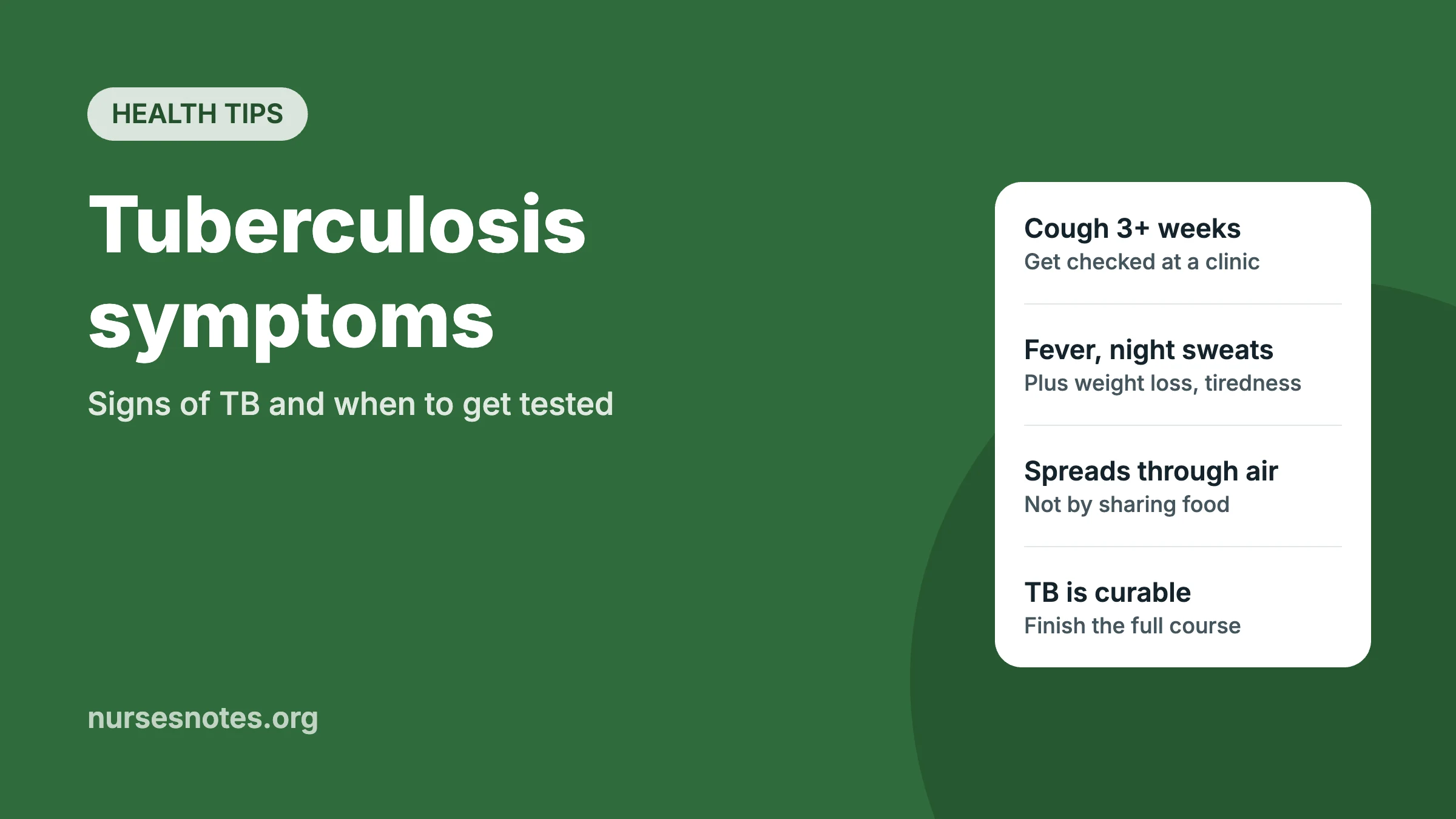
The most common tuberculosis symptoms are a cough that lasts three weeks or longer, coughing up phlegm or blood, chest pain, fever, night sweats, weight loss, and tiredness. TB is preventable and curable, and in the Philippines, testing and treatment are free at government DOTS facilities, including many local health centres.
Key points
- A long-lasting cough is the classic sign; CDC and NHS use three weeks as the point to get checked.
- TB spreads through the air when someone with active lung TB coughs, speaks, or sings, not through shaking hands, sharing food, or touching surfaces.
- Latent TB causes no symptoms and cannot spread, but it can turn into active TB later.
- Treatment means taking medicines every day for several months, and finishing the full course prevents drug-resistant TB.
What is tuberculosis?
Tuberculosis (TB) is an infection caused by bacteria that most often attacks the lungs, though it can affect other parts of the body. The World Health Organization (WHO) estimates that about a quarter of the world’s population has been infected, and only about 5–10% of them go on to develop TB disease.
TB remains a major problem in Asia. According to WHO’s 2026 fact sheet, the Philippines accounted for 6.8% of the world’s new TB cases in 2024, the third-highest share after India and Indonesia.
Tuberculosis symptoms in adults
Symptoms of TB in the lungs usually start slowly and worsen over weeks. WHO notes they can stay mild for many months, which is why people often delay getting checked.
- A cough lasting three weeks or longer
- Coughing up phlegm, sometimes with blood
- Chest pain
- Fever, chills, and night sweats
- Weight loss and loss of appetite
- Weakness and tiredness
Signs of TB outside the lungs
TB can also affect the lymph nodes, kidneys, spine, or brain. CDC lists swollen lymph nodes, blood in the urine, back pain, and headache or confusion as possible signs, depending on where the infection is.
TB symptoms in children
Mayo Clinic notes that teenagers have symptoms similar to adults. Younger children may have a fever that does not go away and weight loss, while babies may simply fail to grow or gain weight. A baby who is very drowsy, unusually fussy, vomiting, feeding poorly, or has a bulging soft spot needs urgent medical care.
Latent TB vs active TB
| Latent TB infection | Active TB disease | |
|---|---|---|
| Symptoms | None; the person feels well | Cough, fever, night sweats, weight loss, and others |
| Can it spread? | No | Yes, when it affects the lungs or throat |
| Treatment | Preventive medicine may be offered to stop it becoming active | A full course of several TB medicines |
How TB spreads, and how it does not
TB germs are released into the air when a person with active TB of the lungs or throat coughs, speaks, or sings. CDC explains that the germs can stay in the air for several hours, especially in crowded rooms with poor ventilation. Infection usually needs close contact over a long time, such as living with someone who has TB.
According to CDC, you cannot catch TB by shaking hands, sharing food or drinks, touching bed linen or toilet seats, sharing toothbrushes, or kissing.
Who is at higher risk?
- People living with HIV (WHO says they are 12 times more likely to fall ill with TB)
- People with diabetes, undernutrition, or a weak immune system
- People who smoke or drink alcohol harmfully
- Household and close contacts of someone with TB
- People in crowded living conditions, older adults, and young children
- Health workers, which makes good infection control vital. Our PPE donning and doffing guide covers the basics.
How to get tested and treated
- See a doctor or visit your health centre if you have symptoms or live with someone who has TB.
- Expect tests such as a sputum (phlegm) test, a chest X-ray, and sometimes a skin or blood test. WHO recommends rapid molecular tests as the first test.
- Take every dose. Active TB is treated with daily medicines for several months; WHO gives 4–6 months, and NHS says at least six months. Your doctor will set the exact plan.
- Finish the course even when you feel better. Stopping early can lead to drug-resistant TB.
- Protect others early on by covering coughs and keeping rooms well ventilated. Mayo Clinic notes that people on treatment usually can no longer spread TB after two to three weeks.
In the Philippines, the Department of Health (DOH) runs TB DOTS (directly observed treatment) through thousands of facilities, including rural health units and health centres, and states that patients have the right to correct and free treatment.
When to get medical help
See a doctor soon if you have a cough for three weeks or more, ongoing fever or night sweats, or weight loss you cannot explain. A cough that has lasted a while may also be something else, so our flu vs cold guide can help you compare. Go to emergency care right away for any of these red flags:
- Coughing up blood
- Difficulty breathing or chest pain
- A severe headache with a stiff neck, confusion, or a seizure
- Sudden weakness in the arms or legs
Frequently asked questions
How long does a TB cough last?
A TB cough usually persists and does not go away on its own. CDC and NHS advise getting checked for a cough that lasts three weeks or longer, especially with fever, night sweats, or weight loss. Do not wait for blood to appear; early testing makes treatment easier and protects your family.
Is TB curable?
Yes. WHO states that TB is preventable and curable. Most people recover fully when they take the prescribed medicines every day for the whole course, usually several months. Stopping too soon can make the bacteria resistant to medicines, which is much harder to treat, so keep going even after you feel better.
Can I get TB from sharing utensils?
No. CDC says TB is not spread by sharing food or drinks, shaking hands, kissing, or touching surfaces. It spreads through the air from someone with active lung TB, usually after long, close contact indoors. Good ventilation and covering coughs help reduce the risk at home.
Related on Nurses Notes
- Flu vs cold symptoms: how to tell the difference
- Type 2 diabetes symptoms
- PPE donning and doffing sequence
- More health tips
Sources
- Tuberculosis, World Health Organization fact sheet, March 2026
- Signs and Symptoms of Tuberculosis, CDC, 2024
- About Tuberculosis, CDC, 2024
- Exposure to Tuberculosis, CDC, 2024
- Tuberculosis (TB), NHS, reviewed September 2026
- Tuberculosis – Symptoms and causes, Mayo Clinic, 2025
- About Tuberculosis, Department of Health Philippines
- Facilities, DOH National Tuberculosis Control Program
This article is for education only and does not replace advice from your own doctor, nurse, or other qualified health professional.