On this page
Flu vs cold symptoms overlap, but flu usually hits suddenly with fever, body aches, exhaustion, and headache, while a cold builds over a day or two and mainly affects your nose and throat. Because the two can look alike, symptoms alone cannot always tell them apart, and only a test can confirm flu.
Key points
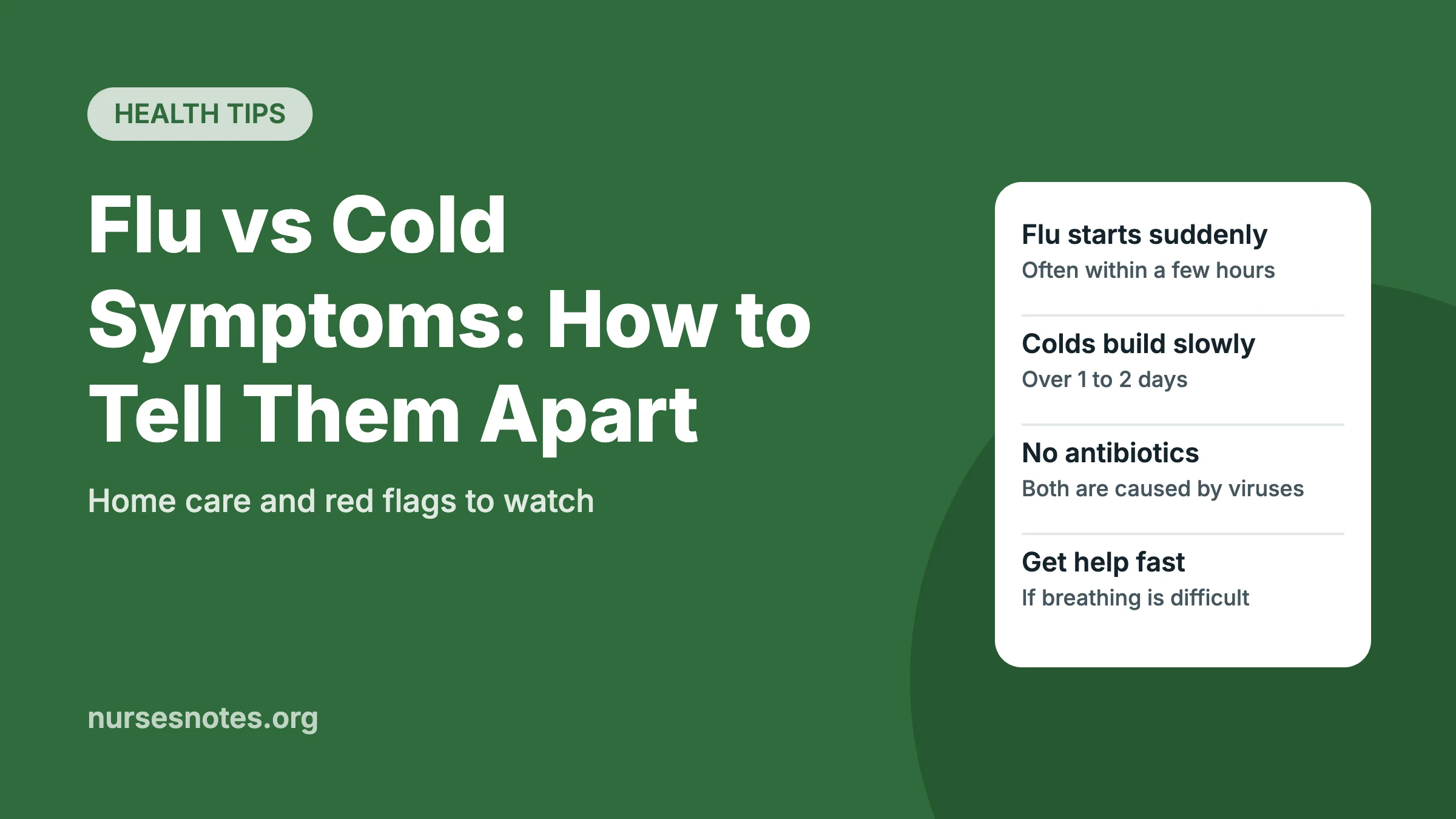
- Flu comes on fast, often within a few hours; a cold usually develops over 1 to 2 days.
- Flu tends to be more intense and is more likely to cause complications such as pneumonia.
- Both are caused by viruses, so antibiotics do not help either one.
- Get urgent help for breathing difficulty, chest pain, confusion, or symptoms that improve and then come back worse.
Flu vs cold symptoms at a glance
| Feature | Common cold | Flu (influenza) |
|---|---|---|
| Cause | Several viruses, such as rhinoviruses | Influenza viruses only |
| Onset | Gradual, over 1 to 2 days | Sudden, often within a few hours |
| Main symptoms | Stuffy or runny nose, sore throat | Fever or chills, body aches, tiredness, dry cough, headache |
| How you feel | Usually mild; you can often carry on | Often too unwell to do normal activities |
| Complications | Rarely serious | Can lead to pneumonia, sepsis, or worsening of asthma or heart disease |
Common flu symptoms
The CDC and NHS list these as typical flu symptoms:
- Sudden fever or feeling hot, cold, or shivery (not everyone with flu has a fever)
- Muscle or body aches
- Tiredness or exhaustion
- Dry cough, sore throat, and headache
- Runny or stuffy nose
- Poor sleep and loss of appetite
Children may also have ear pain, sore eyes, swollen glands, or vomiting and diarrhea, and they may seem less active than usual.
In dengue-prone countries such as the Philippines, a sudden high fever with body aches is not always flu. If you are unsure, read our guide to dengue warning signs and see a doctor early.
Common cold symptoms
A cold mainly affects the nose and throat. Expect a blocked or runny nose and a sore or scratchy throat. Colds are generally milder than flu and rarely lead to serious problems such as pneumonia or hospital care.
How to care for a cold or flu at home
- Rest and sleep. Stay home while you have a fever or feel too unwell for normal activities.
- Drink enough fluids. Your urine should be pale yellow or clear. See signs of dehydration in adults if you are not sure.
- Ease fever and aches. Adults can use paracetamol or ibuprofen as directed on the label. For children, check the product packaging or ask a pharmacist or doctor, because doses depend on the child’s weight and the product.
- Avoid doubling up. Many cold and flu remedies already contain paracetamol, so read labels to avoid taking too much.
- Skip aspirin for children. The NHS advises not giving aspirin to anyone under 16.
- Do not expect antibiotics. Colds and flu are viral, so antibiotics do not work for them.
How to avoid spreading it
- Wash your hands often with soap and warm water.
- Cover coughs and sneezes with a tissue, or use the inside of your elbow.
- Throw used tissues away promptly.
- Stay away from others while you are most infectious. The NHS notes this is the first 5 days of flu.
A yearly flu vaccine is the best way to lower your risk of flu. Read our update on the DOH flu vaccine rollout for the Philippines.
Who is at higher risk from flu?
Flu can be more serious for people aged 65 or over, pregnant women and those who have recently given birth, and people with long-term conditions such as diabetes or heart, lung, liver, or kidney disease. People with a weakened immune system are also at higher risk. If you are in one of these groups, contact a doctor early.
When to get medical help
Get urgent medical advice if you or your child have flu symptoms and:
- You are worried about a baby or child.
- You feel very unwell or short of breath.
- Your symptoms have not improved after 7 days.
- You have a long-term condition that is getting worse.
Go to emergency care or call your local emergency number for any of these red flags:
- Trouble breathing, gasping, or being unable to speak in full sentences
- Chest or abdominal pain or pressure that does not go away, or coughing up blood
- Ongoing dizziness, confusion, or being hard to wake
- Seizures, or not passing urine
- Severe muscle pain, weakness, or unsteadiness
- Fever or cough that improves and then returns or gets worse
- In children: fast or difficult breathing, bluish lips or face, ribs pulling in with each breath, signs of dehydration (no tears, dry mouth, or very little urine), or not being alert
- Any fever in a baby under 12 weeks old, or a fever above 40 °C (104 °F) that does not come down with medicine
Frequently asked questions
Can you have the flu without a fever?
Yes. The CDC notes that not everyone with flu has a fever. You can still have flu if you develop sudden body aches, tiredness, cough, sore throat, and headache. If you are in a higher-risk group or unsure, a doctor can test you, because symptoms alone cannot reliably separate flu from a cold.
How long is the flu contagious?
The NHS says you are most infectious in the first 5 days after your symptoms begin. Stay home and avoid close contact with others while you have a fever or feel too unwell for normal activities. Washing your hands and covering coughs and sneezes help protect the people around you.
Do antibiotics help a cold or the flu?
No. Colds and flu are caused by viruses, and antibiotics only work against bacteria, so they will not help you recover faster. A doctor may prescribe antibiotics only if a bacterial complication develops, such as some chest or ear infections. Rest, fluids, and symptom relief are the mainstays of home care.
Related on Nurses Notes
- DOH flu vaccine 2026: rollout and who should get it
- Signs of dehydration in adults and what to do
- Dengue warning signs: when to go to the hospital
- More health tips
Sources
- Cold Versus Flu. Centers for Disease Control and Prevention (CDC), reviewed August 2024.
- Signs and Symptoms of Flu. Centers for Disease Control and Prevention (CDC), 2024 (updated 2025).
- Flu. NHS (UK), reviewed February 2026.
This article is for education only and does not replace advice from your own doctor, nurse, or other qualified health professional.