
On this page
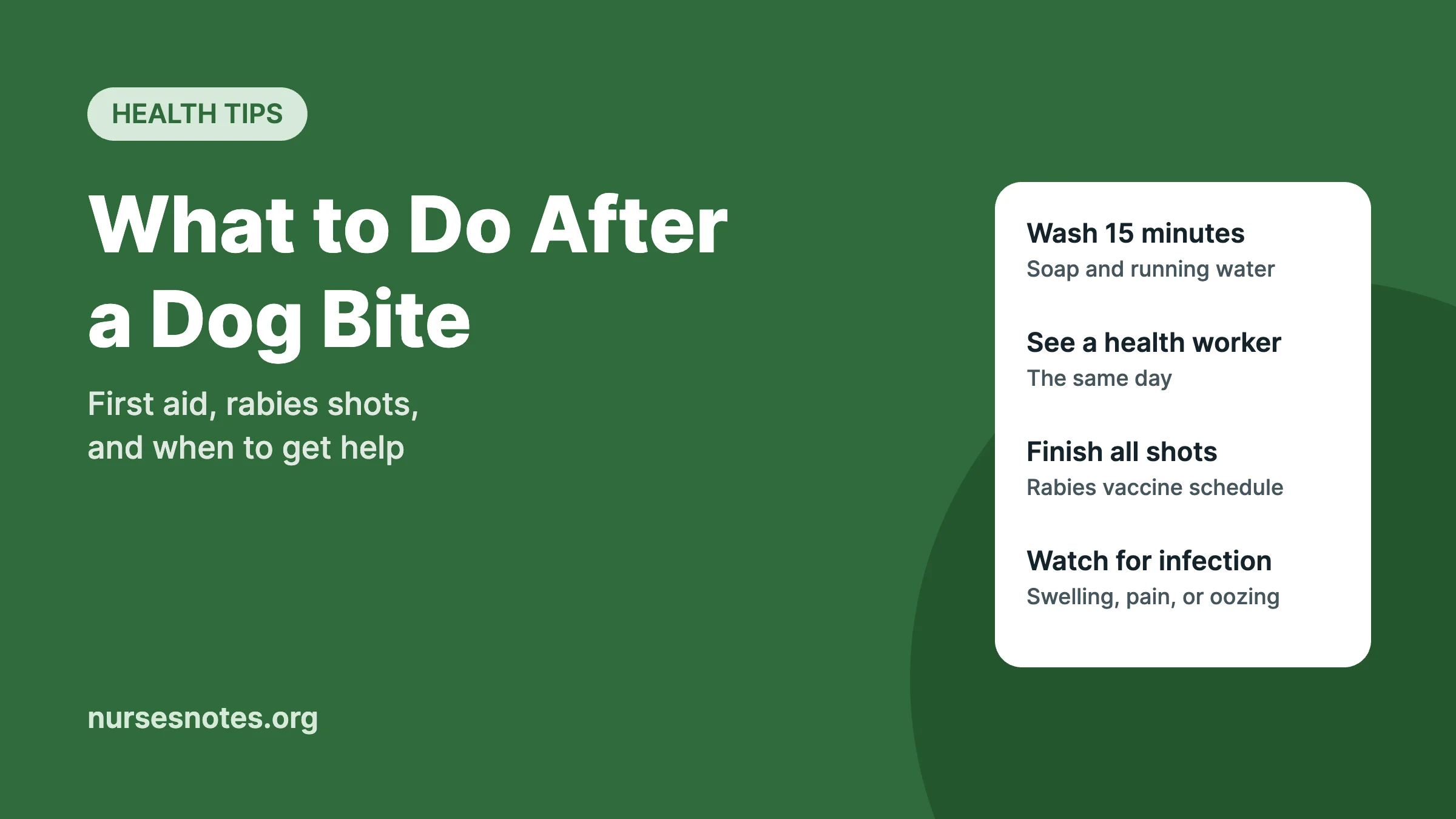
What to do after a dog bite starts right away: wash the wound with soap and running water for at least 15 minutes, then see a health worker as soon as possible. Rabies is almost always fatal once symptoms begin, but prompt wound care and vaccination after a bite can prevent it.
Key points
- Wash every bite or scratch with soap and water for at least 15 minutes, even if it looks small (WHO).
- Get checked the same day: you may need a rabies vaccine, rabies immunoglobulin, a tetanus shot, or antibiotics.
- Dogs cause up to 99% of human rabies cases, and children are bitten most often (WHO).
- Finish the full course of rabies shots exactly as scheduled.
Step-by-step dog bite first aid
- Get to safety. Move away from the dog and keep children away from it.
- Wash the wound at once. Use soap and plenty of running water for at least 15 minutes. WHO lists wound washing as the first part of rabies prevention.
- Control bleeding. Press firmly with a clean cloth if the wound is bleeding.
- Cover it. For a minor wound, an antibiotic cream and a clean bandage can be used after washing (Mayo Clinic).
- Get medical advice the same day. A doctor, nurse, or animal bite clinic will decide whether you need rabies shots, tetanus protection, or antibiotics.
- Find out about the dog. Note whether it is a pet with an up-to-date rabies vaccine, and tell the health worker. Do not try to catch a stray dog yourself.
Do I need a rabies vaccine after a dog bite?
Health workers use the WHO exposure categories to decide. Only a health professional can assess your bite, so do not decide on your own that you do not need treatment.
| WHO category | Type of contact | What is usually needed |
|---|---|---|
| Category I | Touching or feeding an animal, or licks on unbroken skin | No post-exposure treatment; wash the skin |
| Category II | Nibbling of uncovered skin, or minor scratches or grazes without bleeding | Wound washing and rabies vaccine straight away |
| Category III | Bites or scratches that break the skin, saliva on broken skin or the mouth, eyes, or nose, or direct contact with bats | Wound washing, rabies vaccine straight away, and rabies immunoglobulin or monoclonal antibodies |
This care is called post-exposure prophylaxis (PEP). It has three parts: thorough wound washing, a full course of rabies vaccine, and rabies immunoglobulin or monoclonal antibodies when needed. The number and timing of vaccine doses follow national guidelines, so keep every appointment your health worker gives you.
Why rabies needs fast action
- Once rabies reaches the brain and symptoms appear, it is fatal in 100% of cases (WHO).
- Symptoms usually start 2 to 3 months after the bite, but this can range from one week to one year.
- Early signs include fever and pain or tingling, pricking, or burning at the wound. Later signs include agitation, fear of water, and paralysis.
- Rabies vaccine works before symptoms start, which is why prompt care after a bite matters so much.
Tetanus and wound infection
Dog bites can also cause tetanus and bacterial infection. WHO advises a tetanus vaccine if you are not fully vaccinated, and antibiotics for high-risk wounds or people with weak immunity. Mayo Clinic suggests a tetanus booster within 48 hours if your last shot was more than five years ago and the wound is deep or dirty.
Watch the wound for the next few days. Increasing swelling, spreading redness or other colour change, worsening pain, or oozing are signs of infection and need prompt medical review.
What happens to the dog?
WHO advises that the dog be confined and watched every day for 10 days under a veterinarian’s supervision, working with local public health authorities. Do not wait for the observation period to finish before starting treatment if your health worker recommends it.
When to get medical help
See a doctor the same day for any bite or scratch that breaks the skin. Get urgent medical care, or go to the emergency department, if:
- Bleeding is heavy or does not stop with firm pressure
- The wound is a deep puncture, or you are unsure how serious it is
- The skin is badly torn or crushed
- There are signs of infection, such as increasing swelling, colour change, pain, or oozing
- The person has a weakened immune system, as they may need antibiotics (WHO)
For burns and other common injuries, see our guide on how to treat a burn at home.
How to prevent dog bites
- Never leave a young child alone with any dog, even a family pet (WHO).
- Avoid stray dogs and teach children not to approach dogs they do not know.
- Vaccinate pet dogs against rabies; vaccinating dogs is the most cost-effective way to prevent human rabies (WHO).
Frequently asked questions
How long should I wash a dog bite?
Wash it with soap and plenty of running water for at least 15 minutes, as WHO recommends, starting as soon as possible. Washing is the most important first aid step for preventing rabies and infection. After washing, you can cover a minor wound with a clean bandage, then see a health worker the same day for further advice.
Do I need rabies shots if the dog is vaccinated?
Possibly not, but only a health worker can decide. They will consider the type of wound, the dog’s vaccination records, and whether the dog can be observed for 10 days. Because rabies is fatal once symptoms appear, never skip a medical check after a bite or scratch that breaks the skin.
Is it too late to get a rabies vaccine days after a bite?
Rabies symptoms usually take 2 to 3 months to appear, so it is still worth getting assessed even if days have passed. Go to a doctor or animal bite clinic as soon as you can and explain when the bite happened. Treatment is no longer effective once symptoms have started.
Related on Nurses Notes
Sources
- Rabies. World Health Organization fact sheet. Updated 17 September 2026.
- Animal bites. World Health Organization fact sheet. Updated 12 January 2024.
- Animal bites: First aid. Mayo Clinic. Updated 10 May 2024.
This article is for education only and does not replace advice from your own doctor, nurse, or other qualified health professional.