On this page
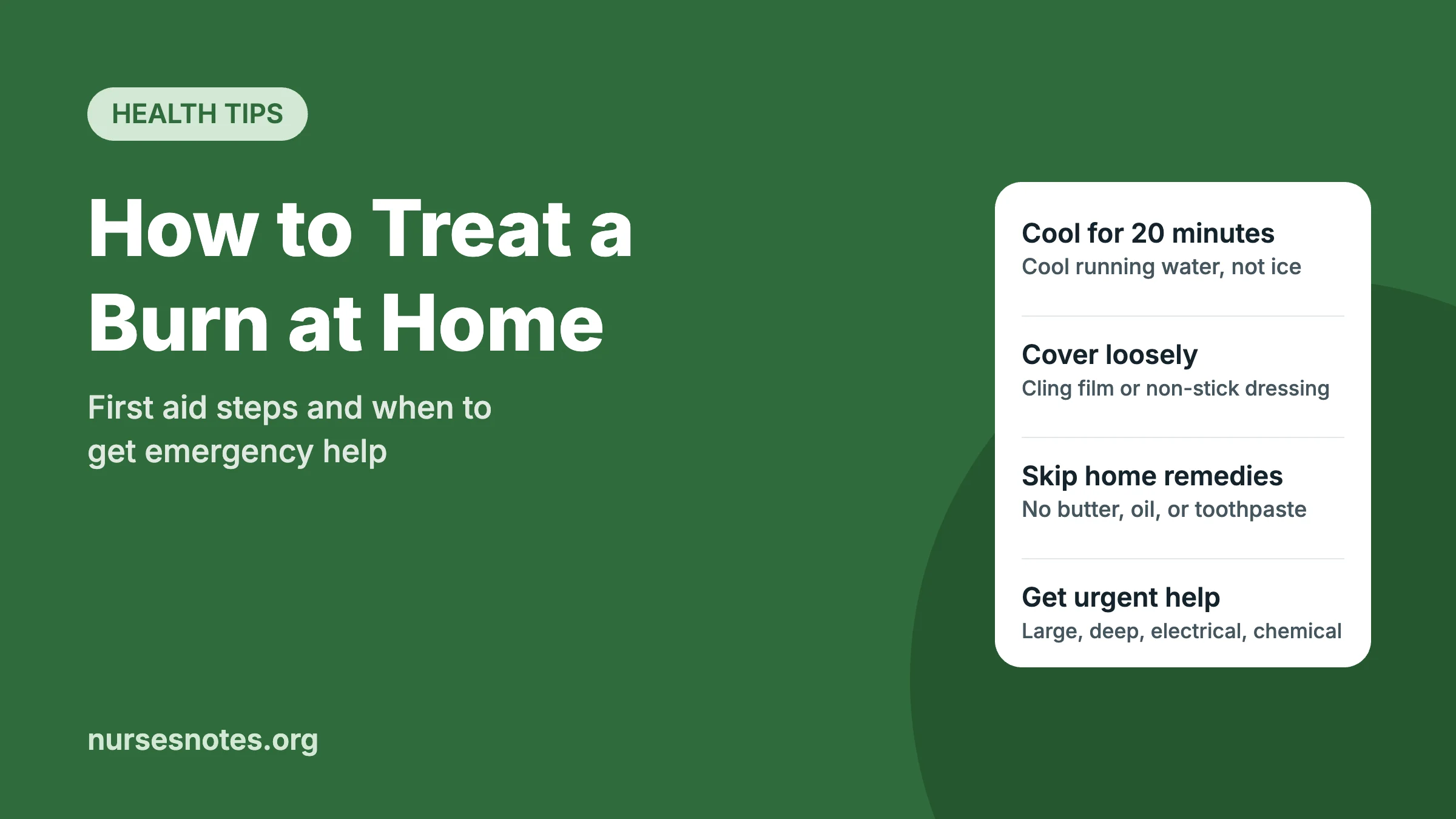
To treat a burn at home, cool it under cool running water for 20 minutes as soon as you can, take off any jewellery or clothing near it that isn’t stuck, and cover it loosely with cling film or a clean, non-stick dressing. Small, shallow burns usually heal well at home. Large, deep, electrical, or chemical burns need emergency care.
Key points
- Cool the burn with cool (not ice-cold) running water for about 20 minutes, ideally within 3 hours of the injury.
- Never put ice, butter, oil, toothpaste, or any other home remedy on a burn.
- Don’t pop blisters or pull off anything stuck to the skin.
- Get emergency help for large or deep burns, burns on the face, hands, feet, or genitals, and any electrical or chemical burn.
First aid for a burn: step by step
Acting fast in the first few minutes limits the damage to the skin and eases the pain. These steps are for heat burns and for scalds from hot liquids or steam.
- Stop the burning. Move away from the heat source and put out any flames safely, making sure you’re safe yourself before you help someone else.
- Cool the burn. Hold it under cool running water for 20 minutes. If there’s no running water, use cool bottled water or a wet towel. A cool, wet cloth is easier for a burn on the face.
- Take off anything tight. Remove rings, watches, and clothing near the burn before it starts to swell, but leave anything that’s stuck to the skin.
- Keep the person warm. Cool only the burned area, not the whole body. Babies, older adults, and people with large burns can get dangerously cold.
- Cover it loosely. Once it’s cooled, lay cling film over the burn or use a clean, non-stick dressing. Don’t wrap it tightly around an arm or leg.
- Ease the pain. Adults can take over-the-counter painkillers such as paracetamol or ibuprofen, following the label. For a child, ask a pharmacist or doctor which medicine and dose suit their weight and age.
The NHS and WHO advise about 20 minutes of cooling, and Mayo Clinic gives about 10 minutes as a minimum. If you can manage the full 20 minutes, do.
What not to put on a burn
A lot of traditional remedies trap heat, irritate damaged skin, or make infection more likely. Leave these out:
- ice or ice-cold water, which can damage the skin further
- butter, cooking oil, toothpaste, or anything like it
- creams or ointments before the burn has been cooled and checked
- sticky plasters, or fluffy cotton wool that can stick to the wound
- popping blisters, which protect the healing skin underneath
If a blister breaks by itself, Mayo Clinic suggests cleaning it gently with water and covering it.
How to tell how serious a burn is
Burns are usually described by how deep they go. A shallow burn only affects the top layer of skin, while deeper burns reach the layers below and need medical care.
| Type | What it may look like | Usual care |
|---|---|---|
| First degree (superficial, top layer only) | Painful, red, and slightly swollen skin with no blisters | Usually home care |
| Second degree (partial thickness) | Painful, red, and swollen skin with blisters | Small ones may heal at home; larger ones need a doctor |
| Third degree (full thickness, deep layers) | White, blackened, leathery, or charred skin that may feel numb | Emergency care |
Size matters as well. Mayo Clinic advises emergency care for a burn wider than about 3 inches (about 8 cm).
Caring for a minor burn while it heals
Small burns often heal at home within about 2 weeks. Keep the dressing clean and dry, and change it if it gets wet or dirty. Once the burn has cooled and starts to heal, a gentle moisturiser or emollient can ease dryness and itching, and a pharmacist can suggest one. Keep the healing skin out of the sun, which can darken scars.
Check your tetanus status too. If the burn is deep and your last tetanus shot was more than 5 years ago, ask your doctor whether you need a booster.
Damaged skin loses fluid, so drink enough water while you recover. Our guide to signs of dehydration in adults covers the early warning signs.
When to get medical help
Call your local emergency number or go to the emergency department straight away if:
- the burn is large or deep, or goes all the way around an arm or leg
- the skin looks white, leathery, or charred
- the burn is on the face, hands, feet, genitals, buttocks, or a major joint
- it was caused by electricity, lightning, or a chemical
- the person breathed in smoke, or may have an inhalation injury
- swelling comes on very fast, or the person seems very unwell
See a doctor, nurse, or pharmacist soon if:
- a baby, young child, or older adult has been burned
- you’re not sure how serious the burn is
- the burn shows signs of infection, such as spreading redness, more swelling, pus, or a fever
- the burn hasn’t healed after about 2 weeks
If the burn is serious, don’t drive yourself. Ask someone to take you, or call an ambulance.
How to prevent burns at home
WHO notes that children are among the people most often hurt by burns, and that many of these injuries happen in the kitchen. Keep hot drinks, kettles, and pans out of children’s reach, and turn pan handles inward. Set your water heater to a safer temperature, and test bath water before a child gets in. Fit smoke alarms and test them regularly, and keep matches, lighters, and chemicals locked away.
Frequently asked questions
How long should you run a burn under cold water?
The NHS and WHO advise cooling a burn under cool, not ice-cold, running water for about 20 minutes. Start as soon as you can, though cooling still helps up to 3 hours after the injury. If 20 minutes isn’t possible, Mayo Clinic gives about 10 minutes as a minimum. Keep the rest of the body warm while you do it.
Should you cover a burn or let it breathe?
Cover it. Once it’s cooled, lay cling film loosely over the burn or use a clean, non-stick dressing. That keeps dirt and germs out, and it can ease the pain of air on the skin. Avoid fluffy materials and sticky plasters, which can stick to the burn, and never wrap a limb tightly.
Is it OK to put toothpaste or butter on a burn?
No. Toothpaste, butter, and oils can trap heat in the skin, irritate the wound, and make infection more likely, and they make it harder for a doctor to assess the burn. Cool running water is the most effective first aid. Once a minor burn has cooled and starts healing, a gentle moisturiser can help.
Related on Nurses Notes
- What to do after a dog bite
- How to stop a nosebleed: first aid steps
- Signs of dehydration in adults and what to do
- How to bring down a child’s fever safely
- All health tips
- Sprained ankle treatment: home care and red flags
- How to clean a wound: first aid for minor cuts and scrapes
Sources
- Burns and scalds. NHS, reviewed March 2026.
- Burns: First aid. Mayo Clinic, April 2026.
- Burns (fact sheet). World Health Organization, October 2026.
- Burns. MedlinePlus Medical Encyclopedia, U.S. National Library of Medicine, April 2026.
This article is for education only and doesn’t replace advice from your own doctor, nurse, or other qualified health professional.