On this page
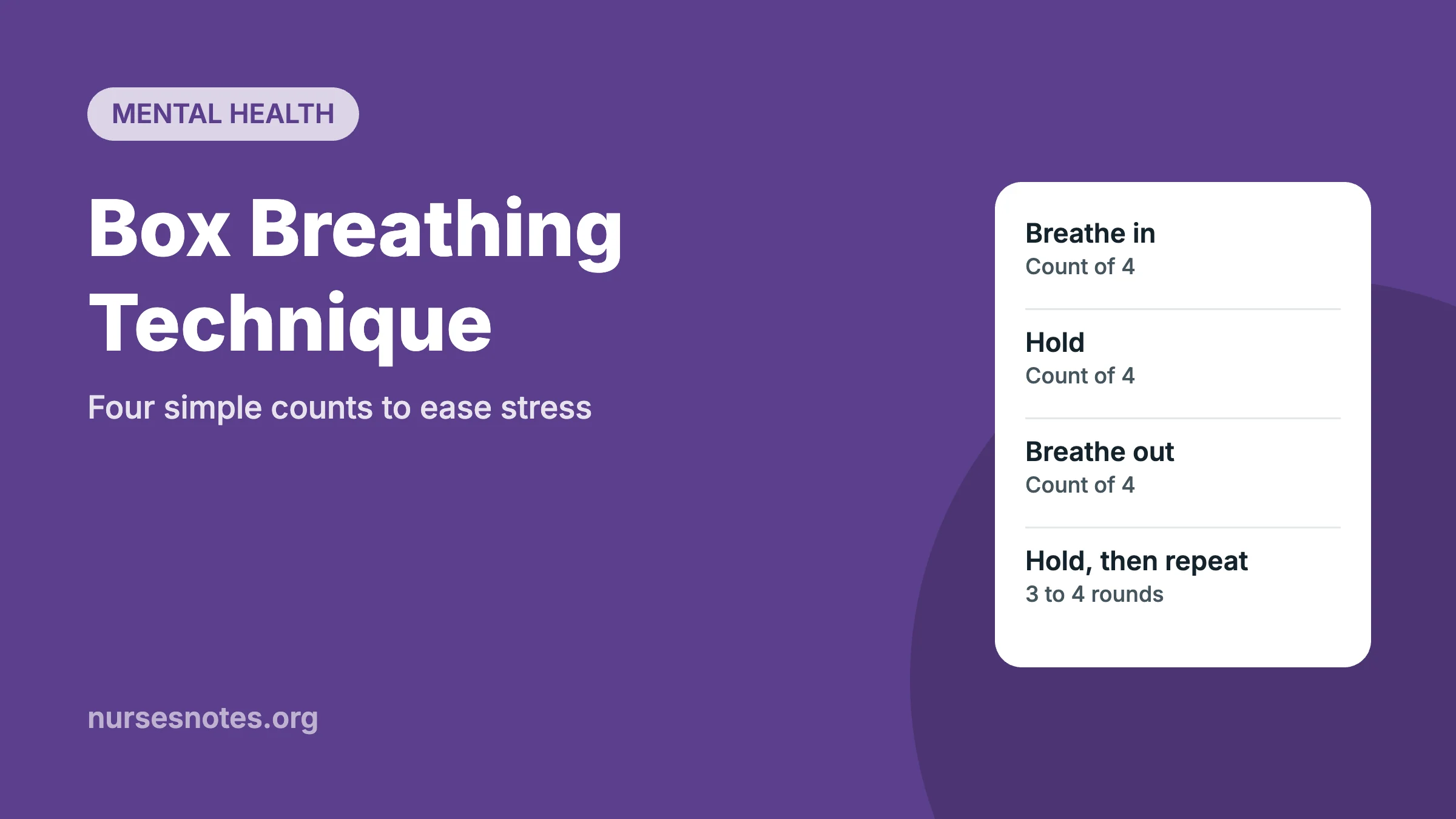
The box breathing technique is a simple way to calm stress: breathe in for a count of four, hold for four, breathe out for four, and hold again for four, then repeat. It takes about a minute, needs no equipment, and can be done anywhere, from a busy ward to a quiet bedroom.
Key points
- Box breathing uses four equal steps of about four seconds each, like the four sides of a box.
- Slow, controlled breathing can help switch on the body’s “rest and digest” response.
- A small 2023 study found five minutes of daily breathwork, including box breathing, lowered anxiety and improved mood.
- It is a coping tool, not a treatment for an anxiety disorder or depression. Reach out for help if stress feels too much.
What is box breathing?
Box breathing, also called square breathing or four-square breathing, is a paced breathing exercise. You picture tracing the four sides of a square while you breathe in, hold, breathe out, and hold, each for the same count.
Slow breathing like this activates the parasympathetic nervous system, the part of the nervous system that helps the body settle after stress. Many people use it before an exam, during a hard shift, or when they cannot fall asleep.
How to do box breathing: step by step
- Sit upright with your feet on the floor, or lie down if that is more comfortable. Rest your hands in your lap.
- Breathe out slowly and fully through your mouth to empty your lungs.
- Side 1: breathe in gently through your nose while you count slowly to four.
- Side 2: hold your breath for a count of four.
- Side 3: breathe out through your mouth for a count of four.
- Side 4: hold your breath again for a count of four.
- Repeat for three to four rounds, or for a few minutes if it feels good.
Stay within your comfort level. Breathe gently rather than forcing large breaths, and if four seconds feels too long, start with a count of three.
How box breathing can help
- Calmer body: Cleveland Clinic notes that regulating your breath may lower the stress hormone cortisol and may even help lower blood pressure.
- Clearer mind: counting gives your mind one simple thing to focus on, which can interrupt racing thoughts. Mind says breathing exercises can help you cope and feel more in control.
- Better mood: in a 2023 randomised study in Cell Reports Medicine, people who did five minutes of breathwork daily for a month, including box breathing, reported less anxiety and better mood. Mindfulness meditation helped too, and one type of breathing (cyclic sighing) did slightly better than the others.
- Easy to use anywhere: no app, equipment, or quiet room is needed.
The research on box breathing is still small and short-term, so think of it as one helpful tool among many, alongside sleep, movement, and support from others.
When to use box breathing
- Before a stressful event, such as a board exam, interview, or difficult conversation
- During a busy or upsetting shift, for example in the staff room or while washing your hands
- When you notice early signs of stress, such as a racing heart, tight chest, or shallow breathing
- At bedtime, to help your body wind down
- As part of a daily routine; experts suggest practising once or twice a day so the skill is ready when you need it
Box breathing pairs well with other quick skills, such as the 5-4-3-2-1 grounding technique.
Other simple breathing exercises
The NHS recommends a gentle version with no breath holding, which some people find easier:
- Breathe in through your nose and let the breath flow as deep into your belly as is comfortable.
- Breathe out through your mouth.
- Some people count steadily from 1 to 5 on each breath in and out.
- Continue for at least 5 minutes.
Tips and safety
- If you feel dizzy or lightheaded, stop and return to normal breathing.
- If you have a lung or heart condition, the gentle version without breath holds may suit you better; check with your doctor if unsure.
- If breathing exercises do not ease your symptoms, or stress, low mood, or panic is affecting daily life, talk to a doctor, nurse, or mental health professional. Our guide to panic attack symptoms can help you recognise when to seek help.
Where to get help
If you are struggling, you do not have to cope alone. Help is available now:
- Philippines: NCMH Crisis Hotline, call 1553 (toll-free via landline, Luzon-wide), available 24/7
- USA: 988 Suicide & Crisis Lifeline, call or text 988, 24/7
- UK and Ireland: Samaritans, call 116 123 free, day or night
- Anywhere: if you or someone else is in immediate danger, call your local emergency number or go to the nearest emergency department.
Talking to someone you trust, such as a friend, family member, or colleague, can also be an important first step.
Frequently asked questions
How long should you do box breathing?
Most guides suggest three to four rounds of box breathing, which takes about one minute. You can continue for up to five minutes if it feels comfortable. Practising once or twice a day helps the technique become a habit, so it is easier to use when stress hits during a busy day or a hard shift.
Does box breathing work for anxiety?
Box breathing can ease feelings of stress and anxiety in the moment by slowing your breathing and giving your mind something to focus on. A small 2023 study found daily breathwork reduced anxiety and improved mood. It does not replace treatment for an anxiety disorder, so see a health professional if anxiety continues.
Is it safe to hold your breath during box breathing?
For most healthy adults, short four-second holds are safe. Breathe gently and stay within your comfort level. If you feel dizzy, stop and breathe normally. People with lung or heart conditions may prefer the gentle NHS breathing exercise without holds and can ask their doctor for advice.
Related on Nurses Notes
- How to manage stress: practical tips
- The 5-4-3-2-1 grounding technique for anxiety
- Signs of anxiety and when to get help
- All Mental Health articles on Nurses Notes
Sources
- How Box Breathing Can Help You Destress, Cleveland Clinic, 2021
- Breathing exercises for stress, NHS, reviewed June 2026
- Brief structured respiration practices enhance mood and reduce physiological arousal, Balban MY and colleagues, Cell Reports Medicine, 2023
- How to manage anxiety and worry, Mind (UK), 2026
- Consult a Professional at the First Sign of Mental Health Symptoms, Department of Health Philippines (Cordillera CHD)
- 988 Suicide & Crisis Lifeline, 988lifeline.org
- Samaritans, samaritans.org
This article is for education only and does not replace advice from your own doctor, nurse, or other qualified health professional.