On this page
The best ways to manage stress are to notice your early signs, deal with one thing at a time, look after your sleep, food, and movement, and talk to someone you trust. If stress is affecting your daily life for weeks or these steps are not helping, it is a good time to speak to a doctor or mental health professional.
Key points
- Stress is a normal reaction to pressure, but long-lasting stress can affect sleep, mood, and physical health.
- Common signs include headaches, muscle tension, poor concentration, irritability, and changes in sleep or appetite.
- Small daily habits help: breathing exercises, regular activity, a steady sleep routine, and less caffeine.
- Talk to a professional if stress is constant, stops you doing things, or you are using alcohol or other substances to cope.
What is stress?
The US National Institute of Mental Health (NIMH) describes stress as the body’s physical or mental response to an outside cause, such as a heavy workload, money worries, or an illness. A stressor can be a one-off event or something that continues for months.
Some stress can help you focus and meet a deadline. When it keeps going without a break, NIMH notes it can affect sleep and the immune, digestive, and cardiovascular systems.
Signs and symptoms of stress
The NHS groups the signs of stress into three areas:
| Type | Common signs |
|---|---|
| Physical | Headaches or dizziness, muscle tension or pain, stomach problems, chest pain, or a faster heartbeat |
| Mental | Trouble concentrating, difficulty making decisions, feeling overwhelmed, constant worrying, and forgetfulness |
| Behaviour | Irritability, sleeping or eating too much or too little, avoiding people or places, and drinking or smoking more |
Chest pain can have many causes. If you have chest pain, especially with shortness of breath or sweating, get urgent medical help rather than assuming it is stress.
How to manage stress: 8 practical steps
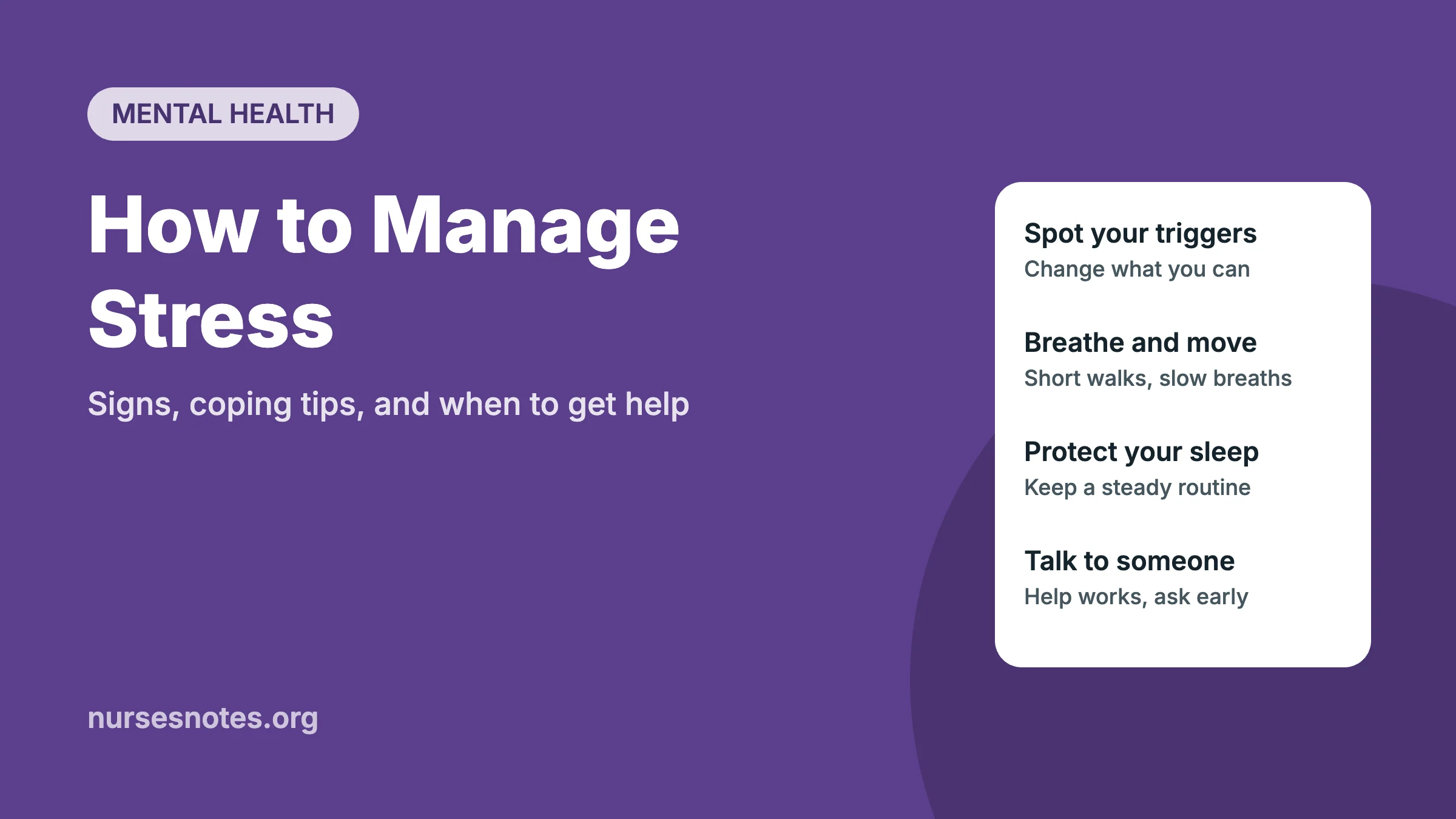
- Spot your triggers. Mind suggests noting the situations that often stress you, such as bills, exams, or caring for someone. Then sort them into things you can change and things you cannot.
- Break tasks into small steps. Do not try to do everything at once. Set small, achievable goals and tackle the most important task when your energy is highest.
- Try a breathing exercise. Slow breathing for a few minutes can calm your body. Relaxation and mindfulness apps can guide you.
- Move your body. Regular physical activity, even a short walk, is one of the NHS stress-busting tips.
- Protect your sleep. Keep a consistent sleep routine. Our sleep hygiene tips can help, even if you work shifts.
- Eat regularly and limit caffeine. NIMH recommends regular, healthy meals and cutting back on too much coffee or soda.
- Write it down. Keeping a journal can help you notice patterns and challenge unhelpful thoughts.
- Stay connected. Talk to friends, family, or co-workers you trust. Spending time in nature or on a hobby you enjoy can also help.
Things to avoid
- Using alcohol, cigarettes, gambling, or drugs to cope, which the NHS warns can make things worse
- Focusing on things you cannot change
- Assuming you are the only one struggling; most people feel stressed at some point
Stress at work, including for nurses
Long shifts, heavy patient loads, and emotional situations make healthcare a high-stress job. Take your breaks, share the load with your team, and use any staff wellbeing or employee support programme your workplace offers.
If stress has turned into exhaustion, detachment, and a sense that nothing you do makes a difference, read our guide to the signs of nurse burnout and how to recover.
When to get help
Speak to a doctor, nurse, or mental health professional if:
- Stress is affecting your work, relationships, or daily life for more than a few weeks
- The self-help steps above are not helping
- You are worrying all the time, avoiding things, or having panic attacks
- You are relying on alcohol or other substances to get through the day
- You feel hopeless or have thoughts of harming yourself
Talking therapies and, for some people, medicine can help a lot. Asking for help is a sign of strength, and support works.
Where to get help
If you or someone you care about is in danger or may not be safe, call your local emergency number now or go to the nearest emergency department. You can also reach these free, confidential crisis lines:
- Philippines: NCMH Crisis Hotline 1553 (Luzon-wide, toll-free landline), 0917-899-8727 or 0966-351-4518 (Globe and TM), and 0908-639-2672 (Smart and Sun)
- USA: call or text 988 to reach the 988 Suicide & Crisis Lifeline, available 24/7
- UK and Ireland: call Samaritans free on 116 123, any time of day or night
- Anywhere else: call your local emergency number
Frequently asked questions
What are the first signs of stress?
Early signs often include headaches, tense shoulders or jaw, trouble sleeping, irritability, and finding it hard to concentrate. Some people eat more or less than usual or reach for more coffee, alcohol, or cigarettes. Noticing your own early signs helps you take action before stress builds up.
What is the fastest way to calm down when stressed?
A short breathing exercise is one of the quickest ways to settle your body. Breathe in slowly through your nose, then breathe out slowly for a little longer, and repeat for a few minutes. Stepping away for a short walk or talking to someone you trust can also help.
When is stress a sign of an anxiety disorder?
NIMH says stress may point to a higher risk of an anxiety disorder when it interferes with daily life, leads you to avoid things, or seems to be there all the time. If this sounds like you, a doctor or mental health professional can assess you and talk through treatment options.
Related on Nurses Notes
- Signs of nurse burnout and how to recover
- Sleep hygiene tips: how to sleep better
- Panic attack symptoms and what to do
- All Mental Health articles on Nurses Notes
Sources
- Stress. NHS, reviewed 6 March 2026.
- I’m So Stressed Out! Fact Sheet. National Institute of Mental Health, NIH Publication No. 20-MH-8125.
- How to manage stress and build resilience. Mind, 2022.
- DOH, WHO, and Australian Gov’t support Mindful Media for the responsible reporting of mental health. World Health Organization Philippines, 16 May 2023.
- 988 Suicide & Crisis Lifeline. 988 Lifeline, accessed October 2026.
- Contact us. Samaritans, accessed October 2026.
This article is for education only and does not replace advice from your own doctor, nurse, or other qualified health professional.