On this page
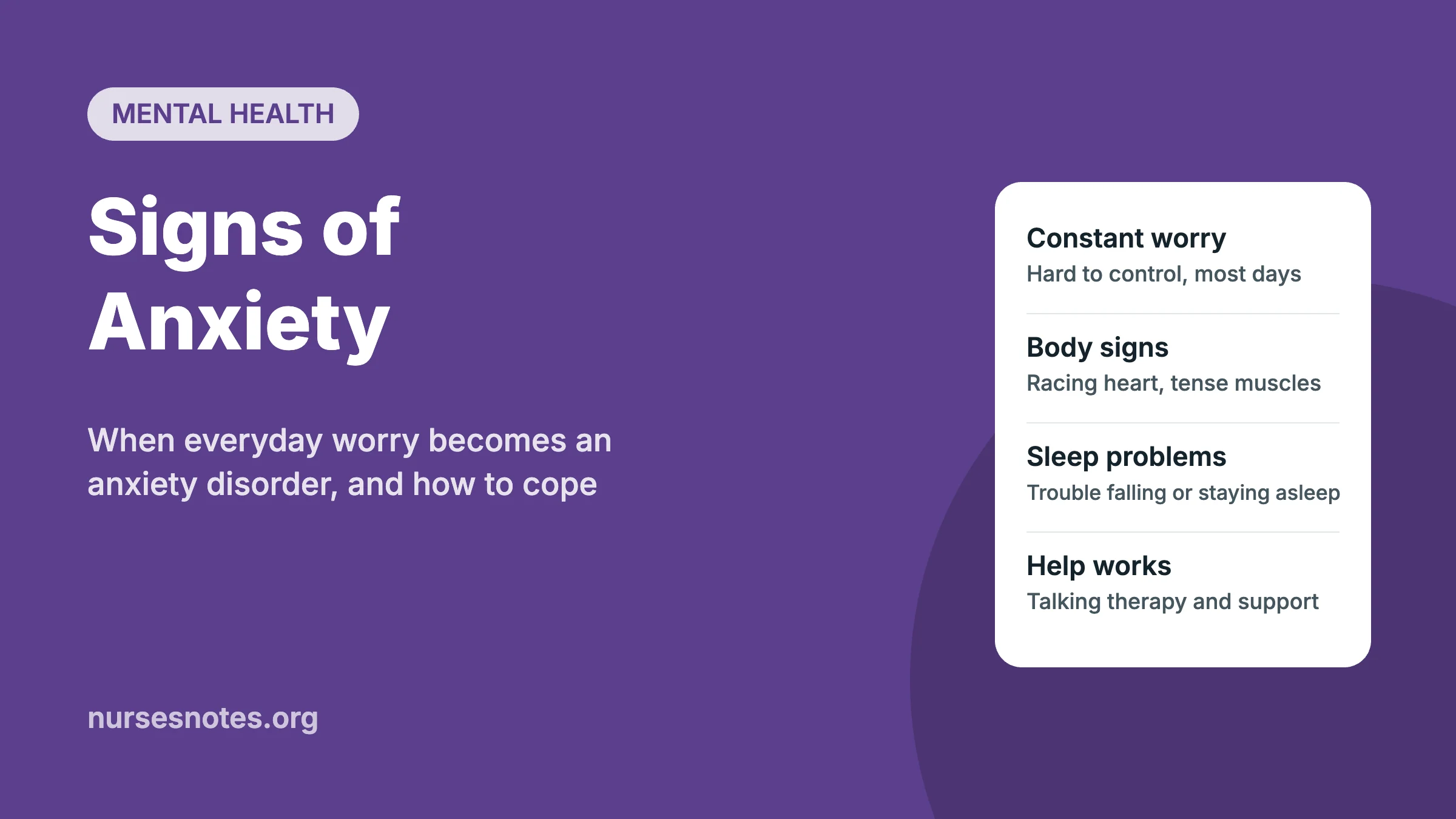
Common signs of anxiety are constant worry that’s hard to control, restlessness, irritability, poor concentration, muscle tension, and trouble sleeping. Everyone feels anxious sometimes. But when the worry is there most days, goes on for months, and gets in the way of work, study, or relationships, it may be an anxiety disorder, and those respond well to treatment.
Key points
- Normal anxiety passes once a stressful situation is over. An anxiety disorder keeps going and is hard to switch off.
- Anxiety affects the body too, with a racing heart, stomach problems, headaches, sweating, or dizziness.
- Talking therapy, especially cognitive behavioural therapy (CBT), and some medicines have good evidence behind them.
- If anxiety is affecting your daily life, talk to a doctor or a mental health professional. Help works, and you don’t have to wait until things get severe.
Normal worry or an anxiety disorder?
Anxiety is a normal response to stress, before an exam, a job interview, or a hard shift, for instance. Mayo Clinic explains that this kind of anxiety is usually short-lived and fades once the situation is sorted out.
With generalized anxiety disorder (GAD), the worry is extreme, ongoing, and difficult to control. It may latch onto lots of everyday things, like health, money, family, or work, and it can show up even when nothing is actually wrong.
Emotional and mental signs of anxiety
- worrying most of the time, about lots of different things
- finding it hard to control or stop the worry
- feeling restless, on edge, or keyed up
- irritability
- trouble concentrating, or your mind going blank
- planning for the worst, and finding uncertainty very hard to live with
- low mood
Physical symptoms of anxiety
- muscle tension, aches, or headaches
- a racing or pounding heart (palpitations)
- sweating, trembling, or twitching
- feeling light-headed, dizzy, or short of breath
- stomach aches, nausea, or other stomach problems
- tiredness, and trouble falling or staying asleep
- needing to pass urine more often
Anxiety can also arrive as sudden waves of intense fear, with a pounding heart and breathlessness. These are panic attacks, and we explain them in panic attack symptoms and what to do. Some of these physical symptoms can also come from medical conditions, so a doctor may examine you to rule out other causes.
When anxiety may be GAD
The U.S. National Institute of Mental Health (NIMH) describes GAD as finding it hard to control worry on most days for at least 6 months, together with at least three symptoms such as restlessness, tiredness, poor concentration, irritability, muscle tension, or sleep problems. Only a qualified professional can make the diagnosis.
Anxiety disorders are common, and having one says nothing about how strong you are. Stressful environments, past traumatic events, and family history can all raise the risk, and anxiety often turns up alongside depression.
How to cope with anxiety: practical steps
- Talk to someone you trust. Saying your worries out loud to a friend, a family member, or a colleague can take some of the weight off.
- Practise slow breathing. Breathe in gently through your nose and out slowly through your mouth for a few minutes. Yoga, pilates, mindfulness, and relaxation exercises can help as well.
- Move your body. The HSE suggests at least 2.5 hours a week of activity that raises your heart rate, like brisk walking, swimming, or cycling.
- Protect your sleep. Keep regular sleep times where you can, including when you’re on rotating shifts.
- Cut down on caffeine and alcohol, since both can make anxiety worse, and try not to rely on alcohol, smoking, or gambling to cope.
- Face things gradually instead of avoiding them. With support, slowly facing the situations that make you anxious works better than steering clear of them.
- Try guided self-help. CBT-based books, online courses, and support groups can help, and many health services offer them for free.
Shift work and long hours can make anxiety harder to manage. Our sleep hygiene tips and guide to managing stress have more ideas.
Treatment for anxiety
Anxiety disorders are very treatable. NIMH describes cognitive behavioural therapy (CBT) as the most studied talking therapy for GAD. It teaches you new ways of thinking about worry and responding to it. Medicines such as SSRI or SNRI antidepressants may also be prescribed, and some take several weeks to start working. A lot of people do best with a combination of the two, chosen with their doctor.
When to get help
See a doctor or mental health professional if:
- worry or fear is there most days and is hard to control
- anxiety is affecting your work, studies, relationships, or sleep
- you’re avoiding places or people because of anxiety
- you’re using alcohol or other substances to cope
- a treatment you’ve tried isn’t helping
Get urgent help if you feel unable to keep yourself safe, are having thoughts of ending your life, or are worried about someone else’s safety. Use the contacts below or your local emergency number.
Where to get help
If you’re in crisis, feel unable to keep yourself safe, or are worried about someone else, please reach out now. You don’t have to cope on your own.
- Philippines: NCMH Crisis Hotline. Call 1553 (toll-free landline nationwide); Globe/TM 0917-899-8727 or 0966-351-4518; Smart/Sun/TNT 0919-057-1553
- USA: 988 Suicide & Crisis Lifeline. Call or text 988, or chat at 988lifeline.org
- UK and Ireland: Samaritans. Call 116 123 (free, day or night)
- Anywhere: call your local emergency number or go to the nearest emergency department
Frequently asked questions
What does anxiety feel like?
Often it’s a constant sense of worry or dread, or of being on edge, that’s hard to switch off. Many people notice physical signs as well, such as a racing heart, tight muscles, an upset stomach, sweating, or poor sleep. Some describe it as their mind always planning for the worst, even when things are going fine.
Can anxiety go away on its own?
Everyday anxiety usually eases once a stressful situation passes. An anxiety disorder such as GAD tends to last longer, and it may come and go, especially through stressful periods. Self-help can make a real difference. If the anxiety carries on for weeks or affects daily life, though, talking therapy, medicine, or both usually work better than waiting it out.
How can I help someone with anxiety?
Listen calmly, without judging them or telling them to stop worrying. Ask what helps, encourage small steps forward instead of avoidance, and gently suggest they talk to a doctor or counsellor. Offer practical help too, like finding a service or going with them to an appointment, and look after your own wellbeing while you do.
Related on Nurses Notes
- Panic attack symptoms: what they feel like and what to do
- How to manage stress: signs, coping tips, and when to get help
- Signs of nurse burnout and how to recover
- All mental health articles
- Social anxiety disorder symptoms: signs, causes, and help
- ADHD symptoms in adults: signs, diagnosis, and support
- Health anxiety symptoms and how to cope
- How to stop overthinking: 8 practical steps
Sources
- Generalized Anxiety Disorder: When Worry Gets Out of Control. National Institute of Mental Health, revised 2025.
- Generalised anxiety disorder (GAD): Symptoms. NHS, reviewed October 2024.
- Anxious or anxiety disorder? Here’s how to tell. Mayo Clinic, accessed October 2026.
- Generalised anxiety disorder in adults: self-help. HSE (Health Service Executive, Ireland), reviewed September 2025.
- National Mental Health Week. Quezon City Government (NCMH Crisis Hotline numbers), accessed October 2026.
- 988 Suicide & Crisis Lifeline fact sheet. SAMHSA, accessed October 2026.
- Talk to us on the phone. Samaritans, accessed October 2026.
This article is for education only and doesn’t replace advice from your own doctor, nurse, or other qualified health professional.