
On this page
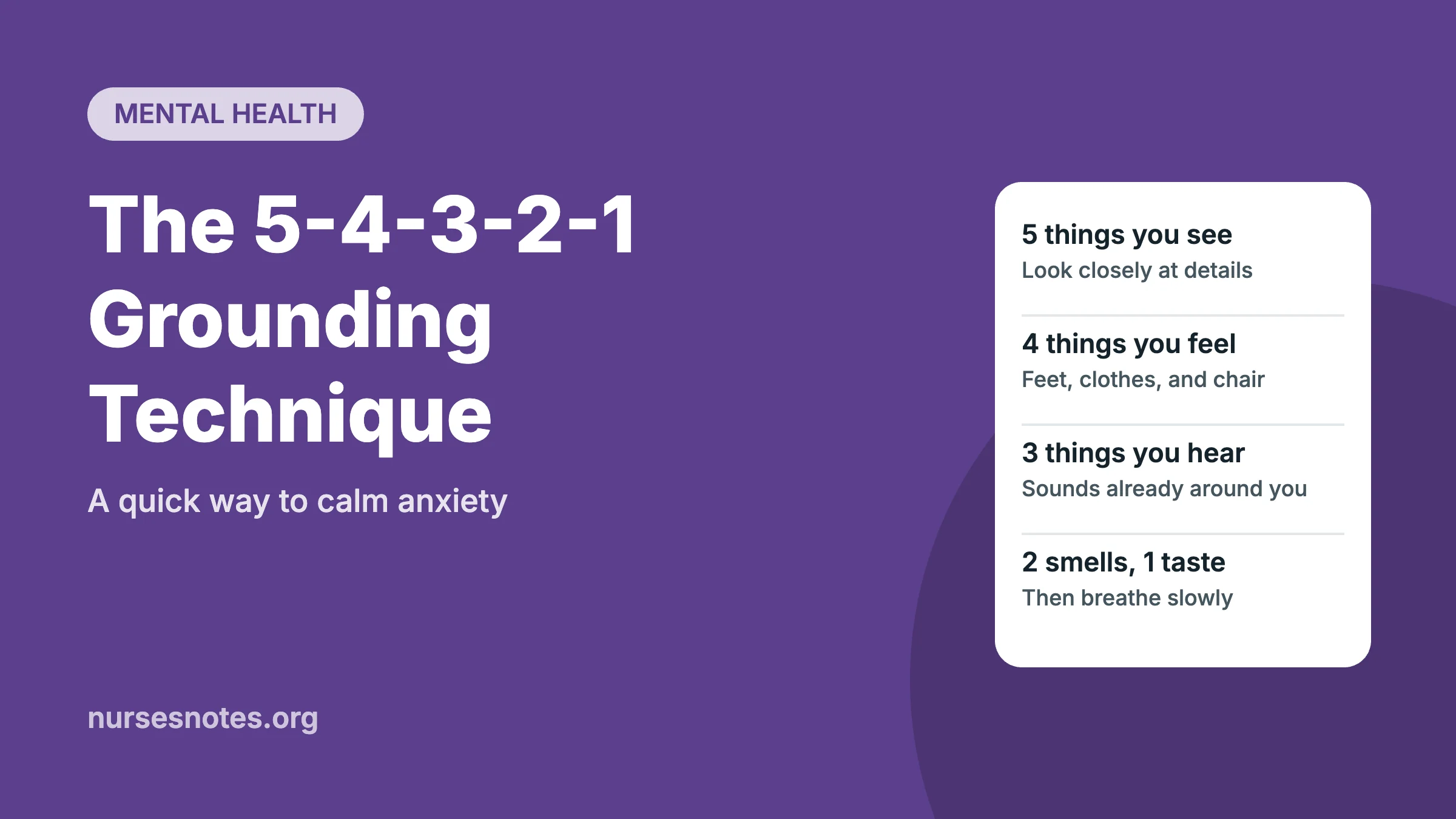
The 5-4-3-2-1 grounding technique is a simple exercise for calming anxiety. You notice 5 things you can see, 4 you can feel, 3 you can hear, 2 you can smell, and 1 you can taste. It takes a minute or two, you don’t need any equipment, and you can do it almost anywhere, from a bus seat to a busy nurses’ station.
Key points
- Grounding moves your attention away from worried thoughts and onto what’s happening around you right now.
- The 5-4-3-2-1 method uses your five senses in a simple countdown.
- It works best if you use it early, before the anxiety builds too high.
- It’s a coping tool and not a treatment. Talk to a professional if anxiety is affecting your daily life.
What is grounding?
Grounding is a set of techniques that bring your mind back to the present moment. Anxiety tends to drag our thoughts toward the future or the past, and grounding gently steers your attention back to what you can sense right now.
Cleveland Clinic describes grounding as a common practice in therapy that can interrupt racing thoughts and help you deal with difficult feelings from a calmer place. NHS inform notes that it can help when the symptoms of anxiety or stress start to feel overwhelming.
How to do the 5-4-3-2-1 grounding technique
Sit or stand comfortably and take one slow, deep breath. Then work through each sense, taking your time:
- Find 5 things you can see. Look closely at the details: the color of a wall, a crack in the floor, the shape of a pen.
- Find 4 things you can feel, like your feet on the floor, the fabric of your uniform, the chair against your back, or the air on your skin.
- Find 3 things you can hear. Listen for sounds that are already around you, such as footsteps, a fan, or distant traffic.
- Find 2 things you can smell. Coffee, soap, fresh air, and hand sanitizer all count.
- Find 1 thing you can taste, such as a lingering taste of toothpaste, tea, or a mint.
Name each one silently or out loud. The numbers are only a guide, so if you can’t find two smells, just move on. When you’re done, take another slow breath and notice how your body feels.
When to use it
Grounding can help in lots of everyday situations, for example:
- before an exam, a presentation, or a difficult conversation
- when you feel overwhelmed during a busy shift or after a stressful patient event
- while you’re waiting for news, test results, or a flight
- when worried thoughts keep you awake at night
- at the start of a panic attack, together with slow breathing
Timing makes a difference. Dr. Melissa Young, an integrative medicine physician at Cleveland Clinic, advises using it early: “The sooner, the better.” It also gets easier to use under stress if you’ve practiced it while you’re calm.
Other grounding exercises to try
NHS inform suggests balloon breathing. Imagine a balloon in your stomach, breathe in through your nose for a count of 3 to fill it, then breathe out slowly through your mouth to let it go, and repeat a few times. Mind describes a “notice and return” approach, where you notice a worrying thought without arguing with it and then gently bring your attention back to your senses.
Touch helps some people too. Mind notes that sitting under a heavy blanket, or holding something with a pleasant texture, can feel steadying. Another simple option is to quietly list the colors, shapes, or objects in the room to keep your mind in the present.
For more everyday coping ideas, see our guide on how to manage stress.
Tips for nurses and caregivers
You can fit it into short pauses at work: walking to a patient’s room, washing your hands, or just before handover. It’s also easy to teach to anxious patients or family members in plain words, since it needs no equipment. After a particularly hard shift, follow it up with a proper check-in, whether that’s a colleague, your supervisor, or an employee support service.
When to get help
Grounding is a useful tool, but it doesn’t replace care. Talk to a doctor, nurse, or mental health professional if:
- your anxiety is hard to manage or keeps coming back
- worry is affecting your sleep, work, studies, or relationships
- you’re having panic attacks, or avoiding places because of fear
- you feel low, hopeless, or unable to cope
There are effective treatments, such as talking therapies, and asking for help takes strength. You can read more about the signs of anxiety here.
Where to get help
If you’re in crisis, feel unable to keep yourself safe, or are worried about someone else, please reach out now. You don’t have to cope on your own.
- Philippines: NCMH Crisis Hotline. Call 1553 (nationwide landline, toll-free), Globe/TM 0917-899-8727 or 0966-351-4518, Smart/Sun/TNT 0908-639-2672
- USA: 988 Suicide & Crisis Lifeline. Call or text 988, or chat at chat.988lifeline.org (free and confidential)
- UK: Samaritans. Call 116 123 (free, 24 hours a day)
- Anywhere: call your local emergency number or go to the nearest emergency department
Frequently asked questions
How long does the 5-4-3-2-1 technique take?
Most people get through it in one to three minutes. There’s no need to rush, so take your time with each detail. If your anxiety is still high afterward, you can go through it again, add a few rounds of slow belly breathing, or step somewhere quieter. With regular practice it often starts working faster.
Does grounding work for panic attacks?
It can help some people feel steadier during a panic attack, by turning their attention away from frightening thoughts and toward their senses. It works best used early and combined with slow breathing. If panic attacks happen often or stop you doing things, talk to a doctor, because there are effective treatments.
Can I teach grounding to children?
Yes. The 5-4-3-2-1 steps turn easily into a game, like “find five blue things.” Practice it together when your child is calm, so it already feels familiar when they’re upset. If a child’s worries happen often or affect school, sleep, or friendships, talk to their doctor or school counselor.
Related on Nurses Notes
- Panic attack symptoms: what they feel like and what helps
- Signs of anxiety: when worry becomes an anxiety disorder
- How to manage stress: signs, coping tips, and support
- Box breathing technique for stress
- More mental health articles
Sources
- A Step-by-Step Look at the 5-4-3-2-1 Grounding Technique. Cleveland Clinic Health Essentials, August 2026.
- Grounding exercises. NHS inform (Scotland), updated December 2025.
- How to manage anxiety and worry. Mind (UK), March 2026.
- World Suicide Prevention Day (NCMH Crisis Hotline numbers). Quezon City Government, September 2024.
- Get Help. 988 Suicide & Crisis Lifeline, accessed October 2026.
- Contact Us. Samaritans, accessed October 2026.
This article is for education only and doesn’t replace advice from your own doctor, nurse, or other qualified health professional.