On this page
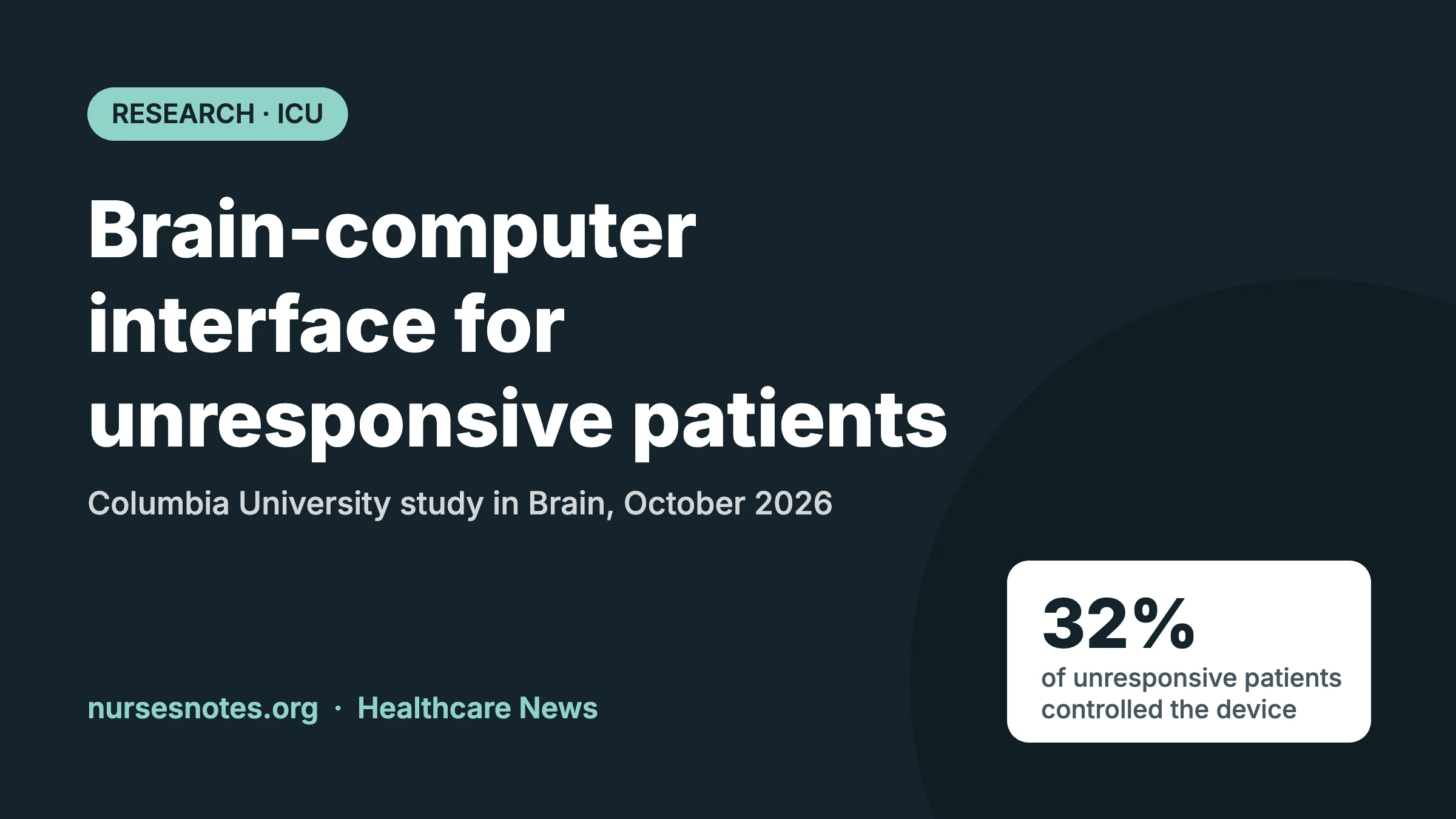
A bedside brain-computer interface for unresponsive patients allowed 13 of 41 (32%) clinically unresponsive ICU patients with acute brain injury to control a sound using only their attempted hand movements, a Columbia University study in the journal Brain reports. Patients who could control the device were much more likely to regain consciousness and independence, but the study is small and the tool is still experimental.
Key points
- Of 41 unresponsive patients, 13 (32%) controlled the EEG-based device within days of their brain injury.
- At 12 months, 6 of 13 patients who controlled the device (46%) had regained functional independence, compared with 2 of 28 (7%) who did not.
- The prospective, single-centre study was published on 22 October 2026; the authors say larger studies are needed to confirm the results.
How the brain-computer interface works
Patients wore standard EEG electrodes and listened to a beeping tone through headphones. A recorded voice asked them to change the tone by trying to open and close their right hand, according to Columbia University Irving Medical Center.
A bedside computer read the brain signals in real time and gave encouraging feedback. No surgery or implant was involved, which makes it more practical in the ICU than scanners such as fMRI.
Brain-computer interface study results
The team, led by neurologist Jan Claassen, MD, tested 41 unresponsive patients, 22 conscious critically ill patients, and 8 healthy volunteers at Columbia University Medical Center and NewYork-Presbyterian Hospital.
| Group | Controlled the device | Recovered consciousness by discharge | Functional independence at 12 months |
|---|---|---|---|
| Unresponsive patients who controlled the device | 13 of 41 (32%) | 4 of 13 (31%) | 6 of 13 (46%) |
| Unresponsive patients who did not | 28 of 41 | 1 of 28 (4%) | 2 of 28 (7%) |
| Conscious ICU patients | 9 of 22 (41%) | Not applicable | Not reported |
| Healthy volunteers | 8 of 8 (100%) | Not applicable | Not applicable |
- Eight unresponsive patients (20%) showed hidden awareness, called cognitive motor dissociation (CMD), on a separate EEG test, and all of them were among those who controlled the device.
- None of the patients who neither controlled the device nor showed CMD recovered.
- Responses were slower in unresponsive patients, with a median delay of 49.8 seconds, compared with 17.1 seconds in conscious patients and 15.5 seconds in healthy volunteers.
- All 37 patients and family members who answered a survey supported possible future use of such devices.
Limitations
- The study included only 41 unresponsive patients at one hospital, and the wide confidence intervals mean the size of the link with recovery is uncertain.
- It is an observational study. Controlling the device predicted better outcomes; it does not show that the device itself caused recovery.
- Only 41% of conscious patients could control the device, so a failed test does not prove a patient is unaware. Claassen called it “only a first step.”
What it means for nurses
- Some patients who look unresponsive may hear and understand. Keep explaining care, speaking to patients by name, and protecting their dignity.
- Encourage families to talk to patients; participants suggested future versions could use a loved one’s voice.
- Keep careful neuro assessments, such as the Glasgow Coma Scale, and report subtle changes; tools like this may one day add to bedside assessment.
- The device is not yet available outside research, so do not promise families it can be used for their loved one.
Frequently asked questions
What is a brain-computer interface?
A brain-computer interface is a system that reads brain signals and turns them into an action, such as moving a cursor or changing a sound. In this study, a noninvasive EEG cap let unresponsive ICU patients change the pitch and tempo of a tone by trying to move their hand, without any surgery or implant.
What is cognitive motor dissociation?
Cognitive motor dissociation (CMD) describes patients who seem unresponsive but whose brain activity shows they understand and try to follow commands. They cannot move, so they appear unaware. Columbia researchers previously found signs of hidden awareness in 15% of unresponsive brain-injured patients, and CMD patients are more likely to recover.
Can unresponsive patients hear you?
Some can. In this study, about one in three clinically unresponsive patients responded to spoken instructions through the device within days of brain injury. Because bedside exams cannot yet tell which patients are aware, nurses should assume a patient may hear and keep talking to them respectfully.
Related on Nurses Notes
- Glasgow Coma Scale: scoring guide and nursing tips
- Signs of stroke and what to do
- Latest healthcare news and research for nurses
Sources
- Shen Q, et al. Clinically unresponsive patients with acute brain injury activate a brain-computer interface (Brain, 22 October 2026)
- A brain-computer interface may give unresponsive ICU patients a voice (Columbia University Irving Medical Center, 22 October 2026)
This summary is for information only and does not replace official guidance or advice from a qualified professional.