On this page
The main signs of stroke are sudden face drooping, arm or leg weakness on one side, slurred or confused speech, loss of balance, and sudden vision trouble. If you notice any of them, call your local emergency number straight away, because fast treatment can save brain tissue and lives.
Key points
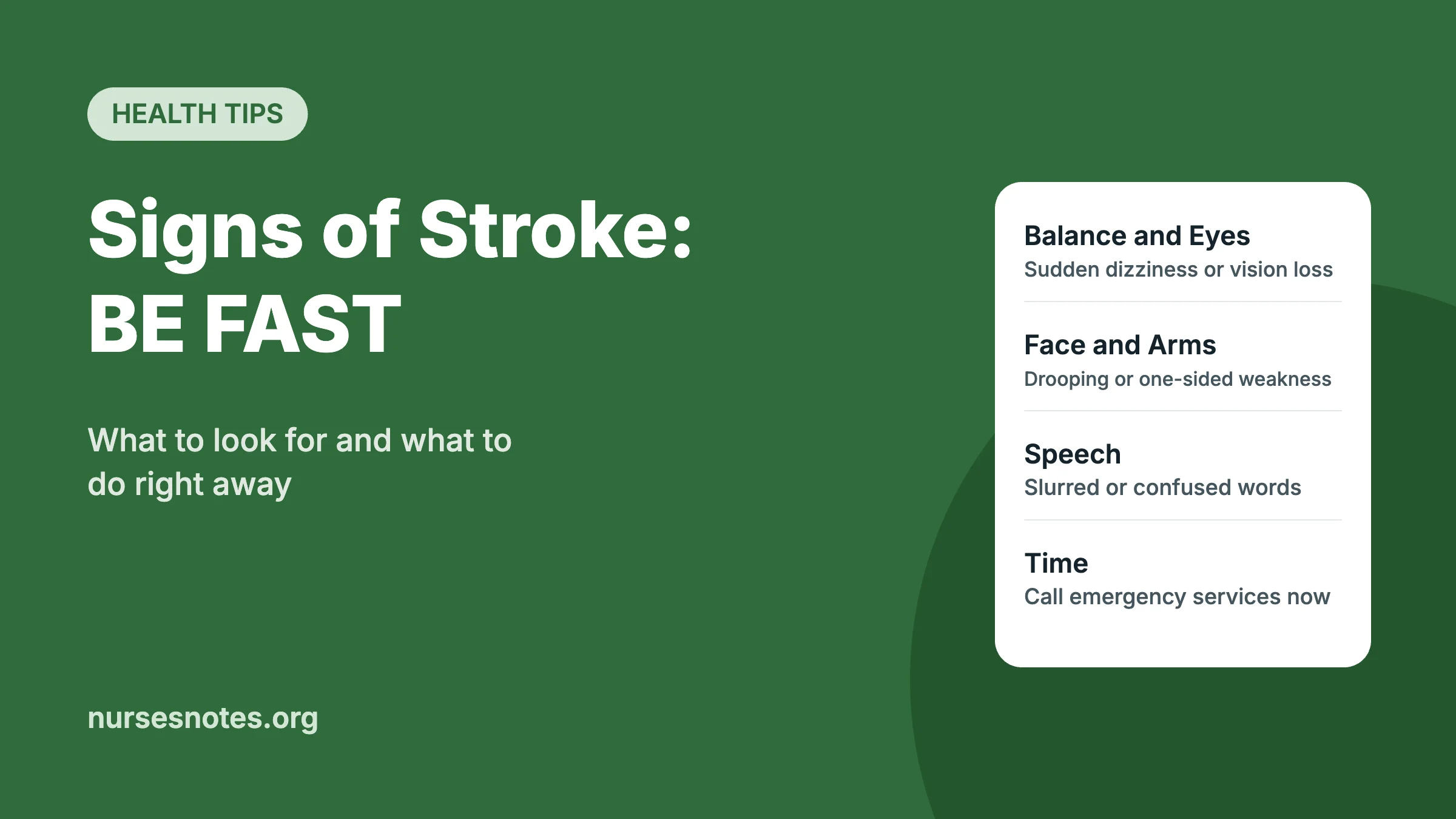
- Use BE FAST: Balance, Eyes, Face, Arms, Speech, and Time to call for help.
- Note the time the symptoms started, because doctors use it to decide on treatment.
- Call an ambulance rather than driving, so care can start on the way.
- Symptoms that go away (a TIA or “mini-stroke”) still need emergency care.
What is a stroke?
A stroke happens when blood supply to part of the brain is cut off or reduced, so brain cells stop getting oxygen. Mayo Clinic explains that most strokes are ischemic, caused by a blocked artery, while a hemorrhagic stroke is caused by a blood vessel in the brain leaking or bursting.
The CDC lists stroke as a leading cause of death and a major cause of serious long-term disability in adults. The good news is that it is often preventable and treatable.
Signs of stroke: the BE FAST test
| Letter | Check | What you might notice |
|---|---|---|
| B – Balance | Ask if they feel dizzy or unsteady | Sudden loss of balance, stumbling, or poor coordination |
| E – Eyes | Ask if they can see normally | Blurred, double, or lost vision in one or both eyes |
| F – Face | Ask them to smile | One side of the face droops |
| A – Arms | Ask them to raise both arms | One arm drifts down or cannot be lifted |
| S – Speech | Ask them to repeat a simple phrase | Slurred, strange, or confused speech |
| T – Time | Call for help now | Note the exact time symptoms began |
Other stroke symptoms to know
Stroke symptoms come on suddenly. Besides BE FAST, the NHS, CDC, and Mayo Clinic list:
- Numbness or weakness down one side of the body, including the leg
- Trouble finding words or understanding others
- Confusion or memory loss
- A sudden, severe headache with no known cause, sometimes with vomiting
- Dizziness or falling
- Nausea or vomiting
According to the CDC, these warning signs are the same for men and women.
What to do if you think someone is having a stroke
- Call your local emergency number immediately (for example 911 in the USA or 999 in the UK). Do not wait to see if symptoms improve.
- Note the time the symptoms started, or the last time the person was seen well.
- Do not drive them yourself unless emergency services tell you to. Paramedics can begin assessment and treatment on the way.
- Follow the call handler’s advice, stay with the person, and keep them as comfortable and safe as possible.
- Tell the ambulance crew what you saw, when it started, and any medicines or health conditions you know about.
Time matters. The CDC notes that the most effective stroke treatments generally need the stroke to be recognised and diagnosed within 3 hours of the first symptoms.
What about a “mini-stroke” (TIA)?
A transient ischemic attack (TIA) causes stroke-like symptoms that pass, sometimes within minutes. Mayo Clinic warns that you cannot tell a TIA from a stroke by symptoms alone, and a TIA raises the risk of a future stroke.
The NHS advises calling for emergency help if you have had stroke signs in the last 24 hours, even if they have stopped. Never ignore symptoms just because you feel fine again.
Who is at higher risk?
Mayo Clinic lists these common risk factors, many of which can be treated or changed:
- High blood pressure, high cholesterol, diabetes, and obesity
- Smoking, heavy drinking, physical inactivity, and illegal drug use
- Heart conditions such as atrial fibrillation, plus obstructive sleep apnoea
- Age 55 or older, and a personal or family history of stroke, heart attack, or TIA
How to lower your stroke risk
Controlling blood pressure is one of the most important steps. For practical ideas, see our guide on how to lower blood pressure naturally. Other helpful habits include:
- Taking prescribed medicines for blood pressure, cholesterol, diabetes, or heart rhythm as directed
- Eating plenty of fruits and vegetables and limiting saturated and trans fats
- Aiming for about 150 minutes of moderate activity a week, as Mayo Clinic notes
- Stopping smoking, limiting alcohol, and treating sleep apnoea if you have it
- Getting regular blood pressure checks, especially if you have any of the risk factors above
When to get medical help
- Emergency, call now: any BE FAST sign, a sudden severe headache, sudden confusion, or sudden vision loss, even if it improves.
- See a doctor soon: if you have risk factors such as high blood pressure, diabetes, or an irregular heartbeat and want a plan to lower your risk.
Frequently asked questions
What are the first warning signs of a stroke?
The first signs are usually sudden: one side of the face drooping, weakness or numbness in one arm or leg, slurred or confused speech, sudden dizziness or loss of balance, and sudden blurred or lost vision. Some people also get a sudden severe headache. Any of these means you should call emergency services straight away.
Can stroke symptoms come and go?
Yes. Symptoms that appear and then fade may be a transient ischemic attack (TIA), sometimes called a mini-stroke. It can look exactly like the start of a full stroke and is a warning that a stroke may follow. Treat it as an emergency, call for help, and get checked even if you feel normal again.
Should I drive someone with stroke symptoms to the hospital?
Health agencies such as the CDC advise calling an ambulance instead of driving. Paramedics can assess the person, alert the hospital, and start care on the way, which can save valuable time. Note when the symptoms began and tell the crew, because this helps doctors choose the right treatment.
Related on Nurses Notes
- How to lower blood pressure naturally
- Glasgow Coma Scale: scoring guide and nursing tips
- Signs of dehydration in adults
- All Health Tips on Nurses Notes
Sources
- Signs and Symptoms of Stroke, Centers for Disease Control and Prevention (CDC), accessed October 2026
- Stroke: Symptoms, NHS, accessed October 2026
- Stroke: Symptoms and causes, Mayo Clinic, accessed October 2026
This article is for education only and does not replace advice from your own doctor, nurse, or other qualified health professional.