On this page
Cradle cap is a common, harmless condition that causes greasy, yellowish, or white scaly patches on a baby’s scalp. It is not contagious, it is not caused by poor hygiene, and it usually clears on its own within a few weeks or months with gentle home care.
Key points
- Cradle cap usually starts in the first few weeks to two months of life and has often cleared by the first birthday.
- It is rarely itchy or painful, and you cannot catch it from another baby.
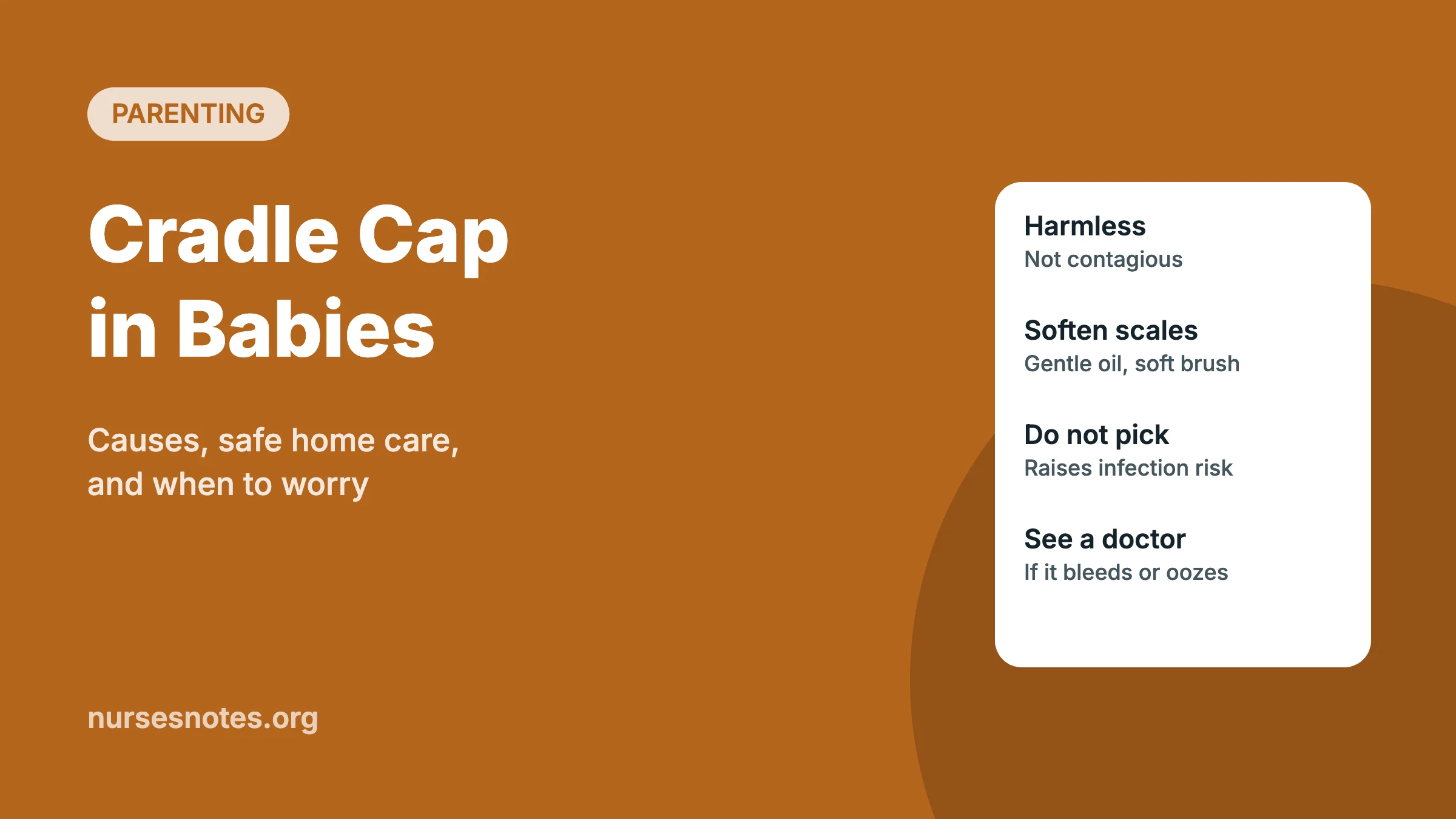
- Gently wash, loosen, and brush the scales; do not pick at them, as this can lead to infection.
- See a doctor if the skin bleeds, oozes, swells, spreads widely, or does not improve after a few weeks of care.
What is cradle cap?
Cradle cap is the name for seborrheic dermatitis when it affects a baby’s scalp. The American Academy of Pediatrics (AAP) says it often appears between three weeks and two months after birth and is very common in young babies.
The exact cause is not known. Mayo Clinic and the AAP describe two likely factors: hormones passed from mother to baby before birth, which make the oil glands more active, and a common yeast on the skin called Malassezia. It is not an allergy or an infection.
What does cradle cap look like?
- Greasy or oily patches of white or yellow scales or thick crusts on the scalp
- Skin under the scales that may look pink or red on lighter skin, or lighter or darker than the surrounding skin on brown or black skin
- Flakes that may come away with a little hair (the hair grows back)
- Sometimes similar patches on the eyebrows, behind the ears, in the neck folds, or in the nappy (diaper) area
Cradle cap is usually not itchy. If your baby seems very itchy or uncomfortable, the rash may be something else, such as eczema, so check with your doctor.
How to treat cradle cap at home
Treatment is not always needed, but these gentle steps, based on NHS, AAP, and Mayo Clinic advice, can help loosen the scales:
- Wash the hair regularly with a mild, unperfumed baby shampoo. The AAP suggests every other day helps most babies.
- Soften thick scales first. Gently massage a little emollient (baby moisturiser), coconut oil, mineral oil, or petroleum jelly into the scalp. Leave it for a few minutes, or overnight for stubborn scales.
- Brush gently with a soft baby brush or fine-toothed comb to lift loose scales.
- Wash the oil out well. Mayo Clinic notes that oil left on the scalp can make cradle cap worse.
- Keep going once it clears. Washing two or three times a week with mild baby shampoo can help stop it coming back.
If the patches spread to the nappy area, change wet or dirty nappies promptly. Our guide on how to treat diaper rash explains gentle barrier care.
What to avoid
- Picking or scratching the crusts. This raises the risk of infection.
- Peanut oil. The NHS advises against it because of the risk of allergy.
- Olive oil. The NHS says it may not be suitable for a baby’s skin.
- Adult shampoos, soap, or perfumed products, which can irritate the skin.
- Dandruff shampoos with salicylic acid. Mayo Clinic says these are not recommended for babies because the acid can be absorbed through the skin.
- Medicated creams or shampoos without advice. Ask your doctor or pharmacist first, as some are too strong for a baby’s skin.
When to see a doctor
Cradle cap is not an emergency, but book a visit with your doctor, nurse, or health centre if:
- It has not improved after a few weeks of home care.
- It spreads to the face or body, or covers large areas.
- The crusts bleed, ooze fluid or pus, or the skin looks swollen.
- The skin smells, looks very red, or your baby seems itchy or in pain.
These can be signs of infection or of another skin condition, such as eczema. A doctor may suggest a mild cream or a medicated shampoo that is suitable for babies.
Get medical help urgently if your baby also has a fever, is feeding poorly, is unusually sleepy, or seems unwell. A young baby with a fever always needs to be checked, and any baby who is floppy, hard to wake, or having trouble breathing needs emergency care.
Frequently asked questions
How long does cradle cap last?
Cradle cap usually goes away on its own within a few weeks or months. The AAP notes that most babies are clear of it by their first birthday, although some toddlers still have a little flaky buildup. Gentle washing and brushing can help the scales lift sooner, but it may come back from time to time.
Can I use coconut oil for cradle cap?
Yes, the NHS and the AAP both list coconut oil as an option to soften the scales. Massage a small amount into the scalp, leave it for a while, brush gently, and then wash it out with baby shampoo. Avoid peanut oil, and check with your doctor or pharmacist if your baby has sensitive skin.
Is cradle cap caused by poor hygiene?
No. Cradle cap is not caused by poor hygiene, and it is not an infection or an allergy, so it is not your fault. Experts think it is linked to active oil glands and a common skin yeast. It also cannot spread to other babies.
Related on Nurses Notes
- How to treat diaper rash: home care and when to worry
- Newborn jaundice: signs and when to worry
- More parenting and child health guides
Sources
- Cradle cap. NHS, reviewed 3 October 2025.
- What is Cradle Cap?. Stein S. HealthyChildren.org, American Academy of Pediatrics, updated 19 October 2023.
- Cradle cap – Symptoms and causes and Cradle cap – Diagnosis and treatment. Mayo Clinic, 30 April 2025.
- Seborrheic dermatitis. MedlinePlus Medical Encyclopedia, U.S. National Library of Medicine, reviewed 1 April 2025.
This article is for education only and does not replace advice from your own doctor, nurse, or other qualified health professional.