
On this page
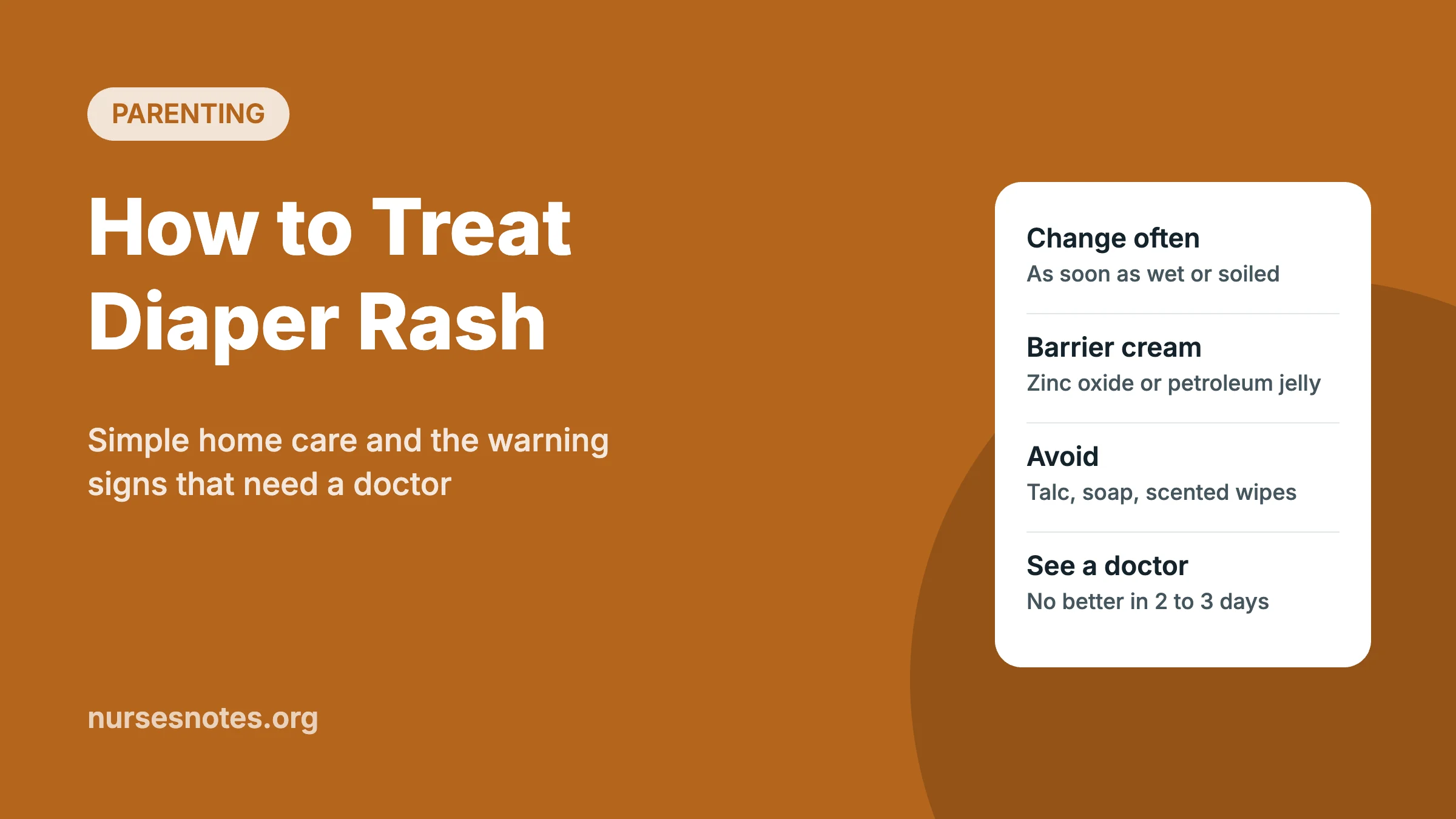
To treat diaper rash, change wet or dirty diapers quickly, clean the skin gently, let it dry, and apply a thick layer of a zinc oxide or petroleum jelly barrier cream at each change. Most diaper rashes improve within a few days of home care, but some need a doctor, especially if the rash is spreading, blistering, or comes with a fever.
Key points
- Most diaper rash is caused by skin irritation from urine and stool, especially during diarrhea or teething.
- Keep the area clean, dry, and protected with a thick barrier cream, and give your baby diaper-free time.
- Avoid talcum powder, scented wipes, soap, and over-the-counter antibiotic ointment.
- See a doctor if the rash is not better after 2 to 3 days, has blisters, pus, or oozing, or comes with a fever.
What is diaper rash?
Diaper rash (called nappy rash in the UK) is irritated, inflamed skin in the area covered by the diaper. It is very common in babies and toddlers, and it usually clears with simple care at home.
Signs and symptoms
- Red or pink, raw-looking skin on the bottom, genitals, or thighs
- Spots, small bumps, or blisters (redness can be harder to see on brown or black skin)
- Dry or scaly patches
- Fussiness or crying, especially during diaper changes
Common causes
- Irritation: wet or soiled diapers left on too long, frequent stools, or diarrhea. Teething can add to this, because babies swallow more saliva.
- Friction: diapers or clothes that are too tight.
- Yeast (candida): often after antibiotics. It looks bright red or pink and shiny with sharp edges, and is usually worse in the skin folds.
- Reactions to products: new wipes, diapers, soaps, or laundry products with fragrances or dyes.
- Bacterial infection: less common, but can cause crusts, pus, or spreading redness.
If your baby has diarrhea, the skin can break down quickly, so change diapers often. Our guide to diarrhea in children explains home care and warning signs.
How to treat diaper rash at home
- Change diapers often. Change as soon as the diaper is wet or soiled, including at night if the rash is bad.
- Clean gently. Use warm water or fragrance-free, alcohol-free wipes. Pat the skin dry instead of rubbing.
- Let the skin breathe. Give your baby some diaper-free time each day, for example on a towel.
- Protect the skin. Apply a thick layer of barrier cream or paste with zinc oxide or petroleum jelly at every change. If a clean layer of cream is still on the skin, you can leave it and add more on top.
- Fit the diaper loosely. Use absorbent diapers that are snug but not tight, and avoid plastic pants over them.
- Bathe gently. A daily bath with plain water or a mild, fragrance-free cleanser helps, but over-washing can dry the skin.
- Wash your hands before and after each diaper change, especially if yeast is suspected.
What to avoid
- Talcum powder
- Soap, bubble bath, baby lotion, and wipes with alcohol or fragrance
- Over-the-counter antibiotic ointment, which can make irritation worse
- Medicated or steroid creams, unless a doctor, nurse, or pharmacist has advised one
- Products not designed for babies
If a rash does not settle, your doctor may recommend a medicated cream, such as an antifungal cream for yeast or a mild steroid cream for a short time. How much to use and for how long depends on your child and the product, so follow the label or the advice of your doctor or pharmacist.
When to get medical help
Contact your doctor or health worker if:
- The rash is not improving, or is getting worse, after 2 to 3 days of home care
- There are blisters, pimples, pus, peeling, oozing, crusts, or bleeding
- The rash spreads beyond the diaper area
- Your baby is in a lot of pain, or cries when passing urine or stool
- A bright red rash with red spots at the edges appears while your baby is taking antibiotics
- Your baby has a fever with the rash
Get urgent medical care (call your local emergency number or go to the nearest emergency department) if your baby:
- Is under 3 months old and has a temperature of 38°C (100.4°F) or higher
- Has a rash that does not fade when you press a clear glass against it
- Is very drowsy, hard to wake, or not interested in feeding
- Has trouble breathing, or blue, grey, or blotchy skin or lips
- Has signs of dehydration, such as few wet diapers, sunken eyes, or no tears when crying
For more on high temperature in children, see how to bring down a child’s fever.
How to prevent diaper rash
- Change diapers promptly and clean gently at every change.
- Use a barrier cream at each change if your baby gets rashes often.
- Choose fragrance-free products, and switch brands for about two weeks if you suspect an allergy.
- For cloth diapers, use liners and change them often.
Frequently asked questions
How long does diaper rash take to go away?
Most mild diaper rashes improve within two to three days of good home care: frequent changes, gentle cleaning, air time, and a thick barrier cream. If the rash is not better after two to three days, is getting worse, or keeps coming back, ask your doctor, as it may be a yeast or bacterial infection.
What is the best cream for diaper rash?
A thick barrier cream or paste containing zinc oxide or petroleum jelly is the usual first choice, and fragrance-free products are best. Apply it generously at every change. Medicated creams, such as antifungal or steroid creams, should only be used if a doctor, nurse, or pharmacist recommends them for your baby.
How can I tell if diaper rash is a yeast infection?
A yeast rash is often bright red or pink and shiny, with sharp edges and small red spots around it. It tends to be worst in the skin folds of the groin and often appears after a course of antibiotics. It usually needs an antifungal cream, so ask your doctor or pharmacist.
Related on Nurses Notes
- Diarrhea in children: home care, ORS, and warning signs
- Teething symptoms: signs, safe relief, and when to worry
- How to bring down a child’s fever
- All parenting articles
Sources
- Common Diaper Rashes & Treatments. HealthyChildren.org, American Academy of Pediatrics, December 2024.
- Diaper rash: Symptoms and causes. Mayo Clinic, February 2024.
- Diaper rash: Diagnosis and treatment. Mayo Clinic, February 2024.
- Nappy rash. NHS, reviewed August 2026.
- High temperature (fever) in children. NHS, reviewed January 2024.
This article is for education only and does not replace advice from your own doctor, nurse, or other qualified health professional.