On this page
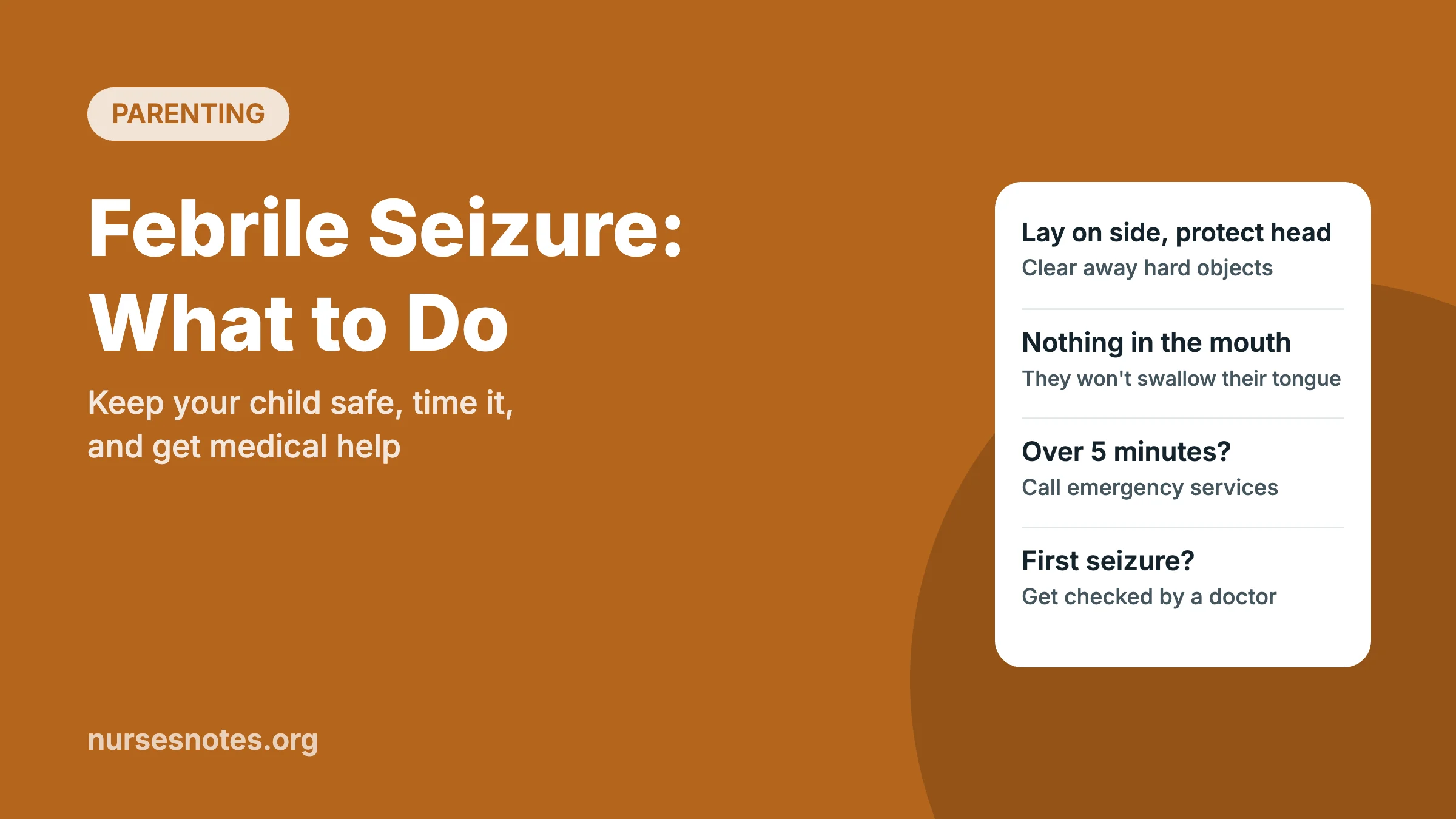
A febrile seizure is a fit that can happen when a young child has a fever, and although it looks frightening, it is usually not serious and rarely causes lasting harm. During a febrile seizure, keep your child safe on their side, time it, and get medical help, calling your local emergency number if it lasts more than 5 minutes or it is the first one.
Key points
- Febrile seizures mostly affect children between about 6 months and 5 to 6 years old and usually last only a few minutes.
- Lay your child somewhere safe, protect their head, never put anything in their mouth, and time the seizure.
- Call your local emergency number if a seizure lasts more than 5 minutes, it is the first one, or your child has trouble breathing.
- Fever medicine can make a child more comfortable but does not prevent febrile seizures.
What is a febrile seizure?
A febrile seizure (also called a febrile convulsion) is a seizure triggered by a fever in an otherwise healthy child. MedlinePlus explains that a temperature of 38°C (100.4°F) or higher may set one off, and seizures often happen in the first 24 hours of an illness, sometimes before parents notice the fever.
The American Academy of Pediatrics (AAP) says febrile seizures affect about 3 to 4 in every 100 children, most often around 12 to 18 months of age. They tend to run in families.
Signs of a febrile seizure
A febrile seizure can look different from child to child. Common signs include:
- Stiffening of the body, or twitching, shaking, or jerking of the arms and legs
- Eyes rolling back, staring, or not responding when you talk to them
- Losing consciousness
- Vomiting or wetting themselves
- Sleepiness, crankiness, or confusion for up to an hour afterwards
The NHS says most febrile seizures last 2 to 3 minutes, and one lasting longer than 10 minutes is rare.
What to do during a febrile seizure
Stay calm and focus on keeping your child safe. These steps are based on NHS, AAP, and MedlinePlus advice:
- Note the time the seizure starts, and check it again when it stops.
- Lay your child down on the floor or a bed, away from hard or sharp objects, and protect their head with your hands or something soft.
- Turn them onto their side so saliva or vomit can drain from the mouth.
- Loosen tight clothing, especially around the neck.
- Stay with your child the whole time.
- When the seizure stops, place them in the recovery position and check that nothing is blocking their mouth or throat.
What not to do
- Do not put anything in your child’s mouth, including your fingers or a spoon. The AAP notes that children “will not swallow their tongue.”
- Do not hold your child down or try to stop the movements.
- Do not try to cool them during the seizure by undressing them or sponging them with cold water.
- Do not leave your child alone.
When to call emergency services
Call your local emergency number right away if:
- The seizure lasts more than 5 minutes
- It is your child’s first seizure
- Your child has difficulty breathing
- The stiffness or jerking affects only one side of the body
- Your child is unusually sleepy for more than an hour after the seizure stops
- Your child has more than one seizure within 24 hours or during the same illness
If your child is still seizing or unconscious, call an ambulance rather than driving them yourself. The NHS advises that a first febrile seizure should always be checked in hospital, even if your child seems fine afterwards.
After a febrile seizure
Your child may be sleepy or confused for a while. A doctor will look for the cause of the fever and may do blood or urine tests. Most febrile seizures need no specific treatment, but the infection causing the fever may need treating.
If you give a fever medicine for comfort, the right dose depends on your child’s weight and the product, so follow the label or ask your doctor or pharmacist. Our guide on how to bring down a child’s fever safely has more home-care tips.
Will it happen again?
Many children only ever have one febrile seizure. The AAP says the chance of another is about 50% if the first happened before age 1, and about 30% if it happened after age 1.
Febrile seizures are not epilepsy. MedlinePlus says there is no evidence that simple febrile seizures cause brain damage or learning problems, and most children outgrow them by about age 5. If seizures keep happening, a doctor may prescribe a rescue medicine to use during a seizure.
Frequently asked questions
Can giving paracetamol or ibuprofen prevent a febrile seizure?
No. The AAP and MedlinePlus both say fever-reducing medicines do not prevent febrile seizures, even when given early. They can help a child feel more comfortable during an illness. Always follow the label or your doctor’s or pharmacist’s advice, because the right dose depends on your child’s weight and the product.
Are febrile seizures dangerous?
Most febrile seizures are harmless and stop on their own within a few minutes. They do not usually cause brain damage or long-term problems. However, a seizure lasting more than 5 minutes is an emergency, and every first seizure should be checked by a doctor to find and treat the cause of the fever.
What is the difference between a febrile seizure and epilepsy?
A febrile seizure happens only with a fever, usually in children under about 6 years old. Epilepsy means repeated seizures without a fever or other clear trigger. Children who have had febrile seizures have only a slightly higher, but still small, chance of developing epilepsy later, according to the NHS.
Related on Nurses Notes
- How to bring down a child’s fever safely at home
- Diarrhea in children: home care, ORS, and warning signs
- More parenting articles
Sources
- Febrile seizures (NHS, reviewed 2023)
- Febrile Seizures (American Academy of Pediatrics, HealthyChildren.org, updated December 2025)
- Febrile seizures (MedlinePlus, U.S. National Library of Medicine, reviewed January 2026)
This article is for education only and does not replace advice from your own doctor, nurse, or other qualified health professional.