
On this page
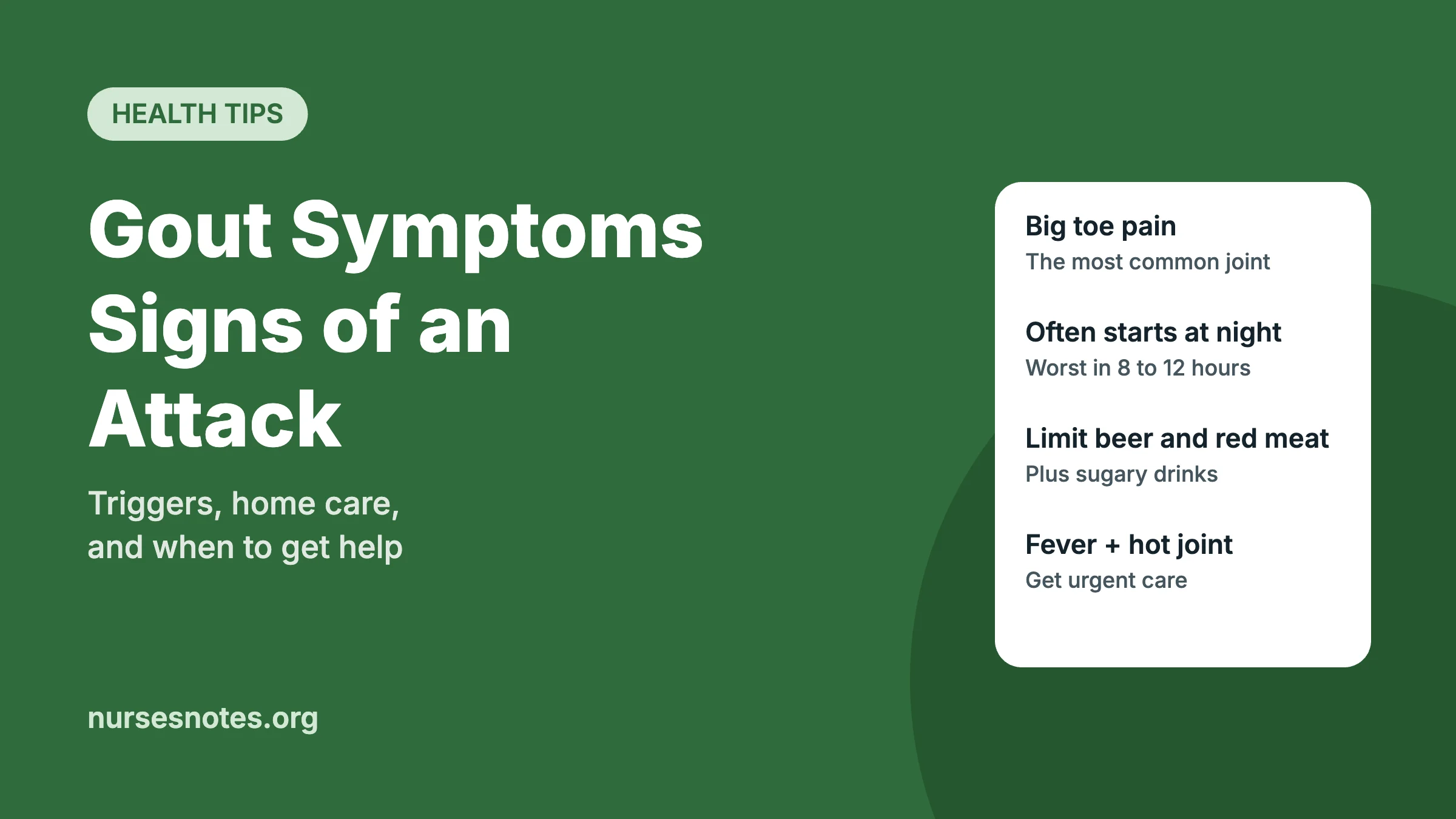
The most common gout symptoms are sudden, severe pain, swelling, warmth, and redness in a joint, most often the big toe. Attacks often start at night, peak within hours, and usually settle within one to two weeks, but they can come back if the cause is not treated.
Key points
- Gout is a type of arthritis caused by a build-up of uric acid crystals in a joint.
- The big toe is the joint most often affected, but ankles, knees, feet, hands, wrists, and elbows can also flare.
- Red meat, organ meat, some seafood, alcohol (especially beer), and drinks sweetened with fructose can raise the risk.
- A hot, painful joint with fever needs urgent medical care, because it could be a joint infection.
What is gout?
Gout is a form of inflammatory arthritis. It happens when uric acid builds up in the blood and forms sharp crystals inside and around a joint, which triggers sudden inflammation.
It is more common in men. Women usually develop it after menopause. Mayo Clinic notes men are most likely to get it between ages 30 and 50, and women after 60.
Signs and symptoms of a gout attack
- Sudden, intense joint pain, often starting overnight. Mayo Clinic says pain is usually worst in the first 8 to 12 hours.
- Swelling and warmth in the joint, which may feel too tender to touch, even with a bedsheet.
- Red or shiny skin over the joint. On brown or Black skin, redness can be harder to see, so swelling and warmth may be easier to notice.
- Stiffness and less movement in the joint as the attack settles.
- Lingering discomfort for a few days to a few weeks after the worst pain eases.
Without treatment, an attack usually lasts one to two weeks (NHS). Many people have no symptoms between attacks.
What triggers gout?
| Risk factor | Examples |
|---|---|
| Diet | Red meat, organ meat (such as liver), and some seafood such as anchovies, sardines, mussels, scallops, trout, and tuna |
| Drinks | Alcohol, especially beer, and soft drinks or juices sweetened with fructose or high-fructose corn syrup |
| Body weight | Being overweight or living with obesity |
| Medicines | Diuretics (water pills); Mayo Clinic also lists low-dose aspirin, ACE inhibitors, and beta-blockers |
| Health conditions | High blood pressure, diabetes, metabolic syndrome, heart disease, and kidney disease |
| Other | A family history of gout, or a recent operation or injury |
If you take a diuretic such as furosemide, ask your doctor whether it could be affecting your uric acid. Nurses can read more in our furosemide nursing considerations guide.
How to relieve gout pain during an attack
The NHS suggests these self-care steps alongside any treatment your doctor prescribes:
- Take the medicine your doctor or pharmacist recommends as soon as possible. Prescribed gout treatment should start working within about 2 days.
- Rest and raise the affected limb.
- Cool the joint with an ice pack, or a bag of frozen peas, wrapped in a towel for up to 20 minutes at a time.
- Drink plenty of water, unless your doctor has told you to limit fluids.
- Keep the joint uncovered at night and avoid knocking or putting pressure on it.
Doctors may use anti-inflammatory painkillers, colchicine, or steroids for attacks, and uric acid-lowering medicines such as allopurinol or febuxostat to prevent future ones. Which one is right depends on your health and other medicines, so follow your doctor’s advice.
How gout is diagnosed
A doctor will ask about your symptoms, diet, alcohol use, and medicines. A blood test can check your uric acid level, and sometimes fluid is taken from the joint with a thin needle to look for crystals. Imaging such as an X-ray or ultrasound may also help.
How to prevent gout attacks
- Reach a healthy weight gradually, without crash diets.
- Cut down on alcohol and have several alcohol-free days each week.
- Limit sugary drinks and snacks, and eat less red meat, organ meat, and high-purine seafood.
- Drink enough fluids so you do not become dehydrated.
- Stay active. CDC suggests at least 150 minutes a week of moderate activity, such as brisk walking.
- Stop smoking, and take uric acid-lowering medicine every day if it has been prescribed.
Possible complications
Repeated attacks can damage joints over time. Some people develop tophi, which are firm lumps of crystals under the skin, often on the fingers, elbows, or ears. High uric acid can also lead to kidney stones.
When to get medical help
Seek urgent medical care (same-day doctor or emergency department) if:
- a joint is suddenly painful and swollen and the pain is getting worse;
- you have a fever, or feel hot, cold, or shivery, with a hot, inflamed joint;
- you feel sick or cannot eat.
These signs can mean an infection inside the joint, which needs treatment quickly. See a doctor for a first suspected gout attack, or if your usual treatment is not working.
Frequently asked questions
What does the start of a gout attack feel like?
Many people first notice a burning or throbbing pain in one joint, often the big toe, that wakes them at night. Within hours the joint becomes swollen, warm, and very tender. The pain usually peaks in the first 8 to 12 hours, so early treatment and rest can help you feel better sooner.
What foods should I avoid with gout?
Gout guidance from NHS, CDC, and Mayo Clinic suggests limiting red meat, organ meats such as liver, some seafood (such as anchovies, sardines, and mussels), beer and other alcohol, and drinks sweetened with fructose. Diet alone rarely cures gout, so follow any food plan and medicine your doctor recommends for you.
How long does a gout flare last?
An untreated gout flare usually lasts one to two weeks, according to the NHS, with the worst pain in the first day. Some discomfort can linger for a few weeks. With prompt treatment, many attacks settle faster. If flares keep returning, ask your doctor about long-term medicine to lower uric acid.
Related on Nurses Notes
- Kidney stone symptoms and when to get help
- How to lower blood pressure naturally
- Furosemide nursing considerations
- More health tips
Sources
- Gout — NHS, reviewed 2023.
- Gout – Symptoms and causes — Mayo Clinic, 2026.
- Gout — Centers for Disease Control and Prevention (CDC), 2024.
- Gout: What It Is, Symptoms & Treatment — Cleveland Clinic, 2026.
This article is for education only and does not replace advice from your own doctor, nurse, or other qualified health professional.