On this page
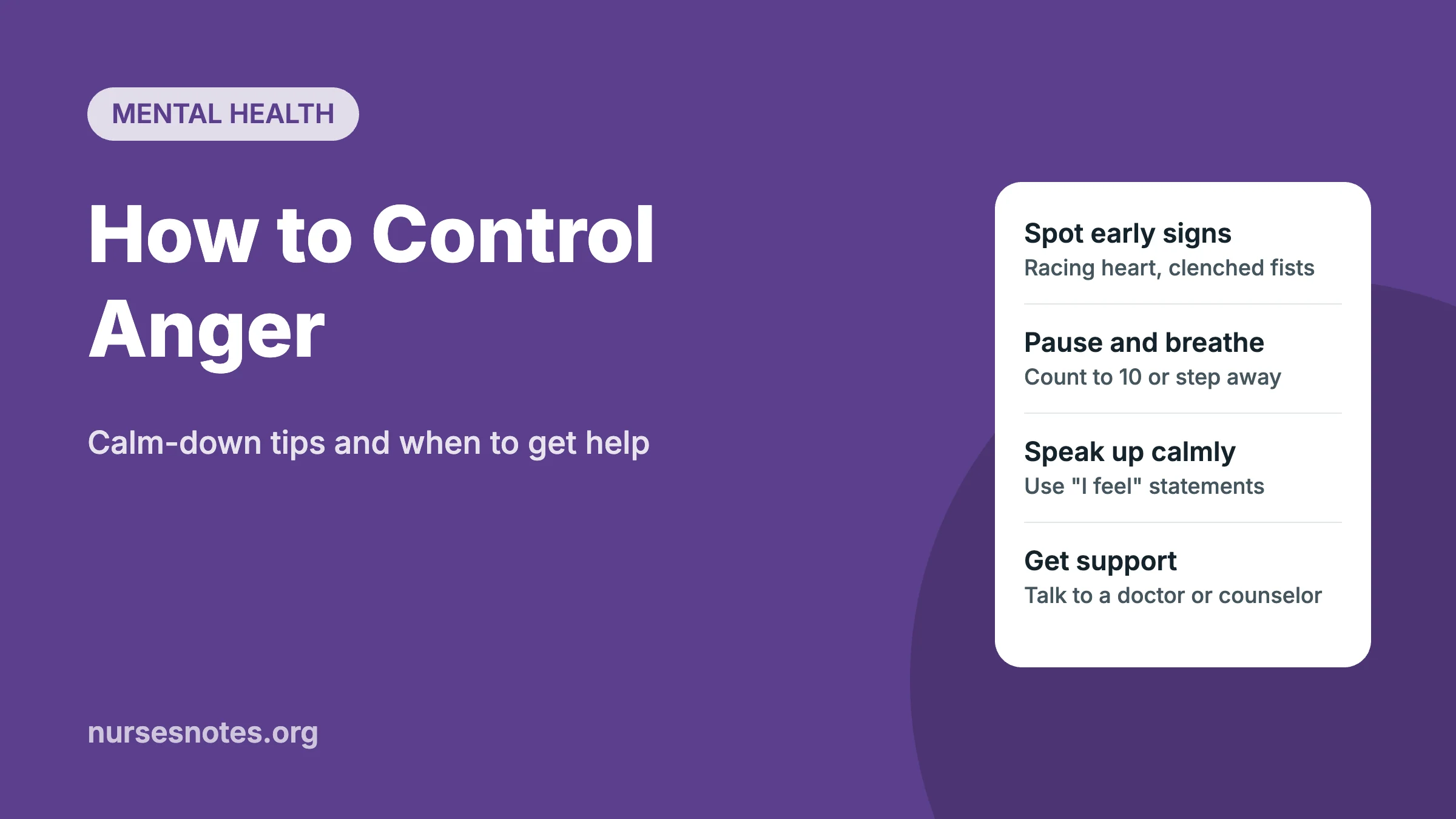
To control anger, learn to notice your early warning signs, pause before you react, and calm your body with slow breathing or a short break, then deal with the problem once you feel steadier. Anger is a normal, healthy emotion, and with practice and support most people can learn to express it in ways that do not hurt themselves or others.
Key points
- Anger is normal; it becomes a problem when it feels out of control or harms you or the people around you.
- Your body gives early warning signs, such as a racing heart, tense muscles, or clenched fists.
- Quick calming tools include slow breathing, counting to 10, and taking a timeout.
- If anger is affecting your relationships, work, or safety, talk to a doctor or mental health professional.
Why do we get angry?
Anger is a natural response when we feel threatened, treated unfairly, disrespected, or powerless. The American Psychological Association describes it as a normal and usually healthy emotion that ranges from mild irritation to intense rage.
Some things make anger harder to manage, including stress, tiredness, past trauma, and alcohol or drugs. Long shifts, short staffing, and difficult conversations with patients and families can also leave nurses running on a short fuse.
Signs that you are getting angry
Noticing anger early gives you more choice about how you respond. Common signs include:
- In your body: a faster heartbeat, quicker breathing, tight chest, tense muscles, clenched jaw or fists, and feeling hot.
- In your mind: feeling tense, unable to relax, easily irritated, humiliated, or resentful.
- In your behavior: shouting, sulking or ignoring people, starting arguments, or breaking things.
Some people turn anger inward instead, becoming withdrawn or feeling physically unwell. This is still worth taking seriously.
How to calm down in the moment
- Pause before you speak. Give yourself a few seconds to think, and allow the other person the same.
- Breathe slowly. Breathe from your belly rather than your chest. Our step-by-step guide to the box breathing technique is a simple place to start.
- Count to 10, or repeat a calming word or phrase such as “take it easy”.
- Take a timeout. Step away from the situation, for example for a short walk, and come back when you feel calmer.
- Picture a calm place or use gentle stretching to release tension.
- Use humor carefully. Lightening the mood can help, but avoid sarcasm, which often makes things worse.
How to manage anger in the long term
Know your triggers
Keep a simple diary of when you felt angry, what happened, how you reacted, and how you felt afterwards. Patterns often appear, such as anger when you are hungry, tired, or rushed.
Change unhelpful thinking
Angry thoughts often use words like “always”, “never”, and “should”. Try replacing them with more balanced words such as “sometimes” or “could”, and remind yourself that getting angry will not fix the problem.
Speak up calmly
Once you are calm, explain what is bothering you clearly and respectfully. Use “I” statements, such as “I feel frustrated when handovers start late”, rather than blaming. Listen to the other person’s side too.
Focus on solutions
Ask yourself what you can change and make a plan. Accept that some problems cannot be solved quickly, and try to let go of what is out of your control.
Look after your body
- Get regular physical activity, even a brisk walk.
- Protect your sleep as much as your shifts allow.
- Cut down on alcohol and avoid drugs, which make anger harder to control.
- Make time to relax, for example with music, journaling, or yoga.
Ongoing stress feeds anger, so our guide on how to manage stress may also help.
When anger becomes a problem
It may be time to get help if:
- Your anger feels out of control or frightens you or others.
- You often regret things you say or do when angry.
- Anger is damaging your relationships, work, or family life.
- You have acted aggressively or violently, or you turn your anger on yourself.
- You also feel very stressed, anxious, or low, especially if low mood lasts more than 2 weeks.
How to get help for anger
Start by talking to your doctor or a mental health professional. They can check for other causes, such as stress, anxiety, or depression, and may refer you to an anger management course or counseling.
Anger management programs can be one-to-one or in a group, and many use cognitive behavioral therapy (CBT). The APA notes that with counseling, many people see their anger move toward a calmer middle range within about 8 to 10 weeks, depending on the person and the techniques used.
If anger is leading to abuse or violence at home, or you feel unsafe because of someone else’s anger, contact your local emergency number or a domestic abuse support service.
Where to get help
If you are struggling, you do not have to cope alone. Talk to someone you trust, or contact a free helpline:
- Philippines: NCMH Crisis Hotline, 24/7: call 1553 or 0917 899 8727.
- USA: 988 Suicide & Crisis Lifeline, 24/7: call or text 988.
- UK: Samaritans, 24/7: call 116 123 free.
- Anywhere: if you or someone else is in immediate danger, call your local emergency number.
Reaching out is a sign of strength, and support can help.
Frequently asked questions
Is it normal to feel angry all the time?
Everyone feels angry sometimes, but feeling angry most of the time is a sign that something needs attention. Ongoing stress, poor sleep, burnout, depression, or anxiety can all make you more irritable. Talking to a doctor or mental health professional can help you find the cause and the right support.
What is the fastest way to calm down when angry?
Stop and step back before you react. Slow your breathing, count to 10, or take a short walk away from the situation. These steps calm your body’s stress response so you can think more clearly. Practice them when you are calm, so they come naturally when you need them.
Can anger management therapy help?
Yes. Anger management courses and talking therapies such as CBT teach you to spot triggers, change unhelpful thoughts, and express feelings assertively. They can be done one-to-one or in a group. Your doctor can suggest local options, and many people notice real improvement within a few months.
Related on Nurses Notes
- Box breathing technique: how to do it and how it helps
- How to manage stress: signs, coping tips, and when to get help
- Signs of nurse burnout and how to recover
- All mental health articles
Sources
- Get help with anger, NHS, reviewed 2026.
- How can I manage my anger long term?, Mind, 2023.
- Anger management: 10 tips to tame your temper, Mayo Clinic, 2024.
- Control anger before it controls you, American Psychological Association, 2023.
- DOH AND WHO PROMOTE HOLISTIC MENTAL WELLNESS IN LIGHT OF WORLD SUICIDE PREVENTION DAY, Department of Health Philippines (NCMH Crisis Hotline numbers).
- 988 Suicide & Crisis Lifeline; Contact a Samaritan, Samaritans.
This article is for education only and does not replace advice from your own doctor, nurse, or other qualified health professional.