On this page
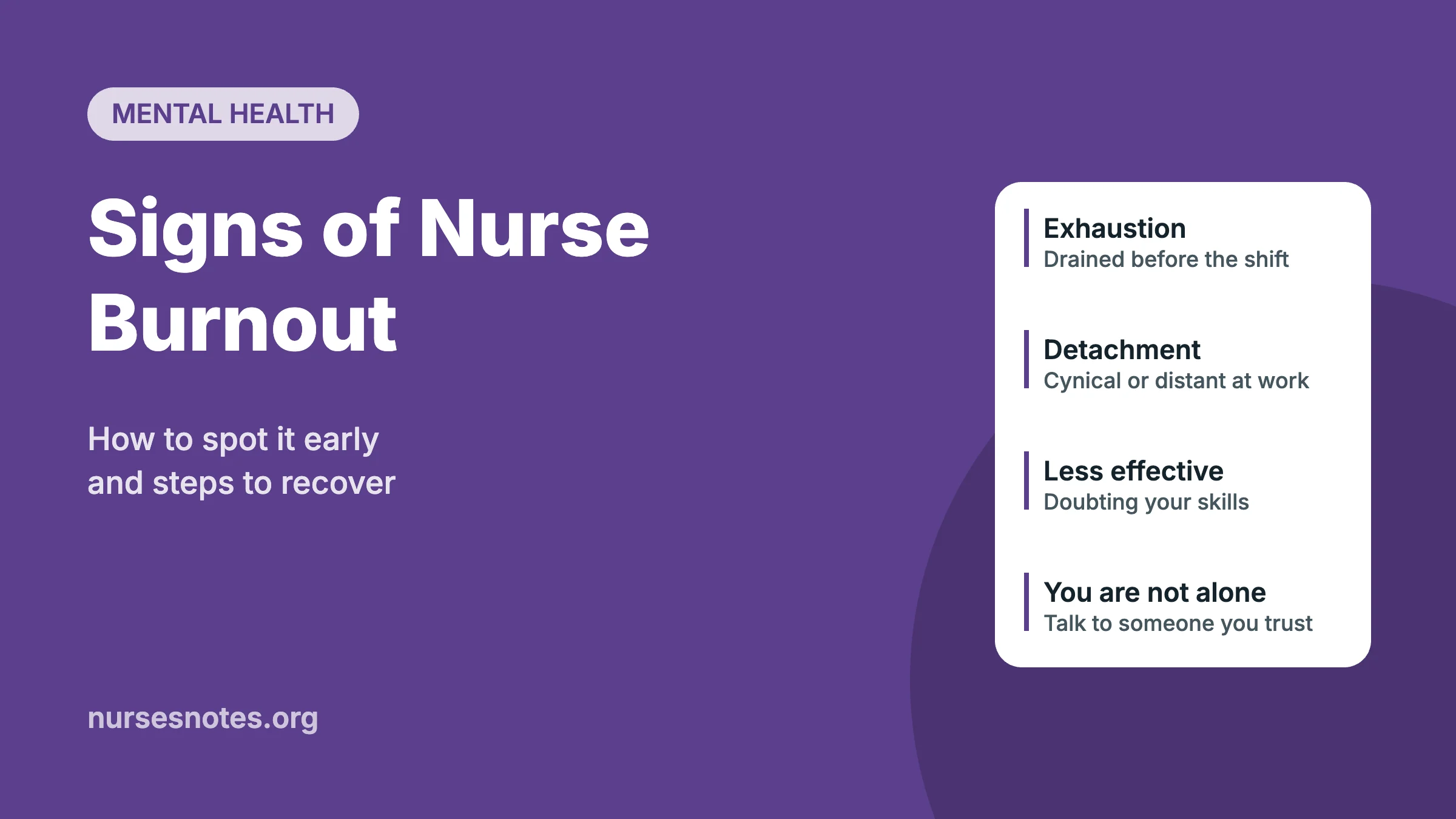
The main signs of nurse burnout are feeling exhausted most of the time, feeling detached or cynical about your work and patients, and feeling that you are no longer doing a good job. Burnout builds slowly from long-term work stress, but it can be eased with support, rest, and changes at work, and you do not have to wait until you are at breaking point to ask for help.
Key points
- The World Health Organization describes burnout as the result of chronic workplace stress that has not been successfully managed.
- Its three core features are exhaustion, mental distance or cynicism about the job, and reduced sense of effectiveness.
- Burnout is not a medical diagnosis, but its symptoms can overlap with depression, so it is worth talking to a professional.
- Recovery usually needs both personal care and changes in workload or support at work.
What is nurse burnout?
In the WHO’s ICD-11, burnout is listed as an occupational phenomenon rather than a medical condition. It applies specifically to work, not to stress in other parts of life.
Nursing carries many of the risk factors: long and changing shifts, heavy workloads, staff shortages, time on your feet, and the emotional weight of caring for very sick or dying patients. The American Nurses Association also highlights moral injury, the distress of being unable to give the care you know patients need because of things outside your control. Research on understaffing in hospitals shows how closely staffing, workload, and patient outcomes are linked.
Signs of nurse burnout
| Area | What it can look like |
|---|---|
| Exhaustion | Feeling drained before a shift starts; too tired to go to work; low energy and trouble focusing |
| Detachment | Feeling distant, impatient, or cynical about the job, patients, or co-workers; dreading work |
| Reduced effectiveness | Doubting your skills; little satisfaction from finishing tasks; feeling your work does not matter or is not appreciated |
| Body and habits | Trouble sleeping, tension, headaches, or stomach problems; using food, alcohol, or other substances to cope |
Burnout is common. The ANA cites a 2020 survey in which 62% of nurses reported burnout. Noticing these signs early is not a weakness; it is useful information.
Burnout, stress, or depression?
The WHO is clear that burnout refers specifically to work. Depression, by contrast, is a health condition that needs its own assessment and treatment, and it is not limited to how you feel about your job.
Because the symptoms can overlap and the two need different treatments, Mayo Clinic advises talking to a doctor or mental health professional if you recognise these signs in yourself.
How to recover from burnout
- Name it and talk about it. Share how you feel with someone you trust: a colleague, friend, family member, or a counsellor.
- Protect your rest. Aim for adequate sleep between shifts and use your leave. Real time off helps you recover.
- Talk to your manager or scheduler. Raise workload and shift patterns. Burnout is often a system problem, and managers can only change schedules if they know.
- Use the support available. Ask whether your employer has an employee assistance programme, peer support, or counselling service.
- Look after your body. Regular, healthy meals and exercise support your energy and help you manage stress.
- Try calming practices. Slow breathing, mindfulness, yoga, or meditation can help you step back from constant pressure.
- Ask for training or a change if you need it. More skills, a different unit, or a different role can restore a sense of control. If nothing changes, it is okay to consider a job that fits you better.
How to support a colleague who seems burned out
- Check in privately and listen without trying to fix everything at once.
- Offer practical help, such as covering a break so they can eat or rest.
- Encourage them to talk to their manager, a doctor, or a counsellor, and share support services you know about.
- If you are worried about their safety, stay with them and help them contact crisis support or emergency services.
When to get help
Contact a doctor or mental health professional if you feel low or hopeless most days, cannot sleep, are relying on alcohol or other substances to cope, or feel unable to function at work or home. If you ever have thoughts of harming yourself, or feel you cannot keep yourself safe, reach out to a crisis line or your local emergency number straight away. You deserve support, and help works.
Where to get help
- Philippines: NCMH Crisis Hotline, open 24/7: 1553, 1800-1888-1553, 0919-057-1553, 0966-351-4518, or 0917-899-8727 (0917-899-USAP).
- USA: 988 Suicide & Crisis Lifeline: call or text 988, or chat at 988lifeline.org. Free and confidential.
- UK: Samaritans: call 116 123, free, any time of day or night.
- Anywhere: if you or someone else is in immediate danger, call your local emergency number.
Frequently asked questions
How long does it take to recover from nurse burnout?
There is no fixed timeline, and it differs from person to person. Recovery tends to be slower if the causes at work, such as heavy workload or constant shift changes, stay the same. Rest, support from colleagues and managers, and help from a counsellor or doctor when needed all make a difference. Small steps still count.
Can burnout make you physically sick?
Yes, burnout can show up in the body. People commonly report poor sleep, headaches, stomach problems, and tension. Mayo Clinic notes that unaddressed burnout is linked with higher risk of high blood pressure, heart disease, type 2 diabetes, and getting ill more often, so physical symptoms are worth checking with a doctor.
Should I quit nursing if I am burned out?
Not necessarily. Many nurses recover by changing their schedule, unit, or role, getting more support, or taking time off. It helps to talk with your manager and a trusted mentor before making a big decision. If the job still does not improve, choosing a different path is a valid way to protect your health.
Related on Nurses Notes
- Study: understaffed day shifts linked to more hospital deaths
- Signs of dehydration in adults, including tips for shift workers
- More mental health articles
- Panic attack symptoms and what to do
- How to help someone with depression: a practical guide
- Sleep hygiene tips: how to sleep better when you are stressed
Sources
- World Health Organization. Burn-out an “occupational phenomenon”: International Classification of Diseases. WHO, 2019.
- American Nurses Association. Nurse burnout: what is it and how to prevent it. ANA, 2024.
- Mayo Clinic. Job burnout: how to spot it and take action. Mayo Clinic, accessed October 2026.
- Philippine Information Agency. DOH: mental health programs, crisis hotlines available. PIA, October 2025.
- 988 Suicide & Crisis Lifeline. Get help. Accessed October 2026.
- Samaritans. Contact us. Samaritans (UK), accessed October 2026.
This article is for education only and does not replace advice from your own doctor, nurse, or other qualified health professional.