On this page
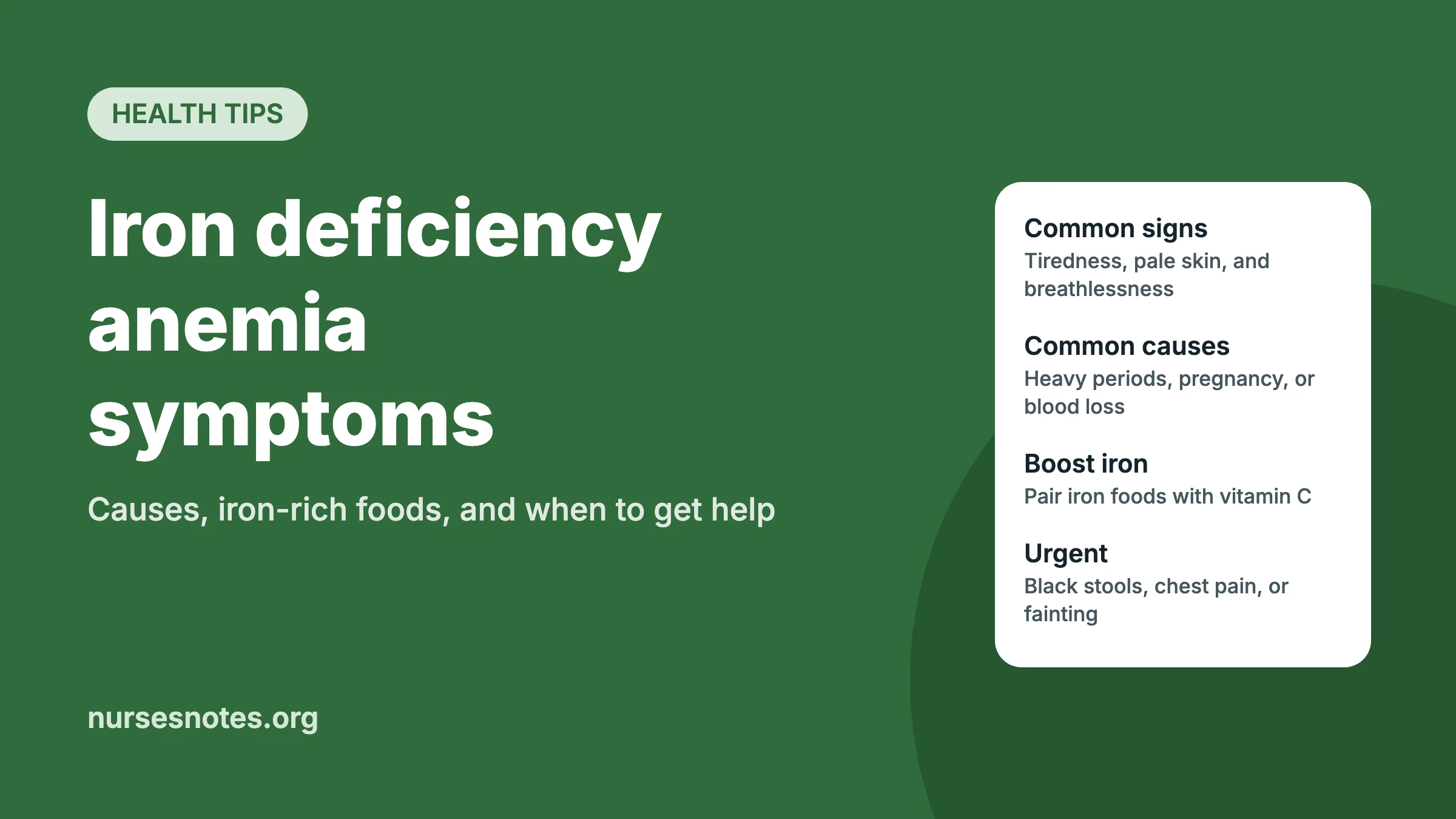
Iron deficiency anemia symptoms often include tiredness, weakness, shortness of breath, pale skin, and a fast or pounding heartbeat, though mild cases may cause no symptoms at all. It is the most common type of anemia, and a simple blood test can confirm it, so see a doctor rather than guessing or starting iron tablets on your own.
Key points
- Iron deficiency anemia happens when the body lacks enough iron to make healthy red blood cells.
- Heavy periods, pregnancy, a low-iron diet, and hidden bleeding in the gut are common causes.
- A blood test confirms it, and finding the cause is just as important as treating it.
- Black or bloody stools, chest pain, or fainting need urgent medical care.
What is iron deficiency anemia?
Anemia means you have fewer healthy red blood cells or less hemoglobin than normal, so less oxygen reaches your organs. When the cause is too little iron, it is called iron deficiency anemia. WHO describes iron deficiency as the most common nutritional cause of anemia worldwide.
It is very common. WHO estimates that 40% of children aged 6 to 59 months, 37% of pregnant women, and 30% of women aged 15 to 49 are anemic worldwide.
Signs and symptoms of iron deficiency anemia
Symptoms often build slowly, so many people do not notice them at first. The most common are:
- Tiredness, low energy, and weakness.
- Shortness of breath, especially on exertion.
- Pale skin.
- A fast or pounding heartbeat (palpitations).
- Headaches, dizziness, or light-headedness when standing.
- Cold hands and feet.
- Poor concentration.
Less common signs
- Brittle or spoon-shaped nails.
- A sore or smooth tongue, or mouth ulcers.
- Hair loss.
- Cravings for ice, paper, or soil (pica).
- Restless legs.
- Ringing in the ears (tinnitus) or a strange taste in the mouth.
In babies and young children, poor appetite can be a sign. Babies around 9 months to 1 year are at higher risk; our guide on when to start solid foods explains the role of iron-rich first foods.
What causes it?
| Cause | Examples |
|---|---|
| Blood loss | Heavy periods, stomach ulcers, bowel inflammation or polyps, bowel cancer, piles, or regular use of aspirin, ibuprofen, or naproxen |
| Not enough iron in the diet | Diets low in meat, fish, beans, and green leafy vegetables; strict vegetarian or vegan diets without planning |
| Higher iron needs | Pregnancy, breastfeeding, and rapid growth in infants and young children |
| Poor absorption | Coeliac disease, Crohn’s disease, stomach or weight-loss surgery, and some medicines such as antacids |
People who donate blood often, and those with kidney disease or long-term inflammation, are also at higher risk. Because hidden bleeding in the gut can cause it, doctors usually look for the cause, especially when there is no obvious explanation.
How it is diagnosed
Your doctor will ask about your diet, periods, medicines, and any bleeding, then order blood tests. A complete blood count (CBC) checks hemoglobin and red cell size, and iron studies such as ferritin show how much iron your body has stored. Our CBC normal values guide explains what these results mean. Extra tests, such as a stool test, may be needed to find a source of bleeding.
Treatment
- Iron tablets or liquid, at the dose and for the time your doctor recommends. Treatment often lasts a few months, because the body needs to refill its iron stores after the blood count improves.
- Treating the cause, such as heavy periods or a stomach ulcer.
- IV iron or, rarely, a blood transfusion for people who cannot take tablets or have severe anemia.
Iron tablets can cause constipation or diarrhea, nausea, stomach pain, heartburn, or dark or black stools. Taking them with or after food can help. Tell your doctor if side effects are troublesome rather than stopping on your own.
Do not take iron supplements without checking with a health professional first, because too much iron can harm the liver and other organs. Keep iron tablets locked away from children, as an overdose can be fatal.
Iron-rich foods to eat
- Animal sources: lean red meat, liver, chicken, turkey, fish, and eggs.
- Plant sources: beans, lentils, peas, tofu, dark leafy greens (such as spinach, kangkong, and malunggay), and dried fruit.
- Fortified foods: iron-fortified cereals and breads.
- Boost absorption: eat foods rich in vitamin C, such as oranges, calamansi, kiwi, tomatoes, or broccoli, with iron-rich meals.
- Time your drinks: tea, coffee, and milk can reduce iron absorption, so avoid them around iron-rich meals or tablets.
When to get medical help
See a doctor if you have ongoing tiredness, breathlessness, pale skin, or any of the symptoms above, or if your periods are very heavy. Get urgent medical care if you have:
- Black, tar-like, or bloody stools, or you vomit blood.
- Chest pain or a racing or irregular heartbeat.
- Fainting or severe shortness of breath.
- Very heavy bleeding from any part of the body.
Frequently asked questions
How long does it take to recover from iron deficiency anemia?
Many people feel better within a few weeks of starting iron, and MedlinePlus notes that blood counts often improve in about 6 weeks. Treatment usually continues for several more months to rebuild iron stores. Your doctor will repeat blood tests to check progress, so keep taking iron as prescribed even after you feel well.
Can iron deficiency anemia be dangerous?
Mild anemia is rarely dangerous but can still affect your energy and daily life. Left untreated, severe anemia can strain the heart, causing a fast or irregular heartbeat, and may lead to heart failure. It can also cause problems in pregnancy and delays in children’s development, so it is worth treating early.
What drinks should I avoid when taking iron?
Tea, coffee, and milk or other dairy products can reduce how much iron your body absorbs. Try to have them a while before or after your iron tablet or iron-rich meal. A glass of orange juice or another vitamin C source with your meal can help absorption. Ask your pharmacist about any medicines that interact with iron.
Related on Nurses Notes
- CBC normal values: a quick guide
- When to start solid foods for your baby
- All Health Tips on Nurses Notes
Sources
- Iron deficiency anaemia. NHS, page last reviewed 26 January 2024.
- Iron deficiency anemia. MedlinePlus Medical Encyclopedia, U.S. National Library of Medicine, reviewed 1 April 2025.
- Iron-Deficiency Anemia. National Heart, Lung, and Blood Institute (NIH), updated 24 March 2022.
- Iron deficiency anemia: Symptoms and causes. Mayo Clinic, 20 September 2025.
- Anaemia. World Health Organization, accessed 7 November 2026.
This article is for education only and does not replace advice from your own doctor, nurse, or other qualified health professional.