On this page
Key points
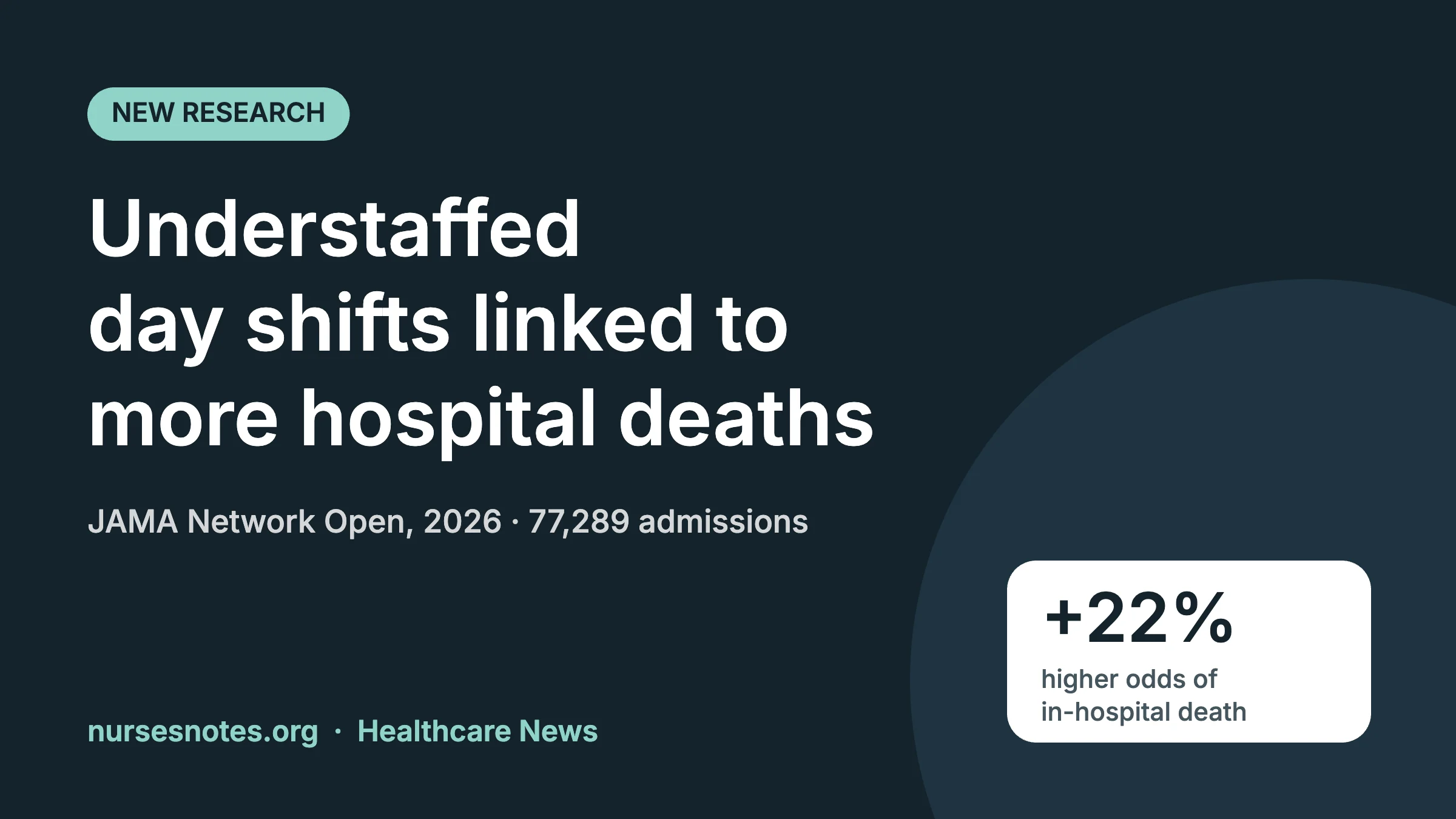
- Researchers studied 77,289 adult admissions on 82 medical and surgical wards in 9 hospitals in Japan (April 2019 to March 2020).
- On days when nurse hours fell below the ward’s usual level, patients had about 22% higher odds of dying in hospital.
- The link was strongest for day shifts. Evening and night understaffing showed no clear link with deaths.
The study, by Noriko Morioka and colleagues, was published in JAMA Network Open in 2026. Instead of using a fixed nurse-to-patient ratio, it compared each ward with itself: a day counted as understaffed when nurse hours per patient-day fell below that ward’s own annual median.
What the researchers found
| Outcome | Understaffed (24 h) | Adequately staffed |
|---|---|---|
| In-hospital deaths | 3.1% | 2.8% |
| 30-day readmission | 11.2% | 10.5% |
| Average length of stay | 14.6 days | 13.8 days |
- After adjusting for patient and ward factors, 24-hour understaffing was linked to higher odds of in-hospital death (odds ratio 1.22) and longer stays (about 1.2 extra days).
- Day-shift understaffing showed a similar link with deaths (odds ratio 1.20) and with 7-day readmissions (odds ratio 1.12).
- Evening and night understaffing was not clearly linked with deaths or readmissions.
Why it matters
The finding adds to a large body of research linking nurse staffing to patient safety. Its new angle is that falling short of a ward’s normal staffing, even briefly, may matter for patients. The authors suggest nurse managers track day-to-day shortfalls against their ward’s usual level and respond quickly.
Limitations
This was an observational study, so it shows an association rather than proof that understaffing caused the deaths. It covered one year in one country, before the COVID-19 pandemic, and some differences were small.
What it means for nurses
- Use your facility’s process to report and escalate unsafe staffing, and document shortfalls when they happen.
- Short-staffed day shifts deserve the same attention as nights: the busiest care, discharges and admissions often happen then.
- Managers can use ward-level benchmarks, like this study did, to spot risky days early.
Frequently asked questions
Does nurse understaffing increase patient mortality?
In this 2026 JAMA Network Open study, days with nurse hours below a ward’s usual level were linked to about 22% higher odds of in-hospital death. Because the study was observational, it shows an association, not proof that understaffing caused the deaths.
How did the study measure nurse understaffing?
Researchers compared each ward with itself. A day counted as understaffed when nurse hours per patient-day fell below that ward’s own annual median, rather than below a fixed nurse-to-patient ratio.
Did night-shift understaffing affect patient deaths?
No clear link was found. Understaffing during the evening and night shift was not significantly associated with in-hospital deaths or readmissions, while day-shift understaffing was.
Related on Nurses Notes
- Signs of nurse burnout and how to recover
- Marcos vows better nurse-to-patient ratios for Filipino nurses
- Nurses for Nursing Homes: up to $40,000 loan repayment
- Electrolytes made simple: a study guide for nurses
- More healthcare news for nurses
Sources
- Morioka N, et al. Hospital Nurse Understaffing and Patient Mortality, Readmission, and Length of Stay. JAMA Netw Open. 2026;9(2):e2558235. doi:10.1001/jamanetworkopen.2025.58235
This summary is for information only and does not replace official guidance or advice from a qualified professional.