On this page
- What are electrolytes?
- Normal electrolyte ranges
- Sodium (Na+): the fluid balancer
- Potassium (K+): the heart’s electrolyte
- Calcium (Ca2+): bones, clotting and nerves
- Magnesium (Mg2+): the overlooked one
- Foods that help, and foods to take cautiously
- Nursing tips for managing electrolytes
- Frequently asked questions
Key takeaways
- Electrolytes are minerals that carry an electrical charge. They control fluid balance, nerve signals and muscle function, including the heart.
- The four nurses check most often are sodium, potassium, calcium and magnesium.
- Potassium has the narrowest safe range: both high and low levels can cause dangerous heart rhythms.
- Low magnesium often travels with low potassium and low calcium, and can make them hard to correct.
- Reference ranges vary between labs, so always use your facility’s values and look at the trend, not one result.
What are electrolytes?
Electrolytes are minerals dissolved in blood and other body fluids that carry a positive or negative electrical charge. That charge is what lets cells move water in and out, send nerve impulses and make muscles contract.
Kidneys, hormones and the gut keep electrolyte levels inside a narrow range. When something disrupts that balance, such as vomiting, diarrhoea, kidney disease, heart failure, diuretics or IV fluids, levels can drift too low or too high. Because the heart and brain are so sensitive to these changes, electrolytes are among the most frequently checked lab values in hospital.
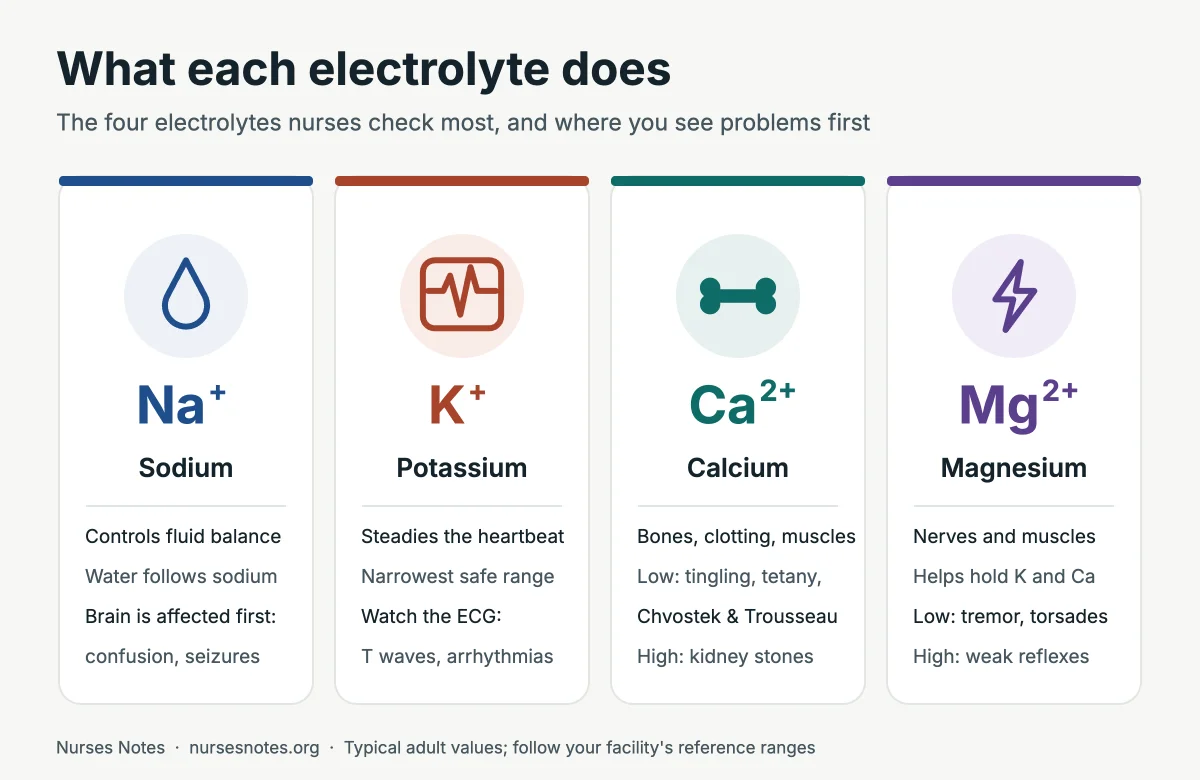
Normal electrolyte ranges
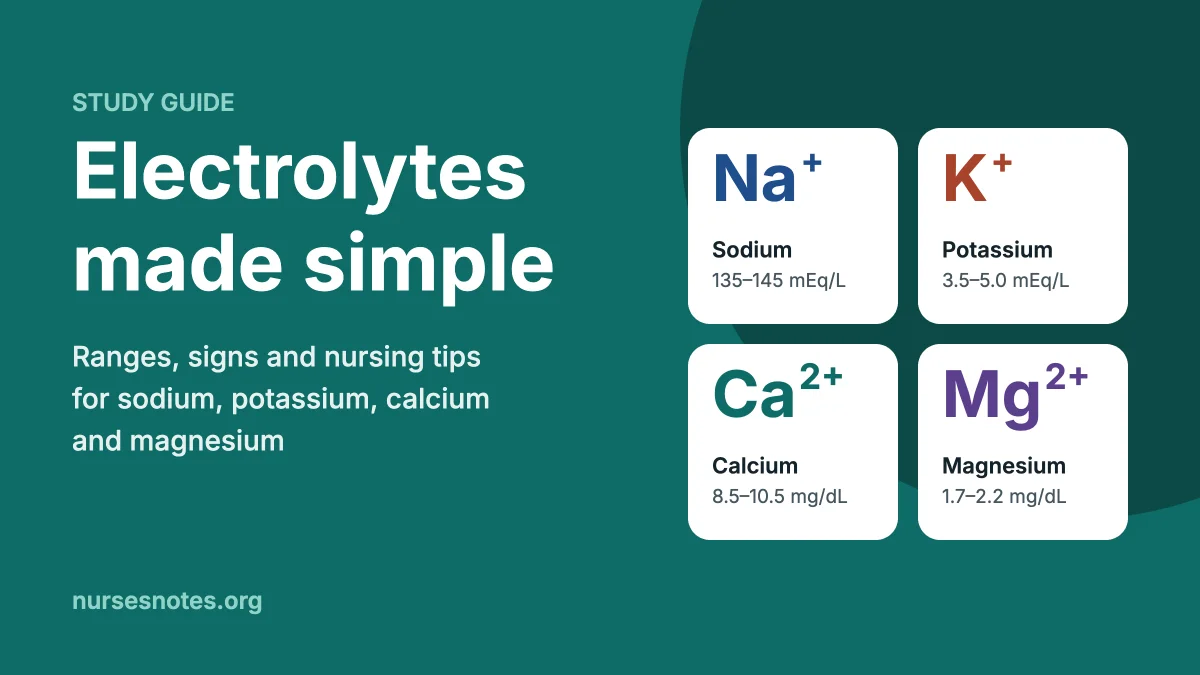
| Electrolyte | Typical adult range | Main job |
|---|---|---|
| Sodium (Na+) | 135–145 mEq/L | Fluid balance, nerve signals |
| Potassium (K+) | 3.5–5.0 mEq/L | Heart rhythm, muscle contraction |
| Calcium, total (Ca2+) | 8.5–10.5 mg/dL | Bones, clotting, muscle and nerve function |
| Magnesium (Mg2+) | 1.7–2.2 mg/dL | Nerves, muscles, heart rhythm |
Sodium (Na+): the fluid balancer
Sodium is the main electrolyte outside the cells, and where sodium goes, water follows. That makes it central to blood volume, blood pressure and how much water moves into or out of brain cells.
Low sodium (hyponatremia): below 135 mEq/L
Common causes include excess water intake, heart failure, liver disease, SIADH, thiazide diuretics and losses from vomiting or diarrhoea. Early signs are vague: headache, nausea, fatigue and muscle cramps. As levels fall further, or fall quickly, confusion, seizures and reduced consciousness can follow because brain cells swell.
High sodium (hypernatremia): above 145 mEq/L
Usually a sign of too little water rather than too much salt, for example in older adults who cannot access fluids, people with high fever or diabetes insipidus. Look for thirst, dry mucous membranes, restlessness and confusion; severe cases can cause seizures and coma.
Nursing focus: monitor neurological status, fluid balance and daily weight. Chronic sodium problems must be corrected slowly as prescribed, because correcting too fast can cause serious brain injury.
Potassium (K+): the heart’s electrolyte
Potassium lives mainly inside cells and controls the electrical activity of heart and skeletal muscle. Small changes in blood potassium can have big effects on heart rhythm.
Low potassium (hypokalemia): below 3.5 mEq/L
Often caused by loop or thiazide diuretics, vomiting, diarrhoea or poor intake. Signs include muscle weakness, cramps, fatigue and constipation. On the ECG you may see flattened T waves and U waves, and the risk of arrhythmias rises, especially in patients taking digoxin.
High potassium (hyperkalemia): above 5.0 mEq/L
Common in kidney failure and with medicines such as ACE inhibitors, ARBs and potassium-sparing diuretics. It can also be falsely high if the blood sample is haemolysed. Patients may feel weak or tingly, but often have no symptoms until the ECG changes: peaked T waves, then widening QRS. Severe hyperkalemia can cause cardiac arrest.
Nursing focus: put patients with significant abnormalities on a cardiac monitor, check renal function and medication lists, and never give potassium as an IV push.
Calcium (Ca2+): bones, clotting and nerves
Most of the body’s calcium is stored in bone, but the small amount in the blood is vital for muscle contraction, nerve signalling and blood clotting. Total calcium is affected by albumin levels, so a low albumin can make total calcium look low; ionized calcium gives a truer picture.
Low calcium (hypocalcemia): below 8.5 mg/dL
Seen after thyroid or parathyroid surgery, with vitamin D deficiency, kidney disease, pancreatitis and low magnesium. Watch for tingling around the mouth and fingertips, muscle cramps and tetany. Chvostek’s sign (facial twitching when the facial nerve is tapped) and Trousseau’s sign (hand spasm when a blood pressure cuff is inflated) are classic findings. The ECG may show a prolonged QT interval.
High calcium (hypercalcemia): above 10.5 mg/dL
Most often caused by overactive parathyroid glands or cancer. Symptoms include constipation, abdominal pain, nausea, fatigue, confusion, kidney stones and bone pain. The ECG may show a shortened QT interval.
Magnesium (Mg2+): the overlooked one
Magnesium supports nerve and muscle function and helps the body hold on to potassium and calcium. It is easy to overlook, but it often explains why another electrolyte will not correct.
Low magnesium (hypomagnesemia): below 1.7 mg/dL
Common with alcohol use disorder, diarrhoea, poor nutrition, diuretics and long-term proton pump inhibitors. Signs include tremor, muscle twitching and cramps, and arrhythmias such as torsades de pointes. Low magnesium frequently occurs alongside low potassium and low calcium.
High magnesium (hypermagnesemia): above 2.2 mg/dL
Usually seen in kidney failure or with magnesium infusions, for example in pre-eclampsia. Look for reduced or absent deep tendon reflexes, low blood pressure and drowsiness; severe cases cause respiratory depression.
Foods that help, and foods to take cautiously
- Potassium: bananas, potatoes, beans, spinach, avocado, yoghurt
- Calcium: dairy, fortified plant milks, sardines, leafy greens
- Magnesium: nuts, seeds, whole grains, leafy greens
- Sodium: most comes from salt and processed foods rather than whole foods
Take cautiously: people with kidney disease, or who take certain heart or blood-pressure medicines, should ask their care team before increasing potassium-rich foods or using salt substitutes, which often contain potassium.
Nursing tips for managing electrolytes
- Compare each result with your lab’s range and the patient’s previous values; the trend matters as much as the number.
- Look at the whole picture: fluid balance, kidney function, medicines (especially diuretics) and the ECG.
- Check magnesium whenever potassium or calcium is low.
- Follow your facility’s policy for IV potassium dilution, rate and monitoring; never give it as an IV push.
- Recheck levels after replacement and report critical values promptly.
Frequently asked questions
Which electrolyte imbalance is the most dangerous?
Potassium imbalances are often the most urgent, because both high and low potassium can quickly cause life-threatening heart rhythms.
Can drinking too much water lower sodium?
Yes. Drinking a large volume of water in a short time can dilute the sodium in the blood and cause hyponatremia. Endurance athletes and people with certain medical conditions are at higher risk.
Why is magnesium checked when potassium is low?
Low magnesium makes the kidneys lose potassium, so potassium replacement may not work until magnesium is corrected too.
How often are electrolytes checked in hospital?
It depends on the patient. People on IV fluids or diuretics, or with abnormal results, are usually checked more often, sometimes several times a day while levels are being corrected.
Free printable cheat sheet: get every range and key sign on one page. Subscribe to the Nurses Notes newsletter and it lands in your inbox.
Related on Nurses Notes
- ABG interpretation steps: a simple guide for nurses
- Study: understaffed day shifts linked to more hospital deaths
- All nursing study guides
- More healthcare news for nurses
References
- Shrimanker I, Bhattarai S. Electrolytes. StatPearls. NCBI Bookshelf.
- Rout P, Afzal M. Hyponatremia. StatPearls. NCBI Bookshelf.
- Castro D, Sharma S. Hypokalemia. StatPearls. NCBI Bookshelf.
- Anastasopoulou C, Goyal A. Hypocalcemia. StatPearls. NCBI Bookshelf.
- Allen MJ, Sharma S. Magnesium. StatPearls. NCBI Bookshelf.
This guide is for education only. It does not replace your facility’s protocols or advice from your own doctor, nurse or pharmacist.