On this page
A nursing care plan for hypertension focuses on accurate blood pressure measurement, safe use of antihypertensive medicines, and teaching that helps the patient control blood pressure for life. This study guide walks through assessment, nursing diagnoses, interventions, and expected outcomes in the format used for NCLEX and Philippine nursing board revision.
Key points
- Most people with hypertension have no symptoms, so correct measurement technique is the most important assessment skill.
- Common nursing diagnoses include Risk for Decreased Cardiac Output, Risk for Unstable Blood Pressure, and Readiness for Enhanced Health Self-Management.
- Key interventions are monitoring blood pressure, giving medicines safely, checking for orthostatic hypotension, and teaching lifestyle changes.
- A reading above 180/120 with chest pain, breathlessness, weakness, or vision changes is an emergency.
What is hypertension?
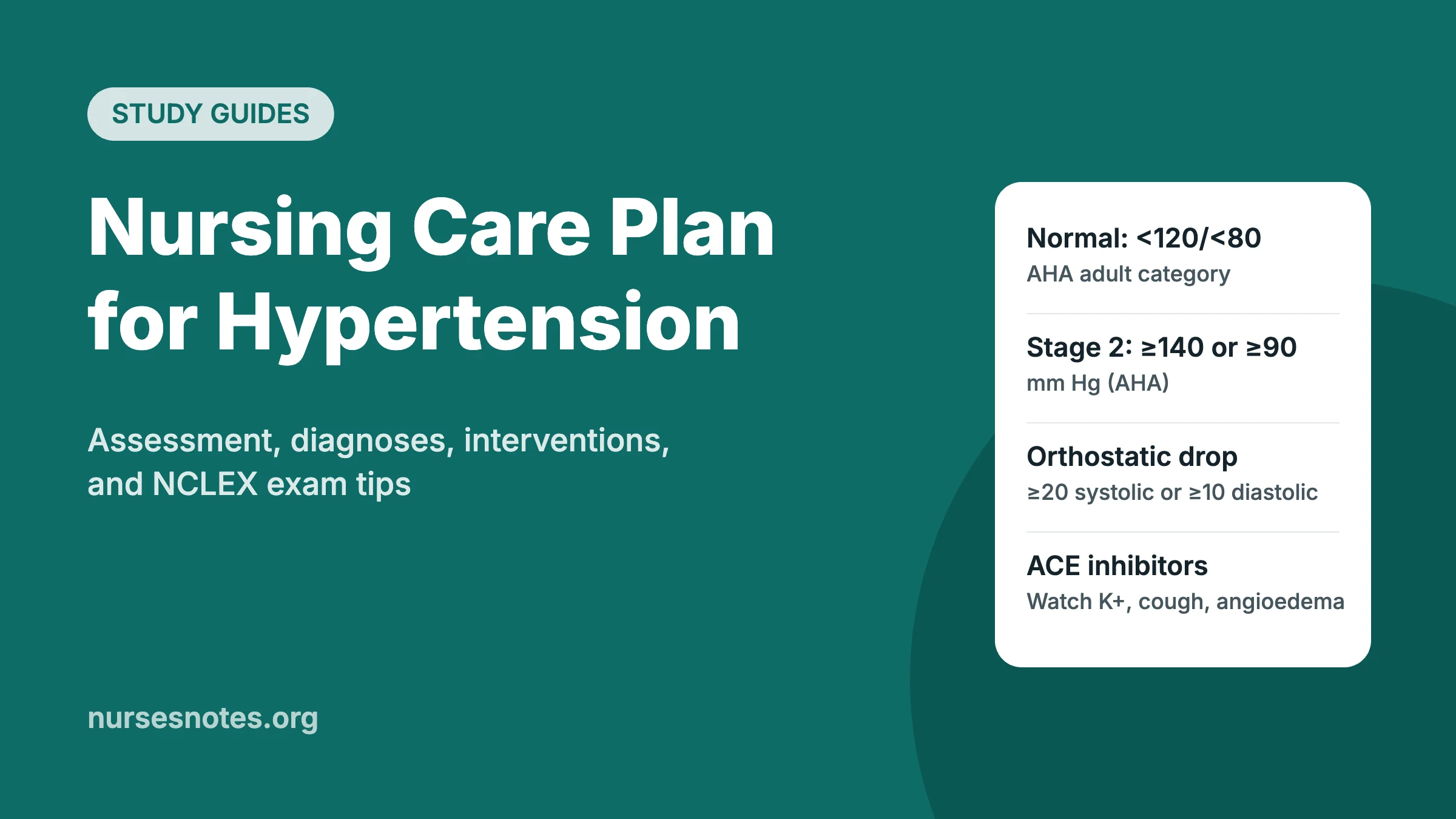
Hypertension is blood pressure that stays above the normal range over time. The American Heart Association (AHA) defines normal adult blood pressure as below 120/80 mm Hg, and StatPearls describes hypertension as a systolic pressure of 130 mm Hg or more, or a diastolic pressure above 80 mm Hg.
It matters because high pressure damages the heart, brain, kidneys, and blood vessels without warning. StatPearls lists complications such as coronary heart disease, heart attack, stroke, kidney failure, peripheral arterial disease, atrial fibrillation, and aortic aneurysm.
Blood pressure categories
| Category | Systolic (mm Hg) | Diastolic (mm Hg) | |
|---|---|---|---|
| Normal | Below 120 | and | Below 80 |
| Elevated | 120 to 129 | and | Below 80 |
| Stage 1 hypertension | 130 to 139 | or | 80 to 89 |
| Stage 2 hypertension | 140 or higher | or | 90 or higher |
| Hypertensive crisis | Above 180 | and/or | Above 120 |
Nursing assessment for hypertension
Hypertension is often found by chance during routine vital signs, because many patients feel well. Some report headache, dizziness, or fainting, and a few present with signs of organ damage.
- Blood pressure technique: let the patient sit quietly for 5 minutes, use the right cuff size, and take readings on at least two occasions before a diagnosis is made. Check both arms at the first assessment.
- Cuff size: Open RN gives a bladder width of about 40% and a length of 80 to 100% of the arm circumference. A cuff that is too small gives a falsely high reading, and one that is too large gives a falsely low reading.
- Orthostatic vital signs: measure lying or sitting, then after 1 and 3 minutes of standing. A fall of 20 mm Hg systolic or 10 mm Hg diastolic within 3 minutes is orthostatic hypotension.
- Signs of organ damage: chest pain, shortness of breath, crackles, swelling of the legs, confusion, weakness or numbness, and changes in vision or speech.
- Risk factors: age, family history, obesity, high salt intake, heavy alcohol use, smoking, inactivity, chronic stress, diabetes, kidney disease, and sleep apnea.
- Medicines that can raise blood pressure: NSAIDs, decongestants, and estrogen-containing contraceptives.
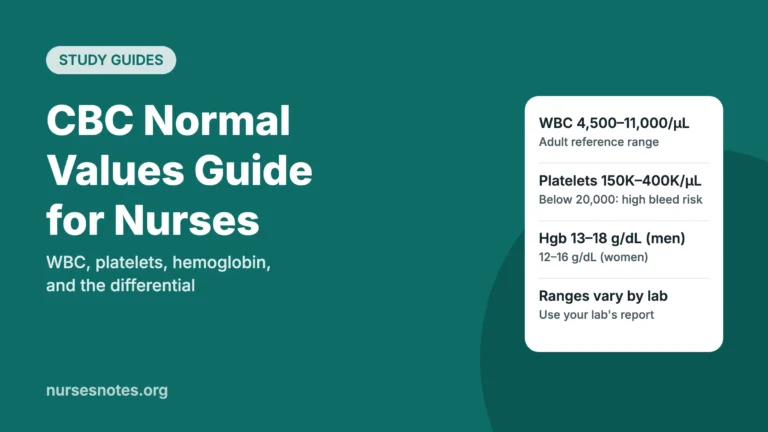
- Tests to review: creatinine and eGFR, electrolytes (especially potassium), HbA1c, lipids, urine albumin-to-creatinine ratio, and a 12-lead ECG.
Review the potassium and sodium results with care, since several antihypertensives change them. Our electrolytes guide for nurses explains the normal ranges and warning signs.
Nursing diagnoses for hypertension
Open RN suggests these NANDA-style nursing diagnoses for a patient with hypertension. Choose the ones that fit your patient’s assessment data.
- Risk for Decreased Cardiac Output
- Risk for Unstable Blood Pressure
- Readiness for Enhanced Health Self-Management
Sample nursing care plan for hypertension
| Step | Example |
|---|---|
| Assessment | BP 152/96 mm Hg on two visits; no chest pain; eats salty processed food; does not check BP at home |
| Nursing diagnosis | Readiness for Enhanced Health Self-Management |
| Goal | Patient keeps a home BP log and states three lifestyle changes before discharge |
| Interventions | Teach home BP measurement; teach a low-sodium, DASH-style diet; review medicine schedule and side effects; plan regular aerobic activity |
| Evaluation | Goal met if the patient demonstrates correct BP technique, brings a BP log to follow-up, and names three changes |
Nursing interventions for hypertension
Monitoring
- Measure blood pressure with correct technique at the frequency ordered, and verify unexpected readings manually.
- Do not rely on automatic monitors for patients with an irregular rhythm, such as atrial fibrillation, or with tremors.
- Check orthostatic vital signs and use fall precautions, especially in older adults starting new medicines.
- Report new chest pain, breathlessness, neurological changes, or readings above the ordered parameters to the provider at once.
Giving antihypertensive medicines safely
StatPearls lists the main drug classes as ACE inhibitors, angiotensin receptor blockers (ARBs), thiazide diuretics, calcium channel blockers (CCBs), and beta-blockers. Many patients need two or three medicines together.
| Drug class | Key nursing considerations |
|---|---|
| ACE inhibitors | Dry cough, high potassium, dizziness, and rarely angioedema (swelling of the face or throat, which can be life-threatening). Not for use in pregnancy. |
| ARBs | Monitor potassium, sodium, and kidney function; watch for low blood pressure and angioedema. |
| Thiazide diuretics | Monitor electrolytes, fluid balance, and blood pressure. |
| Calcium channel blockers | Watch for low blood pressure and ankle (pedal) swelling. |
| Beta-blockers | Slow the heart rate and reduce contractility; check the pulse and follow facility hold parameters. |
- Stop an ACE inhibitor or ARB and get emergency help if angioedema occurs; StatPearls notes these medicines must then be stopped permanently.
- Mayo Clinic notes that NSAIDs such as ibuprofen and naproxen can make ACE inhibitors less effective.
- Teach patients not to stop or change their medicines without talking to their prescriber, and to rise slowly from lying or sitting.
Health teaching
- Why blood pressure control protects the heart, brain, kidneys, and eyes.
- A low-sodium eating pattern, such as the DASH or Mediterranean diet.
- Regular aerobic activity, a healthy weight, limiting alcohol, and stopping smoking.
- How to check blood pressure at home and keep a log for follow-up visits.
- Stress management, such as deep breathing, progressive muscle relaxation, and guided imagery.
For patient-friendly lifestyle advice you can share, see how to lower blood pressure naturally.
Expected outcomes and evaluation
- Blood pressure stays within the target set by the provider.
- The patient states three lifestyle changes and three symptoms to report promptly.
- The patient keeps a home BP log and brings it to appointments.
- The patient takes medicines as prescribed and can name their main side effects.
If outcomes are not met or are only partly met, reassess and revise the plan with the healthcare team.
When hypertension is an emergency
The AHA advises retesting after 5 minutes if a reading is above 180/120. If it stays that high, or the person has chest pain, shortness of breath, back pain, numbness or weakness, vision changes, or difficulty speaking, treat it as an emergency. In hospital, escalate to the provider or rapid response team at once according to your facility protocol. Sudden weakness or speech problems may also mean a stroke; review the BE FAST signs of stroke.
Exam tips
- Cuff traps: too small reads high, too large reads low.
- Korotkoff sounds: the first sound is the systolic pressure; the point where sounds disappear is the diastolic pressure. Deflate at 2 to 3 mm Hg per second.
- Orthostatic rule: a drop of 20 systolic or 10 diastolic within 3 minutes of standing.
- Drug name endings: ACE inhibitors often end in -pril, ARBs in -sartan, and beta-blockers in -olol.
- Priority question: swelling of the lips, tongue, or throat in a patient on an ACE inhibitor is an airway emergency, not a minor side effect.
- “Silent killer”: expect questions that test whether you know most patients have no symptoms.
Frequently asked questions
What is the priority nursing diagnosis for hypertension?
It depends on the assessment. For a stable outpatient, Readiness for Enhanced Health Self-Management or a teaching-focused diagnosis is common. When blood pressure is very high or there are signs of organ damage, Risk for Decreased Cardiac Output takes priority, because the heart, brain, and kidneys are at risk.
What should a nurse check before giving an antihypertensive?
Check the latest blood pressure and pulse, compare them with the ordered parameters, and look for dizziness or orthostatic changes. Review potassium, sodium, and kidney results for ACE inhibitors, ARBs, and diuretics. Hold the dose and contact the provider if readings fall outside the ordered parameters or the facility policy.
Why do ACE inhibitors cause a cough?
A dry, persistent cough is a recognised side effect of ACE inhibitors, listed by Mayo Clinic and other references. Patients should report it rather than stop the medicine themselves, because the prescriber may switch them to another class. Facial or throat swelling is different and needs emergency care.
Related on Nurses Notes
- How to lower blood pressure naturally: 9 evidence-based steps
- Electrolytes: a nurse’s guide to normal values
- Signs of stroke: BE FAST and what to do
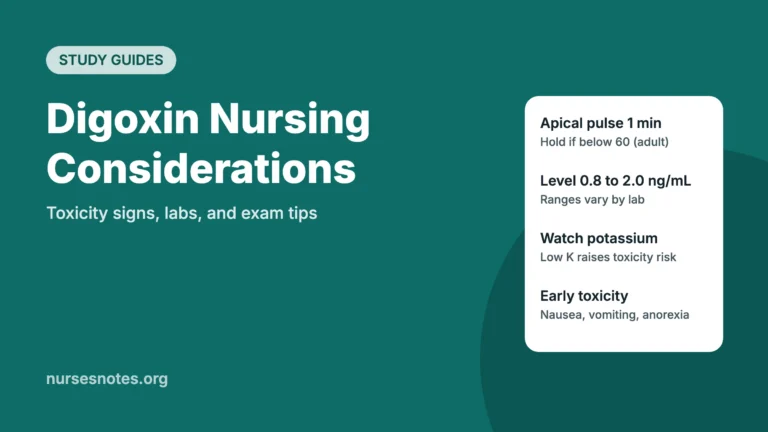
- Digoxin nursing considerations and exam tips
- All study guides
Sources
- Essential Hypertension. Iqbal AM, Jamal SF. StatPearls, NCBI Bookshelf, updated July 2023.
- Understanding Blood Pressure Readings. American Heart Association, accessed October 2026.
- 5.5 Hypertension. Open Resources for Nursing (Open RN), accessed October 2026.
- Angiotensin-converting enzyme (ACE) inhibitors. Mayo Clinic, March 2025.
This article is for education only and does not replace advice from your own doctor, nurse, or other qualified health professional. Always follow your facility’s policies and reference ranges.