On this page
Oral thrush in babies is a common yeast infection that causes white patches on the tongue, gums, and inside the cheeks that do not wipe off easily. It is usually mild and treatable, but a doctor, nurse, or pharmacist should check your baby before you use any medicine.
Key points
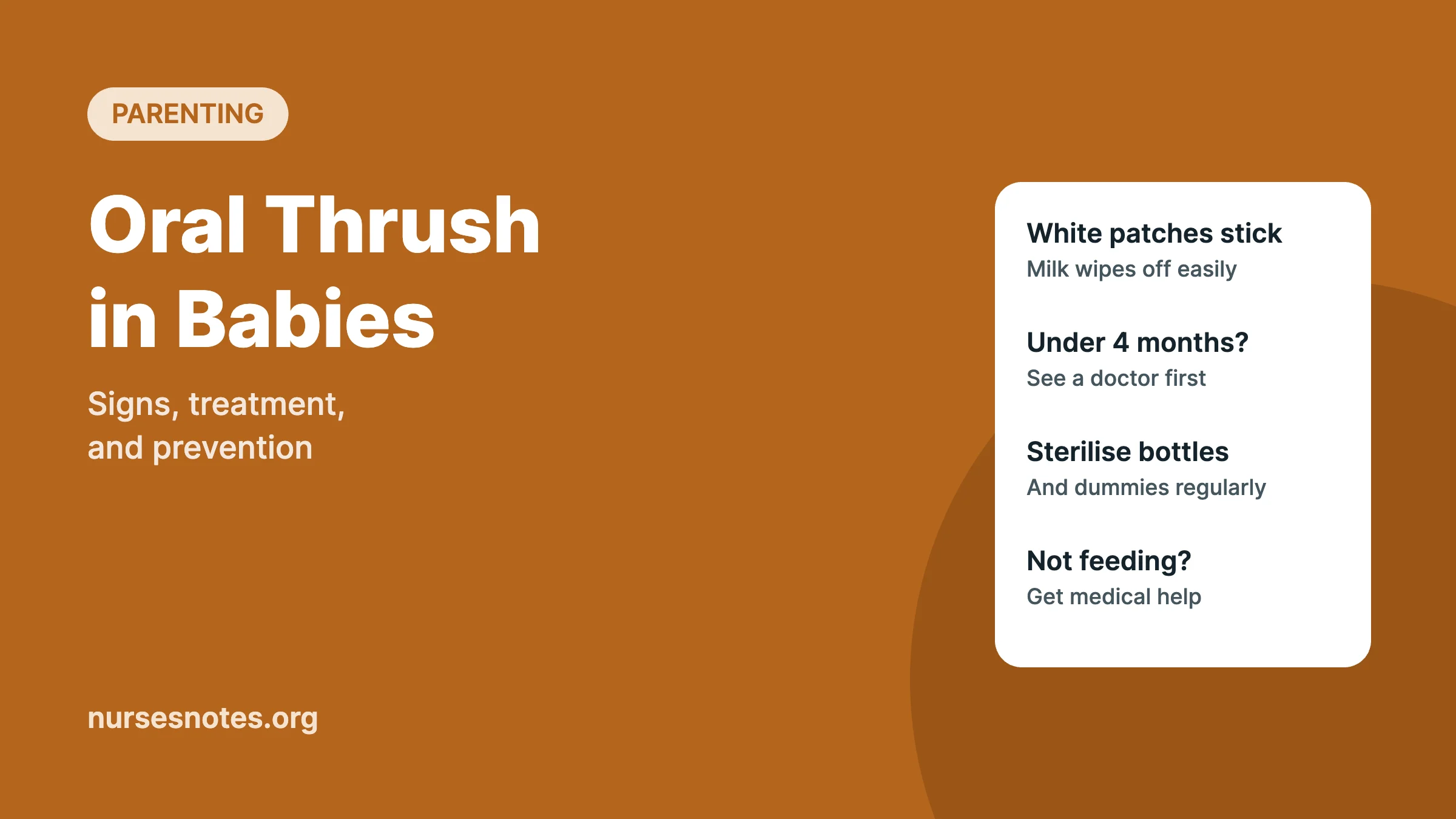
- A white tongue that wipes off easily after a feed is usually just milk, not thrush.
- Thrush patches stick, may look like cottage cheese, and can make feeding uncomfortable.
- Antifungal treatment depends on your baby’s age; some gels are not suitable under 4 months.
- Sterilise bottles and dummies, and treat a breastfeeding mother at the same time if she has symptoms.
What is oral thrush?
Thrush is caused by a yeast called Candida, which normally lives on the skin, in the mouth, and in the gut without causing problems. When it overgrows, it causes an infection called candidiasis (HealthyChildren.org).
It is common in infants and toddlers. Newborns can pick up Candida from their mother during birth, and babies are more likely to get thrush after a course of antibiotics, which upset the normal balance of germs.
Signs and symptoms of thrush in babies
- White or yellow patches on the tongue, lips, gums, roof of the mouth, and inner cheeks
- A coating that may look like cottage cheese and does not rub off easily (NHS)
- A sore mouth, so your baby may be reluctant to feed
- Fussiness, wind, and being harder to settle
- A red, spotty nappy (diaper) rash, which can be caused by the same yeast
Thrush or milk tongue?
Many parents worry about a white tongue that is really milk residue. NHS guidance from West Yorkshire Healthier Together explains that a white tongue after a feed that wipes off easily, in a baby who is feeding well, is usually milk coating the tongue.
| Feature | Milk tongue | Oral thrush |
|---|---|---|
| Where it appears | Mostly on the tongue | Tongue, gums, inner cheeks, lips, and roof of the mouth |
| Gentle wiping with a clean, damp cloth | Comes off easily | Does not come off easily; the area underneath may look red |
| Feeding | Feeds well | May be reluctant to feed or fussy |
| Nappy area | Usually normal | May have a red, spotty rash |
How is oral thrush in babies treated?
Mild thrush sometimes clears by itself in 2 to 3 days. If it does not, or it is affecting feeding, your baby may need an antifungal medicine. Do not use adult products or treatments meant for another family member.
- Nystatin drops are often prescribed for babies with oral thrush or a thrush nappy rash (HealthyChildren.org).
- Miconazole oral gel can be bought from a pharmacy for babies over 4 months. It is not licensed under 4 months because of a choking risk, so younger babies should see a doctor first (NHS).
- Dose and how to give it depend on the product and your baby’s age and feeding pattern. Follow the label or the instructions from your doctor or pharmacist exactly, and finish the full course.
Treatment usually brings improvement within 2 to 3 days, and it can take up to 7 days for the infection to clear completely (West Yorkshire Healthier Together).
Breastfeeding and thrush
Thrush can pass back and forth between a baby’s mouth and a mother’s nipples. Signs in the mother include sudden new nipple pain during feeds, itchy, burning, red, or shiny nipples, and pain that continues after the feed.
Ask a midwife, nurse, or lactation adviser to check your baby’s latch first, because poor attachment can cause similar pain. If thrush is confirmed, mother and baby should be treated at the same time so it does not keep returning.
How to prevent thrush coming back
- Sterilise dummies (pacifiers) regularly and bottles after every use (NHS).
- Replace teats, dummies, and nipple shields weekly while treating thrush.
- Wash bras, breast pads, bibs, and muslin cloths on a hot wash.
- Do not freeze breast milk for later use while your baby has thrush (NHS).
- Wash your hands before and after feeds and nappy changes.
- Change nappies often and keep the nappy area clean and dry (HealthyChildren.org).
For more on nappy care, read our guide on how to treat diaper rash.
When to get medical help
See your doctor or health centre if:
- Your baby is under 4 months old and has signs of thrush (NHS)
- Thrush is affecting feeding
- There is no improvement after a week of treatment, or it keeps coming back
- An older child gets thrush often, which may need checking for other conditions (HealthyChildren.org)
Get urgent medical help if your baby (NHS):
- Is under 3 months old and has a temperature of 38°C or higher
- Is not feeding or is not their usual self and you are worried
- Shows signs of dehydration, such as nappies that are not very wet, sunken eyes, or no tears when crying
Call your local emergency number if your baby has a fit, a rash that does not fade when you press a glass against it, a stiff neck, or seems bothered by light (NHS). Keeping track of how much your newborn eats helps you spot feeding problems early.
Frequently asked questions
Is oral thrush in babies contagious?
Thrush is not usually passed easily between healthy people, but the yeast can spread through saliva and close contact (Cleveland Clinic). It can pass between a breastfeeding mother and her baby, so both may need treatment. Sterilising bottles and dummies and washing hands help stop it from coming back.
Can thrush go away on its own in babies?
Mild thrush may clear by itself within 2 to 3 days. If the patches last longer, spread, or make feeding difficult, see a doctor, nurse, or pharmacist. Babies under 4 months should be checked by a doctor before any treatment, because some antifungal gels are not suitable for young babies.
Why does my baby keep getting thrush?
Thrush often returns when the yeast is passed back and forth through dummies, bottle teats, or a mother’s nipples. Recent antibiotics can also make it more likely. Sterilise feeding equipment, treat mother and baby together if needed, and finish the full course. Ask your doctor if it keeps returning.
Related on Nurses Notes
- How to treat diaper rash
- How much should a newborn eat?
- Teething symptoms and how to help
- All Parenting articles
Sources
- Oral thrush (mouth thrush). NHS. Reviewed 9 October 2026.
- My baby has thrush. West Yorkshire Healthier Together (NHS). Accessed 15 November 2026.
- Thrush and Other Candida Infections. HealthyChildren.org, American Academy of Pediatrics. Updated 21 October 2020.
- Thrush. Cleveland Clinic. Updated 5 January 2023.
- High temperature (fever) in children. NHS. Accessed 15 November 2026.
This article is for education only and does not replace advice from your own doctor, nurse, or other qualified health professional.