On this page
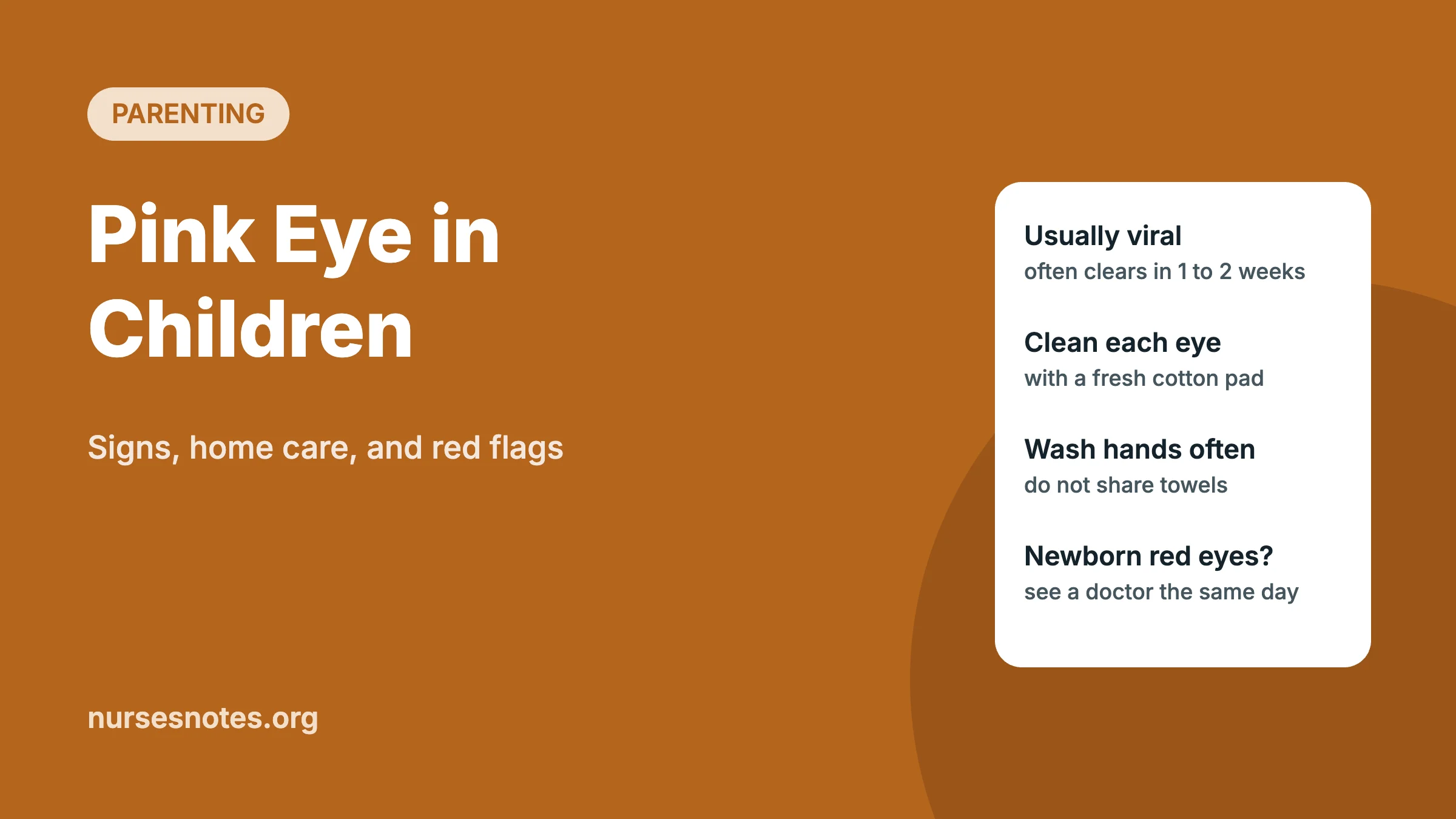
Pink eye in children (conjunctivitis) is an inflammation of the thin clear layer covering the white of the eye and inner eyelids, causing redness, watering, and discharge. Most cases are mild and get better on their own within one to two weeks, but a newborn with red or sticky eyes, or a child with eye pain or vision changes, needs a doctor promptly.
Key points
- Pink eye can be viral, bacterial, allergic, or caused by an irritant; viral and bacterial types spread easily.
- Gently clean discharge with clean water and a fresh cotton pad for each eye, and wash hands often.
- Antibiotic drops do not help viral pink eye; only a doctor can decide whether drops are needed.
- Any baby under 1 month old with red, sticky eyes should see a doctor urgently.
What causes pink eye in children?
| Type | Typical clues | Contagious? |
|---|---|---|
| Viral (most common) | Watery discharge, often with a cold; may start in one eye and spread to the other | Yes |
| Bacterial | Thick yellow or green discharge; eyelids may be stuck together in the morning; sometimes with an ear infection | Yes |
| Allergic | Both eyes, intense itching, tearing, and swelling, often with sneezing or an itchy nose | No |
| Irritant | Watery eyes after smoke, chlorinated pool water, a chemical splash, or something in the eye | No |
Signs and symptoms
- Pink or red colour in the white of the eye
- Swollen eyelids
- Watery eyes or discharge that may be clear, white, yellow, or green
- Crusting on the lashes, especially after sleep
- Itching, burning, or a gritty feeling that makes the child rub their eyes
- Contact lenses that feel uncomfortable (in older children and teens)
Pink eye in newborns needs urgent care
In babies under 1 month old, red, swollen, or sticky eyes can be caused by an infection passed on during birth, even if the mother had no symptoms. Some of these infections can damage the eye and affect sight if they are not treated quickly.
If your newborn has red eyes, swollen eyelids, or discharge, see a doctor the same day. A blocked tear duct can also cause watery, sticky eyes in babies, but a doctor should check first.
How to care for a child with pink eye at home
- Clean the eyes gently. With clean hands, wipe away discharge several times a day using cooled boiled water and a fresh cotton pad or ball. Use a separate pad for each eye and throw it away after one wipe.
- Soothe the eyes. A cool, damp cloth for a few minutes can ease itching and swelling. Use a separate clean cloth for each eye.
- Stop the spread. Wash hands with soap and water for at least 20 seconds, especially after touching the eyes. Do not share towels, washcloths, pillows, or eye drops, and wash pillowcases and towels in hot water.
- Pause contact lenses until the eyes are better and a doctor says it is fine, and replace disposable lenses and cases.
- Use medicines only as advised. Antibiotics do not work on viral pink eye. If your doctor prescribes drops or ointment for a bacterial infection, use them exactly as the doctor directs.
Do not use leftover eye drops or another person’s drops. The right medicine and amount depend on your child’s age and the product, so ask your doctor or pharmacist. Bacterial pink eye sometimes comes with an ear infection; read our guide to ear infection in children.
Can my child go to school or daycare?
Advice varies. The NHS says children do not need to stay off school unless they feel very unwell, while the CDC suggests children can return when they have no fever or other symptoms and the doctor agrees. Many schools and daycares have their own rules, such as returning 24 hours after antibiotic drops start, so check with them.
How long does pink eye last?
- Viral: usually 7 to 14 days, sometimes 2 to 3 weeks
- Bacterial: mild cases often clear in 2 to 5 days and almost always within 2 weeks
- Allergic: improves when the trigger is avoided or treated
When to get medical help
Get urgent medical help (same day) if your child has:
- Red, swollen, or sticky eyes and is under 1 month old
- Eye pain (more than mild discomfort) or a feeling that something is stuck in the eye
- Sensitivity to light
- Blurred vision that does not clear after wiping away discharge, or other vision changes
- A very red or very swollen eye or eyelid
- A fever in a baby under 12 weeks, or a child who looks very unwell
- A weakened immune system
See a doctor soon if: symptoms get worse or do not improve after about a week, there is yellow or green pus, or a bacterial infection is not better after 24 hours of antibiotic drops. Teens who wear contact lenses should see an eye care professional if symptoms do not improve within 12 to 24 hours.
Frequently asked questions
Is pink eye contagious?
Viral and bacterial pink eye are very contagious and spread through hands, towels, pillows, and coughs or sneezes. Allergic and irritant pink eye are not contagious. Good handwashing, not sharing towels or eye drops, and washing bedding in hot water help protect the rest of the family while symptoms last.
Does pink eye go away on its own?
Often, yes. Most viral pink eye clears without treatment in one to two weeks, and many mild bacterial cases improve within a few days. Antibiotics do not help viral pink eye. See a doctor if your child is a newborn, has eye pain or vision changes, or is not getting better after about a week.
Does my child need antibiotic eye drops?
Not always. Antibiotics do not treat viral or allergic pink eye, and many mild bacterial cases get better without them. If the doctor thinks the cause is bacterial, they may prescribe drops or ointment. Use them exactly as directed, and contact the doctor if your child is not better after 24 hours of treatment.
Related on Nurses Notes
- Ear infection in children: symptoms and home care
- How to bring down a child’s fever safely
- Hand, foot, and mouth disease in children
- More parenting articles
Sources
- About Pink Eye, CDC, 2024
- Symptoms of Pink Eye, CDC, 2024
- Pink Eye in Newborns, CDC, 2024
- How to Treat Pink Eye, CDC, 2024
- How to Prevent Pink Eye, CDC, 2024
- Conjunctivitis, NHS, reviewed 2024
- Pink eye (conjunctivitis) – Symptoms and causes, Mayo Clinic, 2025
- Pink eye (conjunctivitis) – Diagnosis and treatment, Mayo Clinic, 2025
- Do I need to keep my son home if he has pinkeye?, HealthyChildren.org (American Academy of Pediatrics), 2016
This article is for education only and does not replace advice from your own doctor, nurse, or other qualified health professional.