On this page
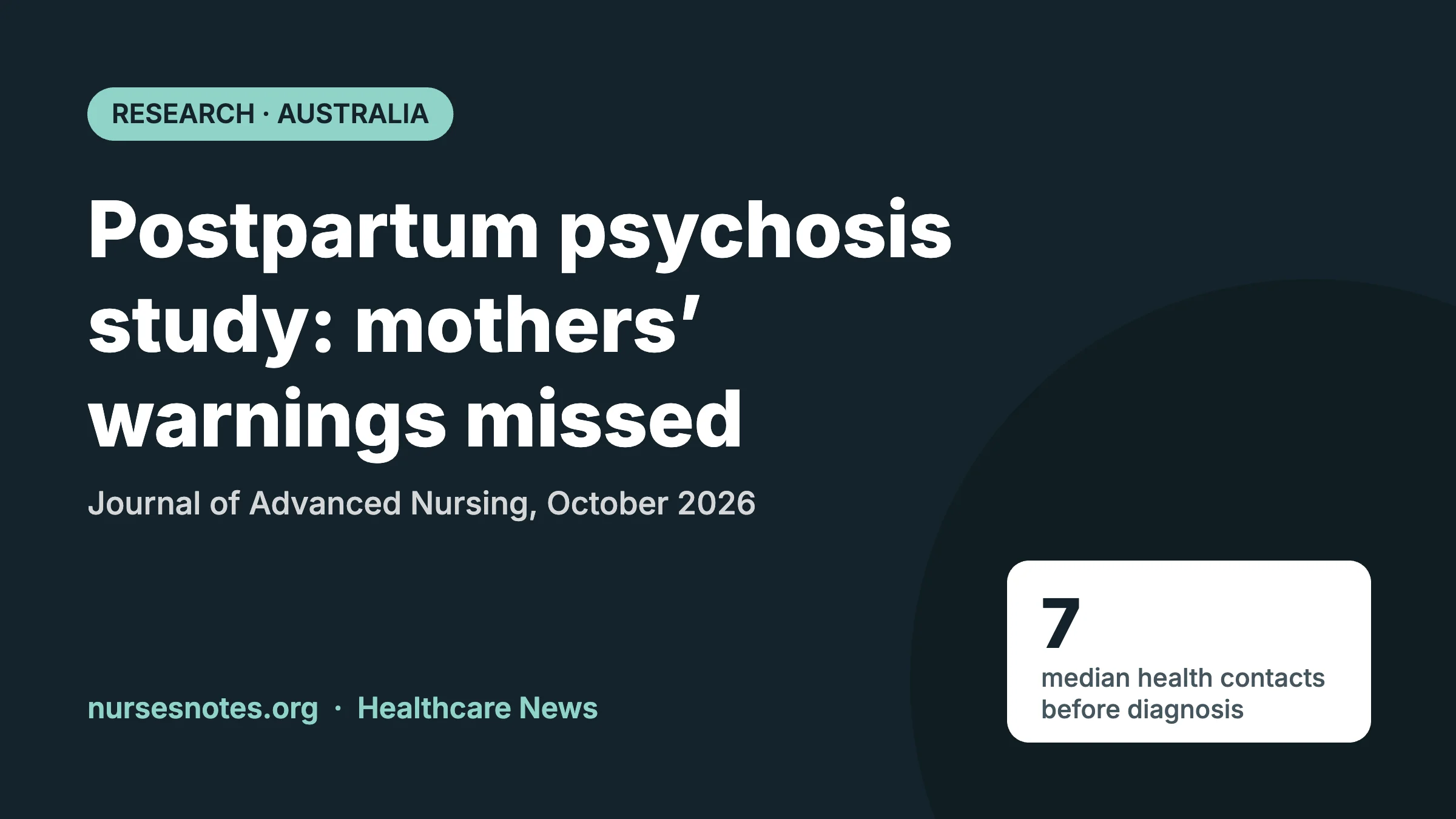
A new postpartum psychosis study from Australia found that women made a median of seven contacts with health services before they got an accurate diagnosis, often because their symptoms were brushed off as exhaustion or the “baby blues.” The interview study, published in the Journal of Advanced Nursing, says nurses, midwives, and doctors need to listen when a new mother says something is seriously wrong.
Key points
- Flinders University researchers interviewed 15 Australian women diagnosed with postpartum psychosis within the past 10 years.
- Women reported a median of seven contacts with health services before getting the care they needed.
- Hallucinations, mania, and severe sleep disturbance were sometimes overlooked or not fully investigated, according to the authors.
What the postpartum psychosis study found
The paper is titled “It’s All in Your Head: A Qualitative Examination of the Help-Seeking Experiences of Women Suffering Postpartum Psychosis.” It was led by Donna McMahon, a PhD candidate at Flinders University in South Australia.
- Women usually knew something was seriously wrong and actively sought help.
- Many felt their concerns were dismissed, minimised, or put down to normal postnatal experiences such as sleep deprivation, anxiety, or the baby blues.
- Serious symptoms were sometimes missed or not assessed in depth.
- After being dismissed, some women lost confidence in their own judgement and became reluctant to seek help again.
“They were not avoiding care. They were actively seeking it,” McMahon said, as quoted by News-Medical.
| Study detail | Finding |
|---|---|
| Journal | Journal of Advanced Nursing (2026) |
| Design | Qualitative interview study |
| Participants | 15 Australian women with postpartum psychosis |
| Contacts before accurate diagnosis | Median of 7 |
| Estimated cases in Australia | 300 to 600 women per year |
What are the signs of postpartum psychosis?
Postpartum psychosis is a serious but treatable mental illness that can begin in the days and weeks after birth. Symptoms listed in AAP’s report on the study include hallucinations, delusions, mania, depression, paranoia, and severe sleep disturbance.
An estimated 300 to 600 women in Australia experience it each year. Ariane Beeston of the Centre of Perinatal Excellence told AAP that “women are crying out for help and not being accurately diagnosed.”
Limitations
- The study is small and qualitative, with 15 participants, so it describes experiences rather than measuring how often delays happen across all services.
- All participants were from Australia, and findings may differ in other health systems, including the Philippines, the UK, and the Middle East.
- Interviews relied on women recalling events that happened up to 10 years earlier.
What it means for nurses
- Take a mother’s own words seriously. The authors say her insight that something is wrong may be one of the earliest warning signs.
- Ask directly about hallucinations, unusual beliefs, racing thoughts, and inability to sleep even when the baby sleeps, not just about mood.
- Postpartum psychosis is an emergency. Escalate urgently to the medical team or perinatal mental health service; do not wait for the next routine visit.
- Use every contact, whether in maternity, emergency, community, or primary care, to assess thoroughly. For family support tips, see how to help someone with depression.
Frequently asked questions
What is the difference between baby blues and postpartum psychosis?
The baby blues involve tearfulness and mood swings in the first days after birth. Postpartum psychosis is far more serious and may include hallucinations, delusions, mania, paranoia, and severe sleep disturbance. This study found postpartum psychosis was sometimes mistaken for the baby blues, which delayed the right diagnosis and treatment.
How common is postpartum psychosis?
Postpartum psychosis is rare compared with postnatal depression or anxiety. In Australia, an estimated 300 to 600 women experience it each year, according to figures cited in AAP’s report on the study. Because it is uncommon, some health professionals have less experience recognising it, which experts say contributes to missed diagnoses.
Can postpartum psychosis be treated?
Yes. Experts quoted in coverage of the study stress that postpartum psychosis is treatable and that early detection should be a priority. It is a psychiatric emergency, so anyone worried about a new mother should contact emergency services or a perinatal mental health service straight away. In Australia, PANDA can be reached on 1300 726 306.
Related on Nurses Notes
- How to help someone with depression: a practical guide
- Safe sleep for babies
- Latest healthcare news and research for nurses
Sources
- McMahon D, et al. It’s All in Your Head: A Qualitative Examination of the Help-Seeking Experiences of Women Suffering Postpartum Psychosis (Journal of Advanced Nursing, 2026)
- Australian study highlights delayed diagnosis in postpartum psychosis care (News-Medical, 22 October 2026)
- Mums seek help seven times before psychosis diagnosis (AAP via The Canberra Times, 22 October 2026)
This summary is for information only and does not replace official guidance or advice from a qualified professional.