On this page
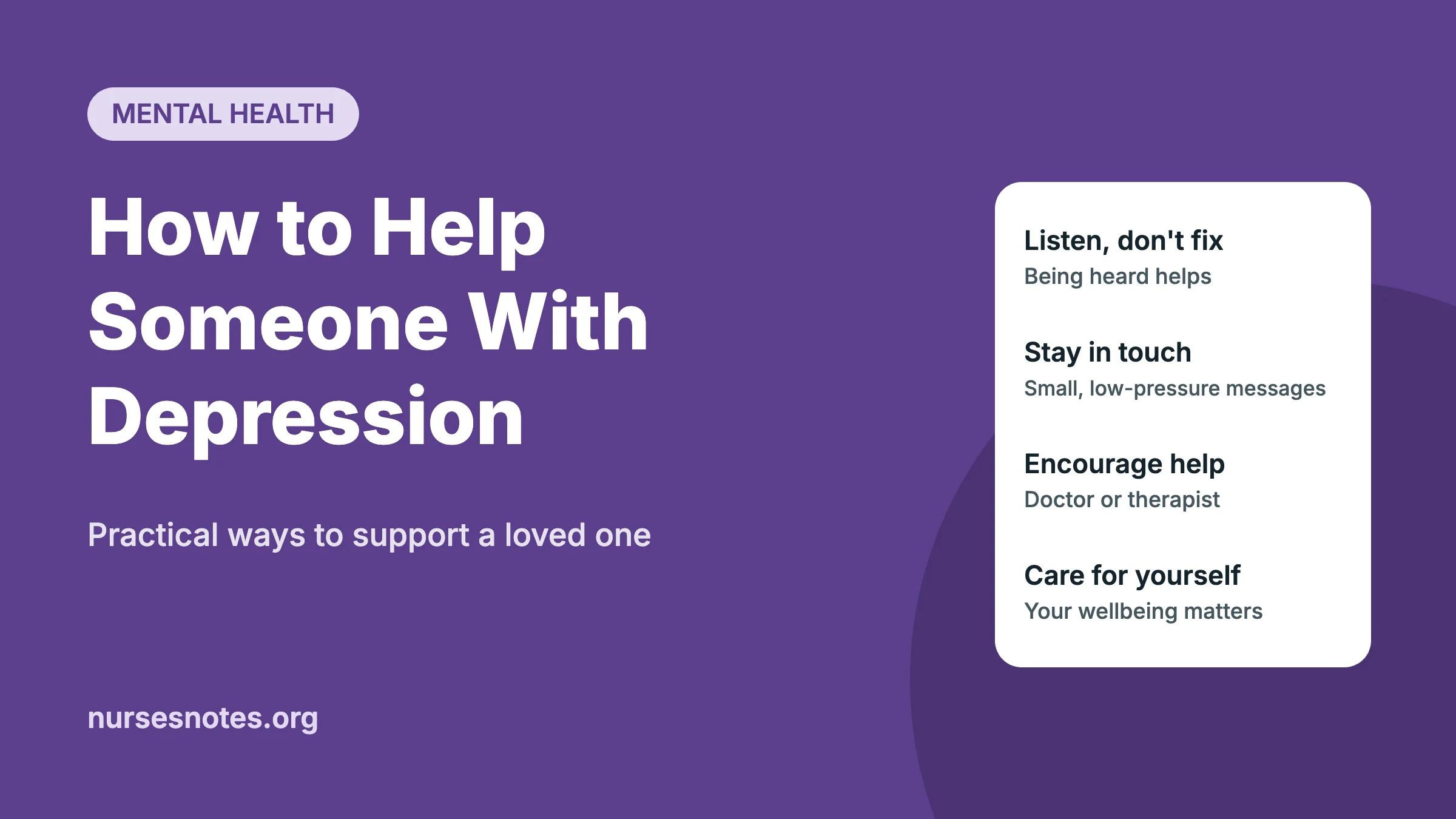
The best way to help someone with depression is to listen without judging, stay in touch, offer practical support, and gently encourage them to get professional help. You cannot “fix” their depression, but your steady care can make it easier for them to take the next step toward recovery.
Key points
- Depression is a real health condition, and it is treatable with talking therapy, medicine, or both.
- Listening matters more than having the right words or answers.
- Small, low-pressure contact, like a short message, helps someone feel less alone.
- Look after your own wellbeing too; supporting someone can be tiring.
Signs someone you love may be depressed
Feeling down now and then is part of life. The NHS says low mood may be depression when it lasts two weeks or more, or starts to affect daily life. Family and friends often notice the change before the person does.
Signs to look out for include:
- Persistent sadness, emptiness, or hopelessness
- Losing interest in things they used to enjoy
- Pulling away from friends and family
- Changes in sleep, appetite, or energy
- Irritability, restlessness, or feeling slowed down
- Trouble concentrating or making decisions
- Feeling guilty or worthless, or neglecting self-care
- Drinking more alcohol or using drugs
For nurses and other carers, depression can overlap with workplace exhaustion. Our article on the signs of nurse burnout may also be useful.
What to say to someone with depression
You do not need a script. What helps most is showing that you care and that you will not judge them. Try a gentle opener in a quiet, private moment:
- “I’ve noticed you seem a bit low lately. How are you really doing?”
- “I’m here if you want to talk, and it’s okay if you don’t right now.”
- “You don’t have to go through this on your own.”
Then listen. Mind points out that you do not always need to offer solutions; being heard can be a relief in itself.
What not to say
- “Just snap out of it” or “Think positive.” Depression is not a choice, and people often cannot simply shake it off.
- “Other people have it worse.” This can increase guilt.
- Pushing for a quick recovery or blaming them for how they feel
Practical ways to help
- Keep in touch. Send a short message, call, or visit. Mind suggests keeping it low-pressure and not expecting an immediate reply.
- Offer everyday help. Shopping, cooking a meal, or helping with chores can lift a heavy load, while still letting them do what they can.
- Invite, don’t insist. NIMH suggests inviting them for walks and outings. If they say no, ask again another time.
- Encourage healthy routines. The NHS suggests gently encouraging regular activity, balanced meals, and things they enjoy.
- Be patient. Recovery often has ups and downs. Remind them that, with time and treatment, depression can lift.
How to encourage professional help
You cannot force someone to get treatment, but you can make it easier. Depression is commonly treated with talking therapies, such as cognitive behavioural therapy, and with antidepressant medicines. NIMH notes that antidepressants usually take about 4 to 8 weeks to work, so encourage your loved one not to give up early and to talk to their doctor before making any changes.
- Suggest they see their doctor or a mental health professional.
- Offer to help find a service, book an appointment, or go with them.
- Help with transport, or with reminders to follow their treatment plan.
If you are worried about their safety
If someone talks about feeling hopeless, being a burden, or not wanting to be alive, take it seriously. It is okay to ask them gently and directly how they are feeling, and to listen calmly to the answer.
If they may not be safe, stay with them if you can, and contact emergency services or a crisis line straight away. The NHS advises going to the emergency department or calling emergency services if someone may harm themselves or others.
Looking after yourself
Supporting someone with depression can be emotionally draining. Mind and the NHS both stress that your wellbeing matters too. Set aside time to rest, share the load with others, and talk to someone you trust or your own doctor if you are struggling. If worry or panic is building up, our guide to panic attack symptoms may help.
Where to get help
If you or the person you are supporting is in danger or may not be safe, call your local emergency number now or go to the nearest emergency department. You can also contact these free crisis lines:
- Philippines: NCMH Crisis Hotline – 1553 (landline, nationwide), 0919-057-1553, 0966-351-4518, or 0917-899-8727
- USA: 988 Suicide & Crisis Lifeline – call or text 988, or chat at 988lifeline.org
- UK and Ireland: Samaritans – call 116 123, free, day or night
- Anywhere else: your local emergency number, or a doctor, nurse, or mental health service near you
Crisis numbers were checked on official sources on 25 October 2026.
Frequently asked questions
How can I help someone with depression who doesn’t want help?
Keep the door open without pushing. Let them know you care, stay in regular low-pressure contact, and mention that help is available whenever they feel ready. You cannot force someone into treatment, but if you believe they may not be safe, contact emergency services or a crisis line straight away.
What should you not say to someone with depression?
Avoid phrases such as “snap out of it”, “cheer up”, or “others have it worse.” These can make someone feel misunderstood or guilty. Instead, try “I’m here for you” or “Do you want to talk about it?” Listening calmly, without judging or rushing to fix things, usually helps far more than advice.
Can depression get better?
Yes. Depression is common, and it is treatable. Many people improve with talking therapy, medicine, or a combination of both, along with support from family and friends. Recovery can take time and may have setbacks, so patience and steady encouragement from loved ones really matter.
Related on Nurses Notes
- How to cope with grief: feelings, self-care, and getting help
- Signs of nurse burnout and how to recover
- Panic attack symptoms: what they feel like and what to do
- All Mental Health articles on Nurses Notes
Sources
- How to help someone with depression – NHS, reviewed April 2026
- How to help someone who has depression – Mind, 2023
- Depression – National Institute of Mental Health (NIMH), 2024
- DOH: Mental health programs, crisis hotlines available this Undas – Philippine Information Agency, October 2025
- Contact Us – 988 Suicide & Crisis Lifeline, accessed October 2026
- Contact Us – Samaritans, accessed October 2026
This article is for education only and does not replace advice from your own doctor, nurse, or other qualified health professional.