On this page
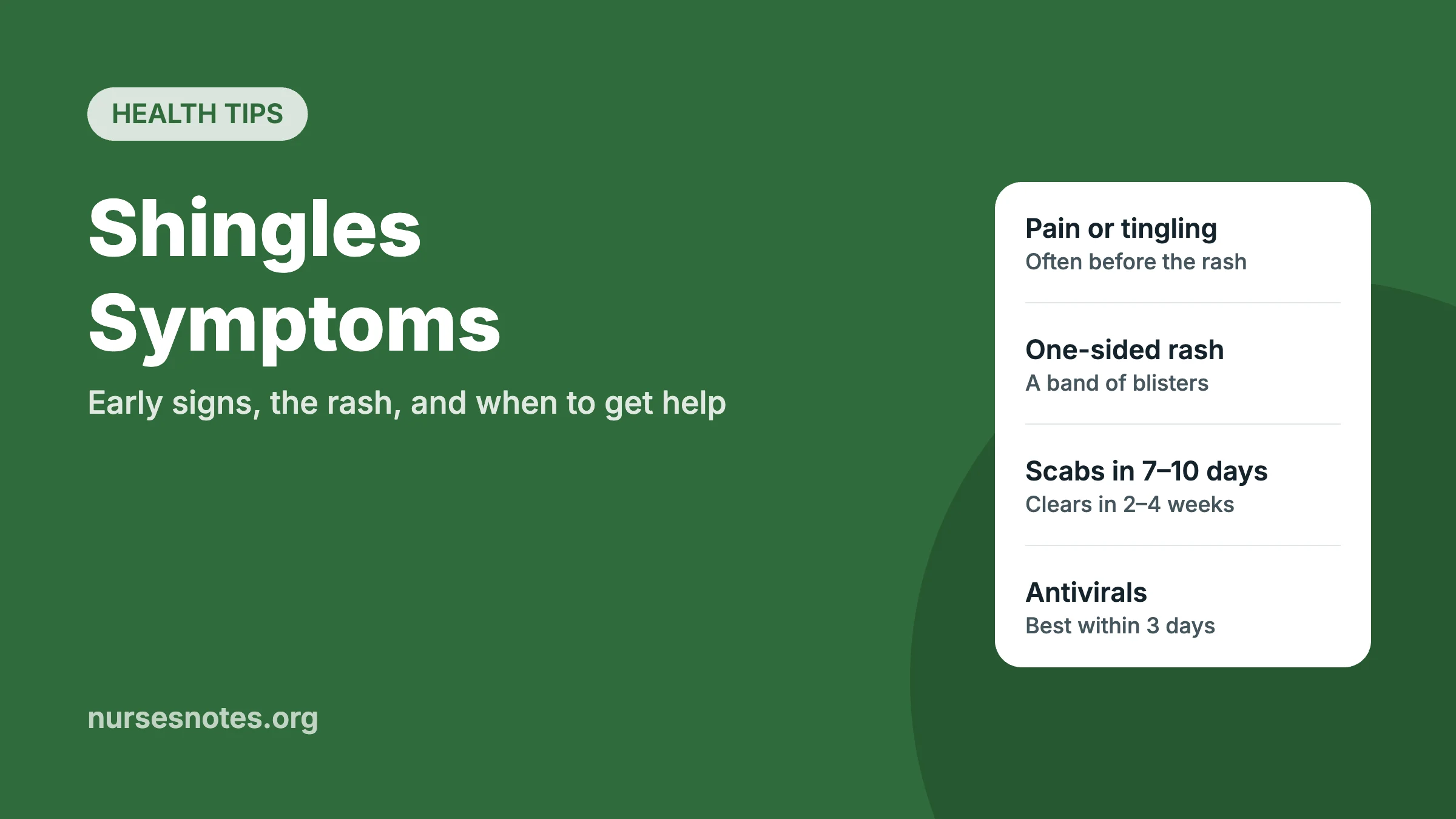
The first shingles symptoms are usually tingling, burning, or pain in one patch of skin, followed a few days later by a rash of blisters on one side of the body. Shingles is caused by the chickenpox virus waking up again, and early treatment can make a real difference, so it helps to know the signs.
Key points
- Shingles usually starts with pain or tingling, then a blistering rash in a band on one side of the body.
- The rash usually scabs over in 7 to 10 days and clears within 2 to 4 weeks.
- Antiviral medicine works best if started within 3 days of the rash appearing.
- A rash near the eye, a weak immune system, or pregnancy means you should get medical advice urgently.
What is shingles?
Shingles (herpes zoster) is caused by the varicella-zoster virus, the same virus that causes chickenpox. After chickenpox, the virus stays in the nerves and can become active again years later. Anyone who has had chickenpox can get shingles, and the CDC estimates that about 1 in 3 people in the United States will have it in their lifetime.
Risk goes up with age, especially after 50. People with a weakened immune system, such as those with HIV, cancer, or long-term steroid use, are also more likely to get shingles and its complications.
Early shingles symptoms
Shingles often begins before any rash appears. Pain is usually the first symptom, and it can be strong enough to be mistaken for a heart, lung, or kidney problem.
- Tingling, burning, itching, or pain in one area of skin
- Skin that is sensitive to touch
- Headache or feeling generally unwell
- Fever, chills, or an upset stomach
What does the shingles rash look like?
A few days after the pain starts, a rash appears in the same area. The pattern is the biggest clue.
- It appears on one side of the body only, often as a stripe or band around the left or right side of the chest or waist.
- It can also affect one side of the face, the eye, or the genitals.
- It starts as blotches, then turns into itchy blisters that ooze fluid.
- The blisters scab over in about 7 to 10 days, and the rash usually clears within 2 to 4 weeks.
- On brown and black skin, the redness can be harder to see.
The NHS notes that a rash on both the left and right sides of the body is unlikely to be shingles.
Is shingles contagious?
You cannot catch shingles from someone with shingles. However, a person who has never had chickenpox can catch chickenpox from the fluid in shingles blisters. The rash is contagious until the blisters have dried and scabbed over.
Until then, keep the rash covered and avoid pregnant people who have not had chickenpox, newborn babies, and anyone with a weakened immune system. If a child in your home gets chickenpox, see our guide to chickenpox in children.
How to ease shingles at home
- Take paracetamol for pain, following the label.
- Keep the rash clean and dry.
- Wear loose clothing made of soft fabric.
- Use a cool compress (a cold, wet cloth or a wrapped ice pack) a few times a day.
- Do not let plasters or dressings stick to the rash, and try not to scratch.
When to get medical help
See a doctor, nurse, or pharmacist as soon as possible if you think you have shingles, ideally within 3 days of the rash appearing, because antiviral medicines work best when started early. Get urgent medical advice if:
- The rash is on or near your eye or nose, or your eyesight has changed
- You are pregnant, or breastfeeding with a rash on the breast
- You have a weakened immune system, for example from chemotherapy
- The rash and pain are widespread or very severe
- The person with the rash is a child or teenager
Complications of shingles
The most common complication is postherpetic neuralgia, which is nerve pain that lasts for months or even years after the rash has gone. The CDC says it affects about 10% to 18% of people who get shingles, and the risk rises with age. Other complications include eye problems that can affect sight, bacterial skin infection, scarring, and, rarely, facial weakness, hearing problems, or pneumonia.
Can shingles be prevented?
A vaccine can lower your risk. The CDC recommends two doses of the recombinant shingles vaccine (Shingrix) for adults aged 50 and older, and for adults aged 19 and older with a weakened immune system. It can be given even if you have had shingles before. Vaccine programmes differ by country, so ask your doctor or local health centre whether it is available and right for you.
Frequently asked questions
Can you have shingles without a rash?
It is possible but rare. The NHS says pain without a rash is uncommon, and most people develop the typical one-sided rash within a few days of the first tingling or burning. If you have unexplained one-sided pain, especially with chest pain, get it checked so other causes such as heart problems are not missed.
How long does shingles last?
Most cases last 2 to 4 weeks. The blisters usually scab over within 7 to 10 days, and the NHS says the rash can take up to 4 weeks to heal fully. Some people have nerve pain for weeks or months afterwards, called postherpetic neuralgia, which is more common in older adults.
Can you get shingles more than once?
Yes, shingles can come back, which is why the CDC recommends the shingles vaccine even for adults who have already had shingles. If you are 50 or older, or have a weakened immune system, ask your doctor whether the vaccine is available and suitable for you, and when you should have it.
Related on Nurses Notes
- Chickenpox in children: symptoms, care, and warning signs
- Signs of a heart attack you should never ignore
- More health tips
Sources
- Shingles. NHS (page last reviewed 23 November 2023).
- Shingles Symptoms and Complications. Centers for Disease Control and Prevention (2024).
- Shingles Vaccination. Centers for Disease Control and Prevention (2025).
- Shingles – Symptoms and causes. Mayo Clinic (2022).
This article is for education only and does not replace advice from your own doctor, nurse, or other qualified health professional.