On this page
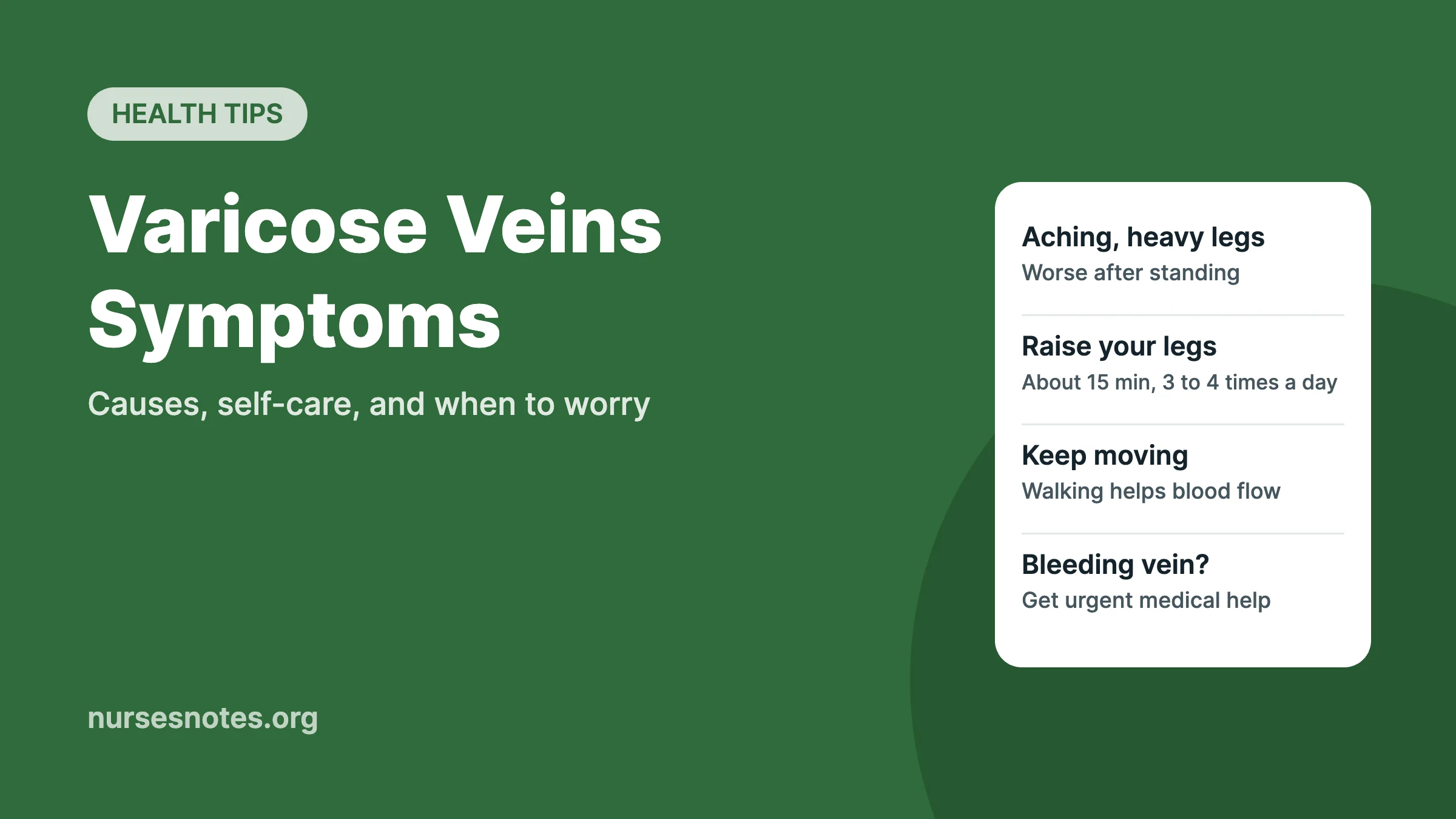
Varicose veins symptoms usually include swollen, twisted, blue or purple veins on the legs, along with aching, heaviness, itching, or swollen ankles that feel worse after long periods of standing. Most cases are not dangerous and improve with simple self-care, but a bleeding vein, a leg sore that will not heal, or a hot, painful, swollen leg needs prompt medical attention.
Key points
- Varicose veins form when tiny valves inside leg veins weaken, so blood pools and the vein stretches and twists.
- Common symptoms are aching, heavy legs, itching, swelling, and skin colour changes, often worse at the end of the day.
- Walking, raising your legs, and compression stockings can ease symptoms; standing jobs like nursing raise the risk.
- Get urgent help for a bleeding vein, and emergency help for chest pain or sudden breathlessness.
What are varicose veins?
Varicose veins are enlarged, twisted veins that sit just under the skin, most often on the calves and the backs of the legs. Leg veins have to push blood back up to the heart against gravity, and one-way valves inside them stop the blood from slipping back down.
When those valves wear out or leak, blood collects in the vein, which then swells and bulges. Spider veins are a smaller, milder version: thin red, blue, or purple lines that are usually harmless.
Common varicose veins symptoms
- Veins that look dark blue or purple, or twisted and raised like cords
- Aching, heavy, or tired legs
- Burning, throbbing, or cramping in the lower legs, sometimes at night
- Swollen ankles or feet
- Itching around the vein, or dry, scaly, or discoloured skin
- Restless legs at night
Symptoms are often worse after standing or sitting for a long time and tend to ease when you lie down with your legs raised. Many people have visible veins with no discomfort at all.
Causes and risk factors
Anyone can get varicose veins, but your chances go up with:
- A family history of varicose veins
- Getting older, as vein valves wear with age
- Being female, and hormone changes from pregnancy, contraceptive pills, or hormone replacement
- Pregnancy, when blood volume rises and puts extra pressure on leg veins
- Being overweight
- Standing or sitting for long periods, as many nurses, caregivers, and shop workers do
- A previous deep vein thrombosis (DVT)
How to ease varicose veins at home
Self-care will not make existing varicose veins disappear, but it can reduce aching and swelling and may slow them getting worse.
- Keep moving. Regular walking or swimming helps the calf muscles pump blood back up the legs.
- Raise your legs. Lie down and rest your legs above heart level for about 15 minutes, 3 or 4 times a day.
- Ask about compression stockings. They squeeze the legs gently to help blood flow. A doctor, nurse, or pharmacist can help you choose the right type and size; they are usually worn in the day and taken off at bedtime.
- Avoid long spells of standing or sitting. Change position often, and avoid crossing your legs when seated.
- Look after your skin. Moisturise dry, itchy skin, and ask your doctor before using medicated creams.
- Stay at a healthy weight and do not smoke. Both lower the pressure and damage on your veins.
Tips for nurses and shift workers
Twelve-hour shifts on your feet are hard on leg veins. Shift your weight and flex your calves while standing, walk during breaks instead of standing still, and put your feet up after work. Good sleep after nights matters too; see our guide to shift work sleep disorder.
Treatment options
Treatment is not always needed. If veins cause pain or skin problems, a specialist usually checks blood flow with a duplex ultrasound scan. Options include:
- Endothermal ablation: heat from radiofrequency or laser seals the vein, usually under local anaesthetic, with same-day discharge.
- Sclerotherapy: an injection of a solution or foam that closes the vein.
- Surgery: tying off and removing the vein, or removing it through tiny cuts.
- Compression stockings: used when procedures are not suitable or not needed.
Varicose veins often get better after giving birth, so procedures are usually not recommended during pregnancy.
Possible complications
- Bleeding from a vein close to the skin
- Venous leg ulcers, usually near the ankle, often preceded by a discoloured patch of skin
- Varicose eczema (itchy, red, scaly skin)
- Superficial vein thrombosis: a clot in a vein near the surface that feels hard and painful
- Rarely, a deep vein thrombosis, a clot in a deep leg vein that can travel to the lungs
When to get medical help
See a doctor if:
- Your varicose veins are painful, itchy, or swollen, or are getting worse
- Self-care is not helping
- You have a sore on your leg that has not healed after 2 weeks
- The skin around a vein changes colour or becomes hard
Get urgent medical help if:
- A varicose vein is bleeding
- One leg becomes suddenly painful, swollen, red, or warm, especially with fever, as this can mean a blood clot or infection
Call your local emergency number if you have chest pain, sudden shortness of breath, coughing up blood, a fast heartbeat, or fainting, as a clot may have reached the lungs.
Frequently asked questions
Are varicose veins dangerous?
Most varicose veins are not dangerous, and for many people the main concern is how they look. Some cause aching or swelling, and a few lead to problems such as skin changes, leg ulcers, bleeding, or blood clots. See a doctor if your veins are painful, getting worse, or causing skin changes or sores.
Can varicose veins go away on their own?
Varicose veins usually do not disappear by themselves, although symptoms often ease with walking, leg raising, and compression stockings. Veins that appear during pregnancy often improve in the months after birth. If they bother you, treatments such as ablation, sclerotherapy, or surgery can close or remove the affected vein.
Do compression stockings help varicose veins?
Compression stockings can ease aching and swelling by gently squeezing the legs to help blood flow back to the heart. They work best when worn every day. Ask a doctor, nurse, or pharmacist to help you choose the right strength and size.
Related on Nurses Notes
- Shift work sleep disorder: signs and coping tips
- How to lower blood pressure naturally
- Signs of dehydration in adults
- All Health Tips
Sources
- Varicose veins, NHS, reviewed July 2024
- Varicose veins – Symptoms and causes, Mayo Clinic, 2024
- Varicose veins, MedlinePlus Medical Encyclopedia, U.S. National Library of Medicine, reviewed 2026
- Varicose Veins, Johns Hopkins Medicine
This article is for education only and does not replace advice from your own doctor, nurse, or other qualified health professional.