On this page
Shift work sleep disorder is a body clock problem where working nights, early mornings, or rotating shifts leads to ongoing insomnia when you try to sleep and heavy sleepiness when you need to be awake. It is common among nurses, and practical changes to light, sleep timing, naps, and caffeine can make a real difference.
Key points
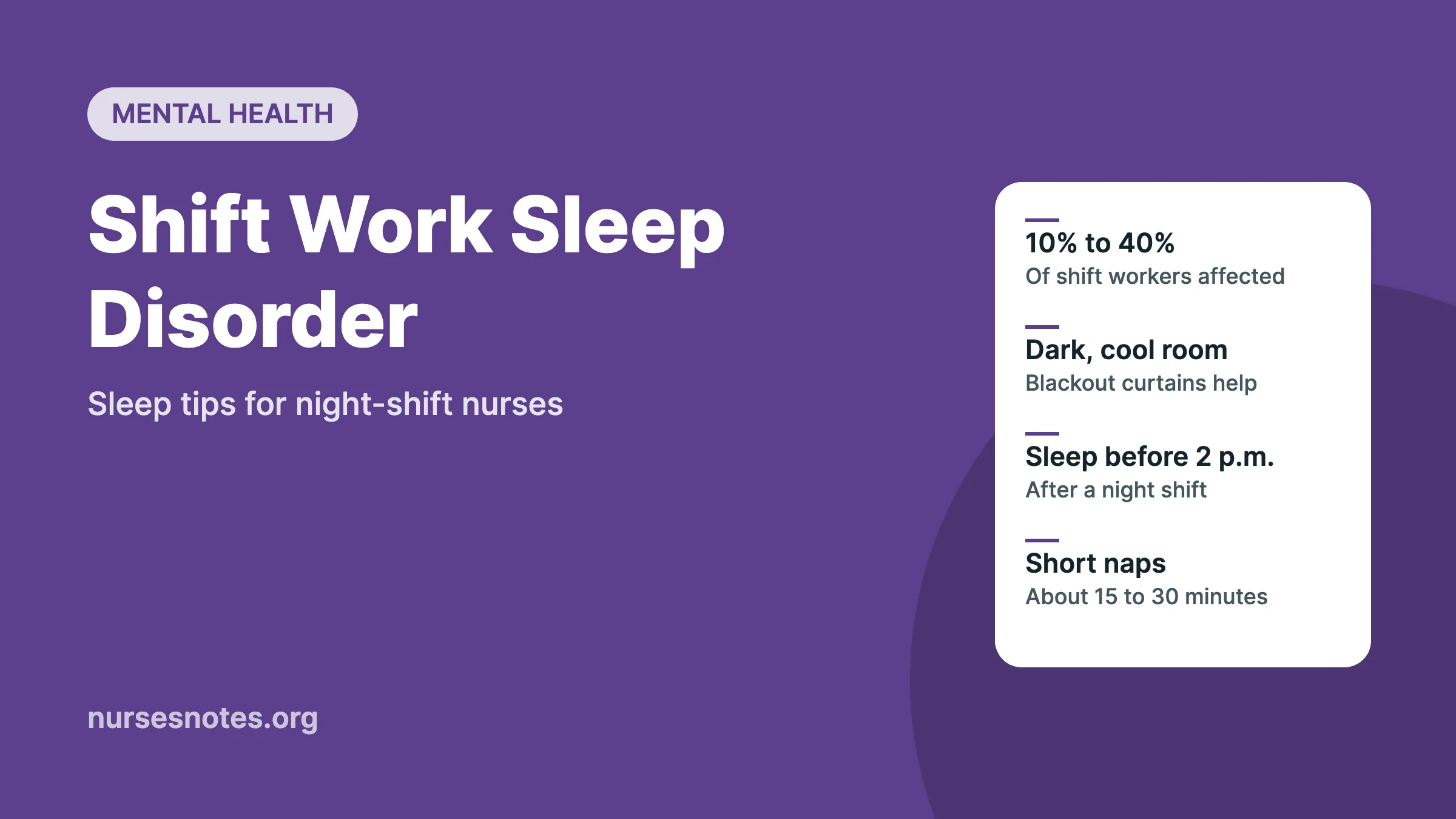
- Cleveland Clinic estimates shift work sleep disorder affects 10% to 40% of people who work non-traditional hours.
- The main signs are trouble sleeping, unwanted sleepiness at work, low energy, poor concentration, and irritability.
- A very dark, quiet, cool bedroom, going to bed soon after a night shift, and planned naps are among the most useful steps.
- See a doctor if sleep problems last for weeks, you still feel exhausted after 7 to 8 hours of sleep, or you are nodding off while driving.
What is shift work sleep disorder?
Your body runs on a roughly 24-hour clock that uses light and hormones to make you alert in the day and sleepy at night. When you work through the night and sleep in daylight, your schedule fights that clock. The NHLBI describes shift work disorder as a circadian rhythm disorder that can cause insomnia, extreme tiredness, and sleepiness on night shifts.
Not every shift worker develops it, but nurses on nights or rotating rosters are at higher risk.
Signs and symptoms
- Trouble falling asleep or staying asleep after a shift
- Feeling very sleepy, foggy, or slow at work, especially in the early hours
- Low energy, headaches, and trouble concentrating
- Irritability or low mood
- Feeling unrefreshed even after a full sleep
Cleveland Clinic notes that shift workers often sleep one to four hours less than people who work days.
Why it matters for nurses
Ongoing sleepiness raises the risk of errors and accidents at work. It also affects the drive home. NIOSH training for nurses reports that 1 in 10 nurses in a 2011 ANA survey said they had a car crash they linked to shift work fatigue. Most drowsy-driving crashes happen between 4 a.m. and 6 a.m.
Over time, poor sleep is linked with depression, getting sick more often, heart disease, and stomach problems. These risks are a reason to take your sleep seriously, not a reason to panic.
How to sleep better after a night shift
Set up your bedroom
- Make the room as dark as possible with blackout curtains or heavy lined drapes, and block light under the door. An eye mask helps if you wear it for the whole sleep.
- Block noise with earplugs, a fan, or white noise, and set your phone to “do not disturb” with emergency contacts allowed.
- Keep the room cool, and ask family or housemates to keep things quiet while you sleep.
Time your sleep
- Go to bed soon after you get home. NIOSH notes that sleep gets harder later in the day, so the more sleep you get before 2 p.m., the better.
- Save chores and errands for after you wake up, not straight after your shift.
- Aim for 7 to 9 hours in total, and keep a fairly regular sleep time, even on days off, where you can.
Manage light
- Seek bright light in the first half of a night shift to stay alert.
- Dim it in the second half to make sleeping easier later.
- Blue-light-blocking glasses or sunglasses on the way home can help, but NIOSH warns that dark sunglasses can make you drowsier. Only wear very dark ones if someone else is driving.
Use naps and caffeine wisely
- A nap before a night shift can improve alertness, and NHLBI suggests shift workers may benefit from one.
- Short naps of about 15 to 30 minutes boost alertness without much grogginess. Longer naps can leave you groggy for up to an hour.
- Have caffeine early in the shift and stop several hours before the end. Caffeine lasts 5 to 6 hours in the body, and NHLBI advises avoiding it within 8 hours of bedtime.
- Avoid alcohol as a sleep aid. It may help you fall asleep but causes waking later.
- Talk to a doctor before using melatonin or sleeping pills. NIOSH notes supplements vary in dose and purity, and sleep medicines can cause next-day drowsiness.
Plan your roster if you can
Cleveland Clinic suggests limiting runs of nights (four or fewer 12-hour nights in a row), taking more than 48 hours off after a run of nights, and avoiding fast rotation between days and nights. If you are too sleepy to drive, take a short nap first, ask someone to drive you, or take a taxi.
For more general habits, see our sleep hygiene tips.
When to get medical help
See your doctor or occupational health service if:
- Sleep problems have lasted several weeks despite these changes
- You still feel tired after 7 to 8 hours of sleep
- It often takes you more than 30 minutes to fall asleep, or you wake often and cannot get back to sleep
- A partner notices loud snoring, gasping, or pauses in your breathing
- You regularly need stimulants to stay awake, or you are falling asleep at work or while driving
A doctor may suggest a sleep diary for at least two weeks, check for other sleep disorders such as sleep apnoea, and discuss options such as light therapy or medicines. If tiredness comes with persistent low mood or loss of interest, mention that too, as burnout and depression are treatable.
Where to get help
If you feel overwhelmed, hopeless, or unsafe, please reach out now. You do not have to cope alone.
- Philippines: NCMH Crisis Hotline 1553 (Luzon-wide landline, toll-free) or 0917-899-8727, available 24/7
- USA: call or text 988 (988 Suicide & Crisis Lifeline), or chat at 988lifeline.org
- UK: Samaritans on 116 123, free, day or night
- Anywhere else: call your local emergency number or go to the nearest emergency department
Frequently asked questions
How long should I sleep after a 12-hour night shift?
Most adults need 7 to 9 hours of sleep in 24 hours, and shift work does not change that. Try to get most of it in one block soon after you get home, as sleep before 2 p.m. tends to be more restful. Top up with a short nap before your next shift if you need it.
Is it better to nap before a night shift?
Yes, for many nurses. Planned naps before night shifts are recommended by sleep experts and can improve alertness during the shift. A short nap of about 15 to 30 minutes avoids deep sleep and grogginess. Longer naps can help too, but allow time to wake up fully before driving or starting work.
Can shift work sleep disorder be cured?
It often improves when shift patterns change, such as moving to days or fewer nights in a row. While you still work shifts, good sleep habits, light management, and planned naps can greatly reduce symptoms. If problems persist, a doctor can check for other sleep disorders and talk through treatments that may help.
Related on Nurses Notes
- Sleep hygiene tips for better rest
- Insomnia symptoms: causes, self-help, and when to see a doctor
- Signs of nurse burnout
- All Mental Health articles
Sources
- Shift Work Sleep Disorder (SWSD), Cleveland Clinic, 2023
- NIOSH Training for Nurses on Shift Work and Long Work Hours (Modules 6, 7, 9, and 11), CDC National Institute for Occupational Safety and Health, 2020
- Circadian Rhythm Disorders: Types, National Heart, Lung, and Blood Institute (NHLBI), NIH, 2022
- Circadian Rhythm Disorders: Treatment, NHLBI, NIH, 2022
- NCMH Crisis Hotline listing, Department of Education Lusog-Isip, Philippines
- 988 Suicide & Crisis Lifeline, 2026
- Contact Samaritans, Samaritans, 2026
This article is for education only and does not replace advice from your own doctor, nurse, or other qualified health professional.