On this page
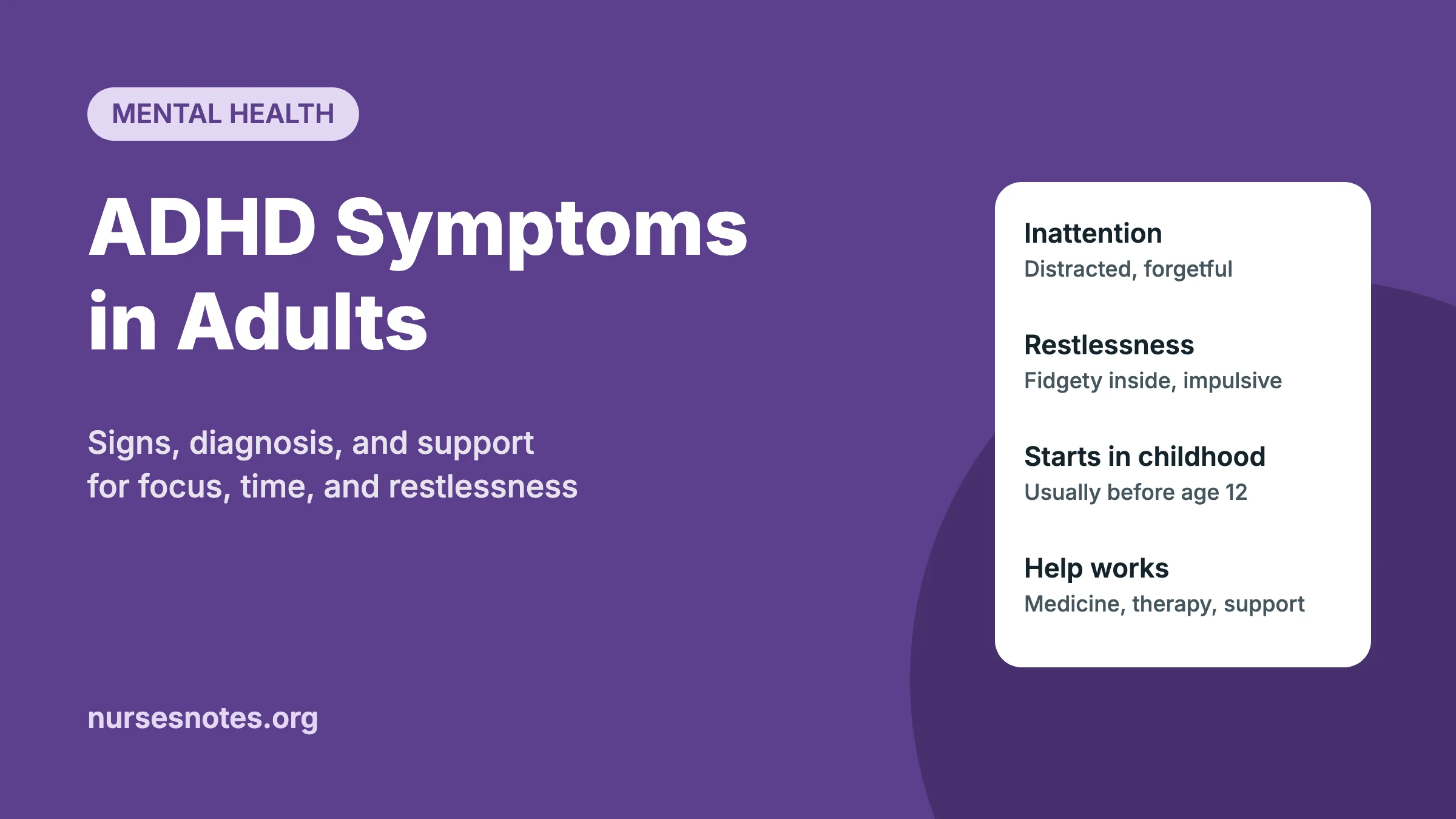
ADHD symptoms in adults usually include trouble focusing, forgetfulness, poor time management, disorganisation, restlessness, and acting on impulse. These symptoms start in childhood, but many adults are only diagnosed later, when the demands of work, study, and family make the difficulties harder to manage.
Key points
- Adult ADHD shows up as problems with attention, organisation, time, restlessness, and impulsive decisions.
- Symptoms begin in childhood, usually before age 12, even if no one noticed them then.
- Diagnosis needs a full assessment by a qualified professional; an online quiz cannot confirm it.
- Treatment such as medicine, therapy, and practical support can make a real difference at any age.
What is ADHD?
Attention-deficit/hyperactivity disorder (ADHD) is a condition that affects attention, activity levels, and impulse control. The National Institute of Mental Health (NIMH) explains that symptoms begin in childhood and often continue into the teen years and adulthood.
ADHD is not caused by laziness or poor parenting. People with ADHD can be creative, energetic, and highly capable, but may need different strategies to manage daily tasks.
Common ADHD symptoms in adults
Inattention
- Being easily distracted, or finding it hard to focus on a task, especially a long or dull one.
- Forgetting appointments, deadlines, or where you put things.
- Struggling to plan, prioritise, and organise your time.
- Starting tasks but having trouble finishing them or following instructions.
Hyperactivity and impulsivity
- Feeling restless or fidgety inside, even when you look calm.
- Talking a lot or interrupting conversations.
- Making quick decisions without thinking about the results.
- Low frustration tolerance, a quick temper, or mood swings.
Most people have symptoms from both groups, while some mainly have one type. The NHS notes that women more often have inattentive symptoms, which can be harder to spot.
How ADHD looks different in adults
Hyperactivity often fades with age or turns into an inner feeling of restlessness, according to the CDC. Mayo Clinic notes that impulsiveness, restlessness, and attention problems may continue, and that adult symptoms are often less obvious than in children.
Many adults have learned coping habits that hide their difficulties, so ADHD may show up as stress, missed deadlines, money problems, or strained relationships.
Conditions that often occur with ADHD
ADHD commonly occurs alongside other conditions, which can make it harder to recognise. These include anxiety, depression, sleep problems, learning difficulties such as dyslexia, and alcohol or substance misuse. If you recognise yourself here, our guides to signs of anxiety and signs of depression may help.
How adult ADHD is diagnosed
- Start with your doctor or general practitioner, who can refer you to a specialist such as a psychiatrist.
- The specialist asks about your current symptoms and how they affect work, study, and relationships.
- They look for signs that symptoms were present in childhood; the CDC says before age 12.
- They may use rating checklists and, with your permission, talk to a family member or close friend.
- A medical and psychological check helps rule out other causes.
Mayo Clinic notes that ADHD is diagnosed only when symptoms cause ongoing problems in more than one area of life. Look for a professional with experience in adult ADHD.
Treatment and support
- Medicines: medicines, most commonly stimulants, can reduce symptoms; they are started and monitored by a specialist.
- Talking therapies: cognitive behavioural therapy (CBT) and mindfulness can build skills for focus, planning, and emotions.
- Treating other conditions: care for anxiety, depression, or sleep problems at the same time.
- Workplace support: reasonable adjustments, such as a quieter workspace or written instructions, can help.
Practical self-help tips
- Use one calendar, alarms, and written lists for tasks and appointments.
- Break big tasks into small steps, and take short breaks.
- Move your body regularly; the NHS lists physical activity as a helpful habit.
- Keep a regular bedtime, and avoid screens, caffeine, sugar, and alcohol before bed. See our sleep hygiene tips.
- Eat regular, balanced meals, and talk to friends and family about what helps you.
When to see a doctor
Make an appointment with your doctor if attention, restlessness, or impulsive habits keep affecting your work, studies, relationships, or safety. Seek help urgently if you feel hopeless, cannot cope, or have thoughts of harming yourself.
Where to get help
If you are in crisis, feel unsafe, or are thinking about harming yourself, reach out now. You do not have to go through this alone.
- Philippines: NCMH Crisis Hotline (24/7): 1553 (toll-free landline), Globe/TM 0917-899-8727 or 0966-351-4518, Smart/Sun/TNT 0908-639-2672.
- USA: call or text 988, or chat at 988lifeline.org (988 Suicide & Crisis Lifeline, 24/7).
- UK: Samaritans, call 116 123 free, day or night.
- Anywhere: call your local emergency number if you or someone else is in immediate danger.
Frequently asked questions
Can you develop ADHD as an adult?
ADHD does not start in adulthood. Symptoms begin in childhood, usually before age 12, but they may have been missed, mild, or hidden by good support at home or school. Many adults only recognise them when life becomes more demanding. A specialist will look back at your childhood history when assessing you.
What does ADHD feel like in adults?
Many adults describe feeling scattered, restless inside, and always behind. You may lose things, forget plans, put off dull tasks, or jump between projects without finishing them. Some people also feel easily frustrated or overwhelmed. These experiences are common now and then, but in ADHD they are persistent and affect daily life.
Can adult ADHD be treated?
Yes. Treatment often combines medicine prescribed and monitored by a specialist, talking therapy such as CBT, and practical changes at home and work. Treating linked problems like anxiety, depression, or poor sleep also helps. With the right support, many adults find their focus, organisation, and confidence improve.
Related on Nurses Notes
- Signs of anxiety and how to cope
- Signs of depression
- Sleep hygiene tips for better rest
- All Mental Health articles on Nurses Notes
Sources
- Attention-Deficit/Hyperactivity Disorder (ADHD). National Institute of Mental Health, reviewed August 2026.
- ADHD in adults. NHS, reviewed March 2025.
- Adult attention-deficit/hyperactivity disorder (ADHD) – Symptoms and causes. Mayo Clinic, January 2023.
- ADHD in Adults. Centers for Disease Control and Prevention, updated October 2026.
- Your Online Resource for Mental Health & Substance Use Prevention. Department of Education (DepEd) Lusog-Isip, NCMH Crisis Hotline listing, accessed November 2026.
- 988 Suicide & Crisis Lifeline. 988 Lifeline, accessed November 2026.
- Contact Us. Samaritans, accessed November 2026.
This article is for education only and does not replace advice from your own doctor, nurse, or other qualified health professional.