On this page
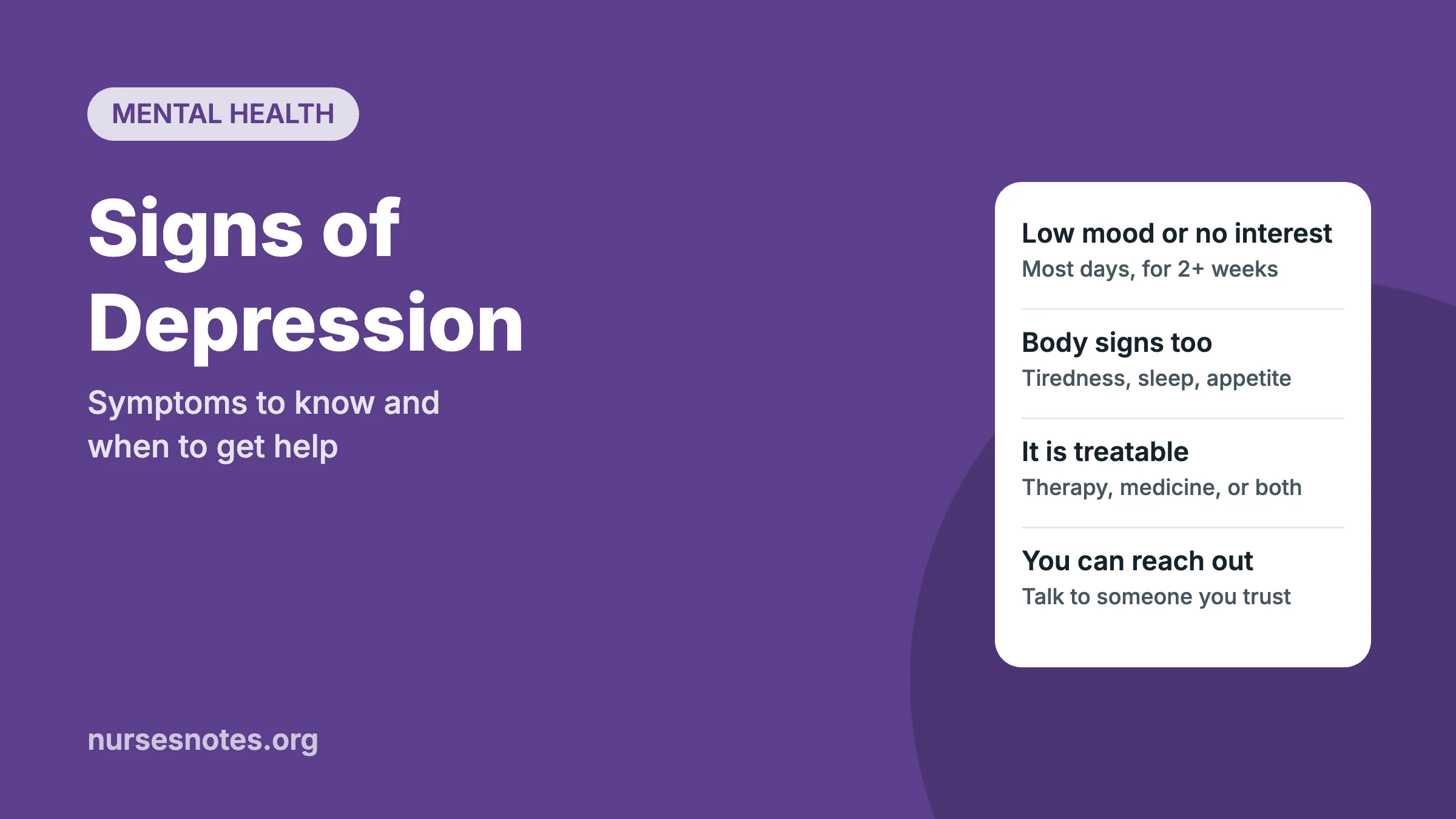
The main signs of depression are a low, sad, or empty mood, or losing interest in things you used to enjoy, most of the day, nearly every day, for at least 2 weeks. Depression is common and treatable, and noticing the signs early is the first step to feeling better.
Key points
- Depression is more than a bad week: symptoms last at least 2 weeks and affect daily life.
- It can show up in the body too, through tiredness, sleep and appetite changes, and unexplained aches.
- Men, teenagers, and older adults may show depression differently, for example as irritability or a lack of emotion.
- Talking therapy, medicine, or both can help, and support is available if you reach out.
What is depression?
Depression (also called major depressive disorder or clinical depression) is a common mental health condition that affects how a person feels, thinks, and handles daily activities. The WHO estimates that 5.2% of adults worldwide had depression in 2023, including 6.2% of women and 4.1% of men.
Everyone feels sad sometimes. What sets depression apart is how long it lasts and how much it gets in the way: the WHO and NIMH describe symptoms present most of the day, nearly every day, for at least 2 weeks.
Emotional signs of depression
- Ongoing sad, anxious, or empty mood
- Losing interest or pleasure in hobbies and activities
- Feeling hopeless, helpless, or that nothing will get better
- Feelings of guilt, worthlessness, or low self-esteem
- Irritability, impatience, or tearfulness
- Trouble concentrating, remembering, or making decisions
- Thoughts of death or suicide
Physical signs of depression
Depression is not only “in the mind.” The NHS and NIMH list these physical symptoms:
- Low energy and constant tiredness
- Sleeping badly, waking very early, or sleeping much more than usual
- Changes in appetite or weight
- Moving or speaking more slowly than usual, or feeling restless
- Aches, pains, headaches, or stomach problems with no clear cause
- Lower sex drive
Changes in behaviour
- Avoiding friends, family, and social activities
- Neglecting hobbies, work, or responsibilities at home
- Using more alcohol or other substances to cope
- Taking more risks or acting on impulse
How depression can look different
NIMH notes that depression does not look the same in everyone:
- Men may seem angry or irritable, talk about physical symptoms, or use alcohol or drugs to cope, and may be less likely to ask for help.
- Children may be clingy, cranky, or complain of feeling ill, and may refuse to go to school.
- Teenagers may sulk, feel frustrated, struggle at school, or sleep or eat more.
- Older adults may show a lack of emotion rather than sadness, and the signs can be mistaken for other illnesses.
- Women may experience depression linked to pregnancy, the time after birth, the menstrual cycle, or menopause.
For nurses and other shift workers, depression can overlap with exhaustion from work. Our article on signs of nurse burnout explains how the two differ.
What you can do if you notice the signs
- Talk to someone you trust, such as a friend, family member, or colleague.
- See a doctor or mental health professional if symptoms have lasted more than 2 weeks or are affecting your work, studies, or relationships.
- Keep a simple routine with regular meals, sleep times, and some daily movement; NIMH notes that even a 30-minute daily walk can help.
- Keep doing small things you used to enjoy, even if you do not feel like it at first.
- Limit alcohol and avoid drugs, as they can make depression worse.
- Put off big life decisions until you feel better, if you can.
If you are worried about someone else, our guide on how to help someone with depression has practical ways to start the conversation.
How depression is treated
Depression can get better with treatment. The WHO lists psychological therapies, such as cognitive behavioural therapy, behavioural activation, and interpersonal therapy, as first-line treatment. For moderate or severe depression, antidepressant medicine may be used alongside therapy.
NIMH notes that antidepressants usually take 4 to 8 weeks to work, so it is important to keep in touch with your doctor about how treatment is going. Supplements such as St. John’s wort can interact with prescription medicines, so check with a doctor or pharmacist first.
When to get medical help
- See a doctor if you have had signs of depression for most of the day, nearly every day, for more than 2 weeks.
- Get help sooner if depression is stopping you from working, studying, eating, or looking after yourself or others.
- If you are having thoughts of suicide, or feel you may not be safe, reach out now to a crisis line, a trusted person, or your local emergency number. You do not have to wait until things feel unbearable.
Where to get help
If you or someone you care about is in danger or may not be safe, call your local emergency number now or go to the nearest emergency department. You can also reach these free, confidential crisis lines:
- Philippines: NCMH Crisis Hotline (24/7): 1553 (Luzon-wide landline, toll-free); Globe/TM 0917-899-8727 or 0966-351-4518; Smart/Sun/TNT 0908-639-2672.
- USA: 988 Suicide & Crisis Lifeline (24/7): call or text 988, or chat at 988lifeline.org.
- UK: Samaritans (24/7): call 116 123 free.
- Anywhere else: call your local emergency number.
Reaching out is a sign of strength. Depression is treatable, and help is available.
Frequently asked questions
How do I know if I am depressed or just sad?
Sadness usually eases within days and often has a clear cause. Depression lasts at least 2 weeks, is present most of the day, and comes with other changes such as poor sleep, low energy, loss of interest, or trouble concentrating. If you are unsure, a doctor or mental health professional can help you work it out.
Can depression cause physical symptoms?
Yes. Depression often causes tiredness, low energy, sleep problems, appetite or weight changes, and unexplained aches or stomach problems. Some people notice these physical signs before they recognise low mood. A doctor can check for other medical causes and talk with you about whether depression may be part of the picture.
Can depression go away without treatment?
Low mood sometimes lifts on its own, but depression that lasts weeks often needs support to improve. Treatments such as talking therapy and, for some people, medicine work well, and starting early can shorten how long symptoms last. Self-care helps alongside treatment, but it does not replace professional care.
Related on Nurses Notes
- How to help someone with depression: a practical guide
- Signs of nurse burnout and how to recover
- Sleep hygiene tips: how to sleep better when you are stressed
- More mental health articles
Sources
- Depression (National Institute of Mental Health, NIH Publication No. 24-MH-8079, 2024)
- Symptoms – Depression in adults (NHS, reviewed 2023)
- Depression (World Health Organization fact sheet, September 2026)
- Lusog-Isip mental health hotlines page (Department of Education Philippines, accessed October 2026)
- 988 Suicide & Crisis Lifeline (988lifeline.org)
- Contact a Samaritan (Samaritans)
This article is for education only and does not replace advice from your own doctor, nurse, or other qualified health professional.