On this page
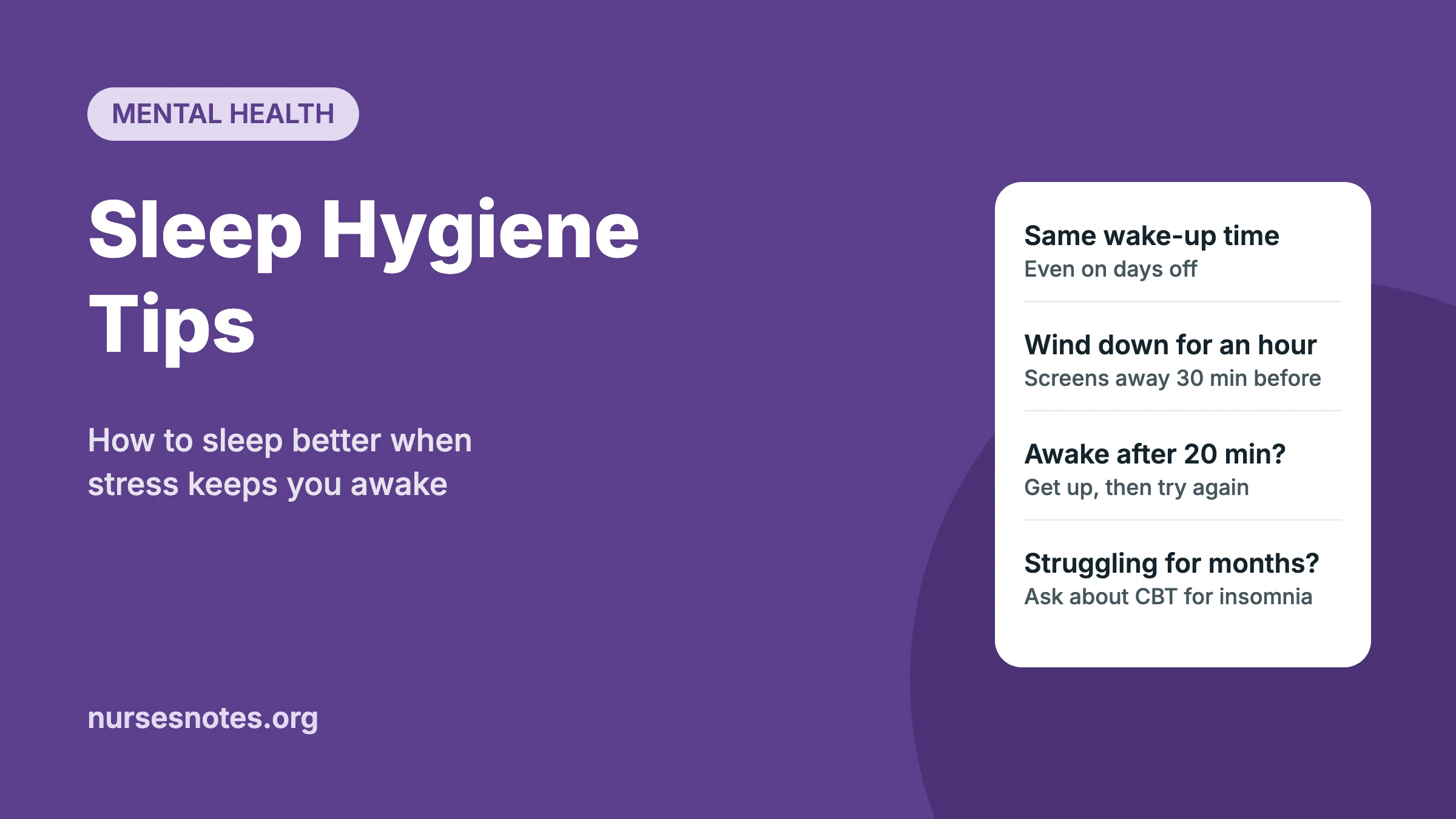
Good sleep hygiene tips include keeping the same wake-up time every day, winding down for an hour before bed, keeping your bedroom dark, quiet, and cool, and cutting back on caffeine, alcohol, and late screens. These habits work best when practised consistently for a few weeks, and if poor sleep keeps affecting your life, a type of talking therapy called CBT for insomnia can help.
Key points
- Sleep and mental health are closely linked: stress, anxiety, and depression can disturb sleep, and poor sleep can make them harder to cope with.
- A regular wake-up time is one of the most powerful habits for resetting your body clock.
- If you cannot sleep after about 20 minutes, get up and do something calm until you feel sleepy.
- See a doctor if sleep problems last for months or affect your daily life.
What is sleep hygiene?
Sleep hygiene means the daily habits and bedroom set-up that make it easier to fall asleep and stay asleep. The aim is to give your brain steady signals that night-time is for rest.
The CDC recommends that adults aged 18 to 60 get 7 or more hours of sleep a night. The NHS notes that stress, anxiety, depression, noise, caffeine, alcohol, and shift work are among the most common causes of trouble sleeping.
Signs you may have insomnia
According to the NHS, you may have insomnia if you regularly:
- Find it hard to fall asleep, or lie awake for long periods
- Wake several times in the night, or wake too early and cannot get back to sleep
- Still feel tired after waking
- Feel irritable or find it hard to concentrate during the day
Sleep hygiene tips that actually help
During the day
- Get up at the same time every day, including weekends and days off, even after a bad night.
- Move your body regularly, but finish vigorous exercise a few hours before bed.
- Limit naps. If you do nap, Mayo Clinic suggests keeping it to about 30 minutes and avoiding naps after 3 p.m. if you sleep at night.
- Watch caffeine. Skip coffee, tea, and energy drinks in the afternoon and evening, and check medicines for hidden stimulants.
In the evening
- Wind down for at least an hour with something calming: a warm bath, reading, gentle music, prayer, or slow breathing.
- Put screens away at least 30 minutes before bed, as the CDC advises.
- Avoid large meals and alcohol close to bedtime. Alcohol may make you drowsy, but it can disrupt your sleep.
- Park your worries. Write tomorrow’s to-do list or a few lines about what is on your mind, so your brain does not rehearse it in bed.
In the bedroom
- Keep the room dark, quiet, and cool, and use a comfortable mattress and pillow.
- Use your bed only for sleep and intimacy, not for work, scrolling, or watching shows.
What to do when you cannot sleep
- Do not force it. Trying hard to sleep usually makes you more alert.
- If you are still awake after about 20 minutes, get up and go somewhere dim and quiet.
- Do something calm and boring, such as reading a paper book or slow breathing, until you feel sleepy.
- Return to bed only when you feel drowsy, and repeat if needed.
If racing thoughts or a pounding heart keep you up, our guide to panic attack symptoms explains grounding and breathing techniques that can also help at night.
Sleep tips for nurses and shift workers
Rotating and night shifts make sleep hygiene harder, but the same principles still help:
- Keep your main sleep at the same time on work days when you can, and protect it like an appointment.
- Make daytime sleep easier with blackout curtains, an eye mask, earplugs, and a cool room.
- Avoid caffeine in the last part of your shift, so it does not block sleep when you get home.
- Never drive when you are very sleepy; arrange a lift or rest first.
Ongoing exhaustion, dread before shifts, or feeling detached from work can be signs of burnout. Read more in signs of nurse burnout and how to recover.
Treatment for insomnia
The NHS and Mayo Clinic recommend cognitive behavioural therapy for insomnia (CBT-I) as a first step. It helps you change the thoughts and habits that keep you awake, and can be done in person or through an online programme.
Sleeping pills are rarely the first choice. Prescription sleep medicines are usually used only for a short time because of side effects and the risk of dependence. Over-the-counter sleep aids are not meant for regular use. Talk to your doctor or pharmacist before trying any sleep medicine or herbal remedy.
When to get medical help
- Changing your sleep habits has not helped after a few weeks.
- You have had trouble sleeping for months.
- Poor sleep is affecting your work, mood, safety, or relationships.
- You snore loudly, stop breathing in your sleep, or have uncomfortable leg sensations at night, which can be signs of other sleep disorders.
- Low mood, constant worry, or hopelessness are keeping you awake. Help is available, and treating these often improves sleep too.
Where to get help
If you or someone you care about is in danger or may not be safe, call your local emergency number now or go to the nearest emergency department. You can also contact these free crisis lines:
- Philippines: NCMH Crisis Hotline – 1553 (nationwide landline, toll-free), or 0917-899-8727 and 0966-351-4518 (Globe/TM)
- USA: 988 Suicide & Crisis Lifeline – call or text 988, or chat at 988lifeline.org
- UK and Ireland: Samaritans – call 116 123, free, day or night
- Anywhere else: your local emergency number, or a doctor, nurse, or mental health service near you
Crisis numbers were checked on official sources on 26 October 2026.
Frequently asked questions
How long does it take for sleep hygiene to work?
Most people need a few weeks of consistent habits before sleep feels noticeably better, because the body clock adjusts gradually, and the first nights may even feel harder. Keep your wake-up time steady, avoid sleeping in to catch up, and stay patient. If nothing improves after several weeks, speak to a doctor about CBT for insomnia.
Can anxiety cause insomnia?
Yes. The NHS lists stress, anxiety, and depression among the most common causes of insomnia. Worry keeps the body alert, which makes it hard to switch off at night. Poor sleep can then make anxiety worse. Calming routines, CBT for insomnia, and treating the anxiety itself can help break this cycle.
Is it bad to use my phone in bed?
Using your phone in bed can keep your mind busy and push back the time you fall asleep. The CDC suggests putting screens away at least 30 minutes before bed. If you use your phone as an alarm, keep it face down and out of reach, and switch on do-not-disturb mode overnight.
Related on Nurses Notes
- Signs of nurse burnout and how to recover
- Panic attack symptoms: what they feel like and what helps
- How to help someone with depression
- All Mental Health articles on Nurses Notes
Sources
- Insomnia, NHS, accessed October 2026
- About Sleep, Centers for Disease Control and Prevention (CDC), accessed October 2026
- Insomnia: Diagnosis and treatment, Mayo Clinic, accessed October 2026
This article is for education only and does not replace advice from your own doctor, nurse, or other qualified health professional.