On this page
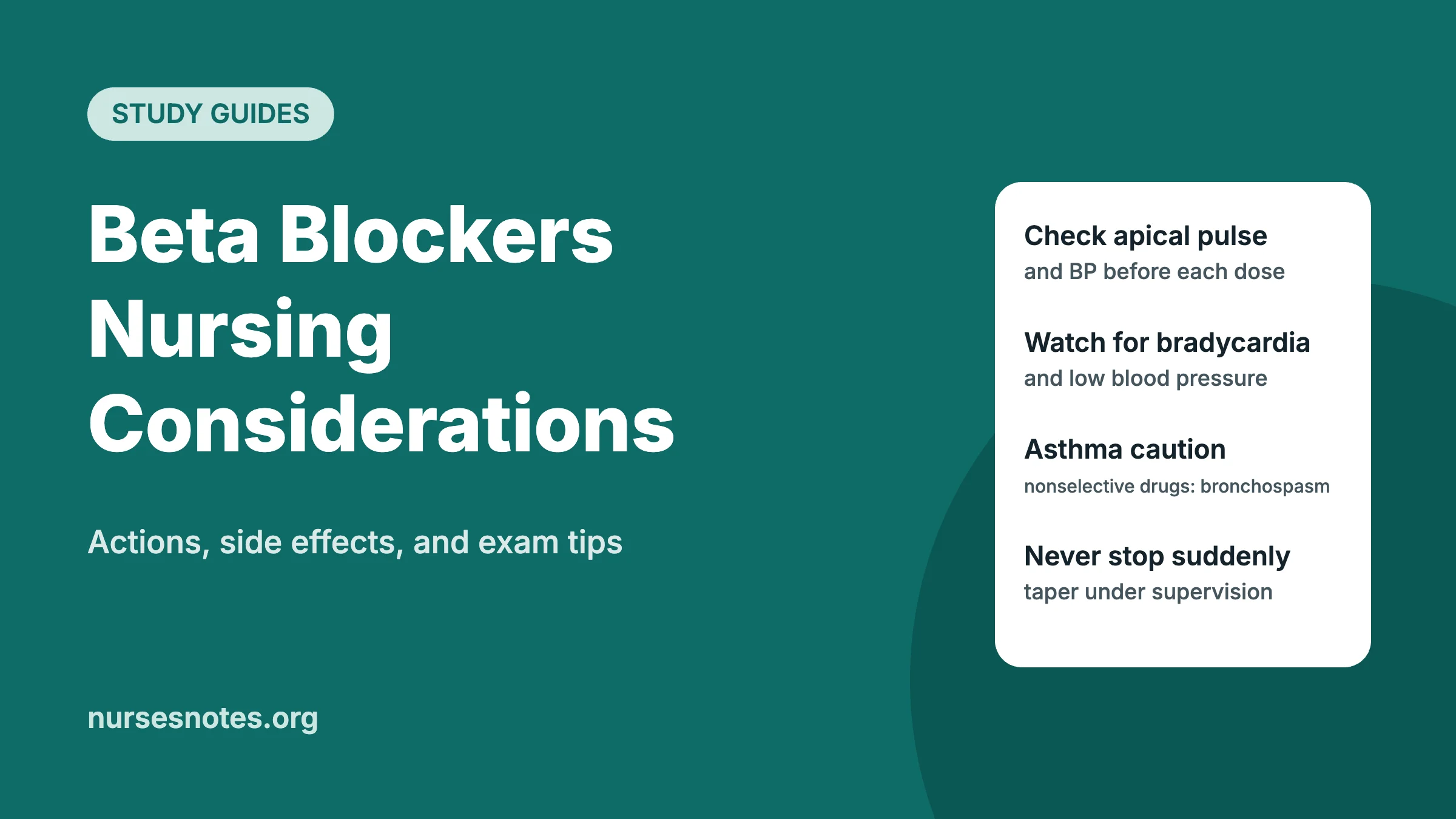
Beta blockers nursing considerations centre on checking the heart rate and blood pressure, watching for bradycardia, hypotension, and bronchospasm, and teaching patients never to stop the drug suddenly. This study guide covers how beta blockers work, the main examples, side effects, contraindications, and the exam points nursing students most often miss.
Key points
- Beta blockers block the effects of epinephrine and norepinephrine, which slows the heart and lowers blood pressure.
- Cardioselective drugs (metoprolol, atenolol, and bisoprolol) act mainly on beta-1 receptors in the heart; nonselective drugs (propranolol, carvedilol, and nadolol) also block beta-2 receptors in the airways.
- Key risks are bradycardia, hypotension, heart block, bronchospasm, worsening heart failure, and masked signs of low blood sugar.
- Stopping suddenly can worsen angina or trigger a heart attack, so doses are tapered under medical supervision.
What are beta blockers?
Beta blockers (beta-adrenergic blocking agents) stop the hormones epinephrine and norepinephrine from acting on beta receptors. The result is a slower heart rate, less forceful heart contraction, and relaxed blood vessels, which together lower blood pressure and reduce the heart’s oxygen demand.
Beta-1 receptors are found mainly in the heart and kidneys, while beta-2 receptors are found mainly in smooth muscle, including the airways. This difference explains most of the side effects you need to know for exams.
Cardioselective vs nonselective beta blockers
| Type | Examples | What to remember |
|---|---|---|
| Cardioselective (beta-1) | Acebutolol, atenolol, betaxolol, bisoprolol, esmolol, metoprolol, and nebivolol | Act mainly on the heart. Selectivity is not absolute: at higher drug levels, metoprolol also blocks beta-2 receptors. |
| Nonselective (beta-1 and beta-2) | Carvedilol, labetalol, nadolol, pindolol, propranolol, sotalol, and timolol | Can narrow the airways, so they are generally avoided in asthma. |
| Beta blocker with alpha-1 blocking activity | Carvedilol | Also widens blood vessels, so dizziness and postural hypotension are common early in treatment. |
What are beta blockers used for?
- High blood pressure (usually not first-line on their own; often added when other drugs such as diuretics have not worked well)
- Angina and coronary artery disease
- Arrhythmias, including atrial fibrillation and fast heart rates
- Heart failure (specific drugs only) and after a heart attack, where metoprolol improves survival
- Other uses: migraine prevention, essential tremor, anxiety symptoms, an overactive thyroid, and glaucoma (timolol eye drops)
Side effects and adverse effects
Common side effects
- Tiredness, dizziness, or light-headedness
- Cold hands and feet
- Sleep problems or vivid dreams
- Weight gain and erectile problems
Serious adverse effects
- Bradycardia and hypotension, including postural hypotension and fainting
- Heart block
- Worsening heart failure, especially when the dose is being increased: watch for weight gain, swelling, and shortness of breath
- Bronchospasm, particularly with nonselective drugs
- Masked hypoglycaemia: a beta blocker can hide warning signs such as a fast heartbeat, so a patient with diabetes may not notice low blood sugar
- Allergic reactions that may be more severe and may respond less to usual doses of epinephrine
Contraindications and cautions
Product labels differ by drug, so always check the specific medicine. Common contraindications and cautions include:
- Severe bradycardia, sick sinus syndrome, or second- or third-degree heart block (unless a pacemaker is in place)
- Cardiogenic shock and decompensated heart failure
- Bronchial asthma or other bronchospastic disease (especially with nonselective drugs such as carvedilol)
- Low blood pressure
- Diabetes (monitor blood glucose more closely)
- Peripheral vascular disease, pregnancy, and breastfeeding (use with caution and medical advice)
Nursing assessment
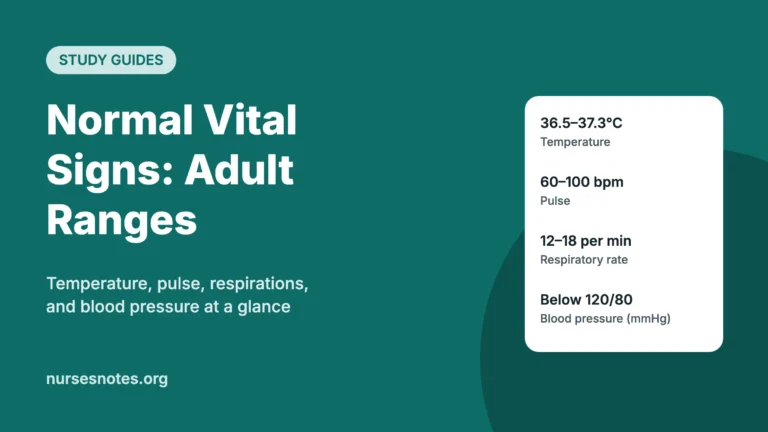
Before each dose, assess the patient and compare findings with the prescriber’s order and your facility’s policy. For a full refresher on normal ranges, see our guide to normal vital signs for adults.
- Apical pulse for a full minute, plus rhythm
- Blood pressure, including lying and standing readings if the patient is dizzy
- Breath sounds and any wheezing or shortness of breath
- Signs of heart failure: daily weight, oedema, and crackles
- Blood glucose in patients with diabetes
- ECG rhythm and any signs of heart block, when the patient is on a monitor
Nursing interventions and considerations
- Know your hold parameters. Many orders and facilities set a minimum heart rate and systolic blood pressure for giving a dose. If none are written, clarify with the prescriber. For reference, the carvedilol label advises reducing the dose if the pulse falls below 55 beats per minute.
- Never stop suddenly. Abrupt withdrawal can worsen angina or cause a heart attack; labels advise tapering over 1 to 2 weeks under supervision.
- Watch for interactions. Verapamil, diltiazem, and digoxin add to bradycardia risk (see our digoxin nursing considerations). Clonidine, other blood pressure drugs, and insulin or oral diabetes medicines also need extra monitoring.
- Give carvedilol with food to reduce dizziness when standing.
- Do not crush or chew extended-release metoprolol tablets.
- Recognise overdose: bradycardia, hypotension, shock, hypoglycaemia, and seizures. Labels list atropine, glucagon, vasopressors, and pacing among treatments in a monitored setting.
Patient teaching
- Rise slowly from lying or sitting, and avoid driving if dizzy.
- Keep taking the medicine even when you feel well, and do not stop it without talking to your doctor.
- If you miss a dose, follow the label: do not take a double dose to make up for it.
- If you have diabetes, check your blood sugar regularly, because the usual warning signs of a low may be hidden.
- Tell your surgeon or dentist that you take a beta blocker.
- Report chest pain, fainting, shortness of breath, swelling, or rapid weight gain.
Exam tips
- Name clue: most beta blockers end in “-olol” (metoprolol, atenolol, and propranolol); carvedilol and labetalol end in “-lol” too.
- Memory aid: you have one heart (beta-1) and two lungs (beta-2).
- Asthma trap: a nonselective beta blocker such as propranolol is the wrong choice for a patient with asthma.
- Diabetes trap: the masked sign of hypoglycaemia is the fast heartbeat, so teach patients with diabetes to check their blood sugar.
- Priority question: a new pulse that is much slower than baseline, or a new heart block, comes before giving the next dose.
Frequently asked questions
Should you check the pulse before giving a beta blocker?
Yes. Nurses check the apical pulse for a full minute and the blood pressure before giving a beta blocker, because the drug slows the heart and lowers pressure. Compare the readings with the patient’s baseline and with the hold parameters in the order or facility policy, and report any new bradycardia, heart block, or hypotension to the prescriber before giving the dose.
Why are beta blockers not stopped suddenly?
Stopping a beta blocker abruptly can cause a rebound in heart rate and blood pressure. Product labels warn this can worsen angina and, in some patients, trigger a heart attack or serious arrhythmia. For that reason, doctors reduce the dose gradually over about one to two weeks, and patients should not stop on their own.
Can people with asthma take beta blockers?
Beta blockers are generally avoided in asthma, especially nonselective drugs such as propranolol or carvedilol, because blocking beta-2 receptors can narrow the airways. If a beta blocker is still needed, the doctor weighs the risks, and even cardioselective drugs are not completely selective. Watch for wheezing, chest tightness, and shortness of breath after any dose.
Related on Nurses Notes
- Nursing care plan for hypertension: diagnoses and interventions
- Digoxin nursing considerations and toxicity signs
- Low blood sugar symptoms and what to do
- More nursing study guides
Sources
- Beta-Blockers, Cleveland Clinic, 2025
- Beta blockers, Mayo Clinic, 2025
- Beta blockers, NHS, reviewed 2026
- Metoprolol, MedlinePlus (NIH), 2026
- Labetalol, MedlinePlus (NIH), 2026
- Beta-blockers overdose, MedlinePlus (NIH), 2025
- Lopressor (metoprolol tartrate) prescribing information, US FDA, 2023
- Coreg (carvedilol) prescribing information, US FDA, 2023
This article is for education only and does not replace advice from your own doctor, nurse, or other qualified health professional. Always follow your facility’s policies and reference ranges.