On this page
Concussion symptoms usually include headache, dizziness, nausea, feeling foggy or slowed down, and trouble concentrating or remembering after a bump, blow, or jolt to the head. Most people recover with rest and a gradual return to normal activities, but some warning signs mean you need emergency care straight away.
Key points
- A concussion is a mild traumatic brain injury caused by a bump, blow, or jolt to the head; most people are not knocked out.
- Symptoms may not appear right away and can take hours or days to show.
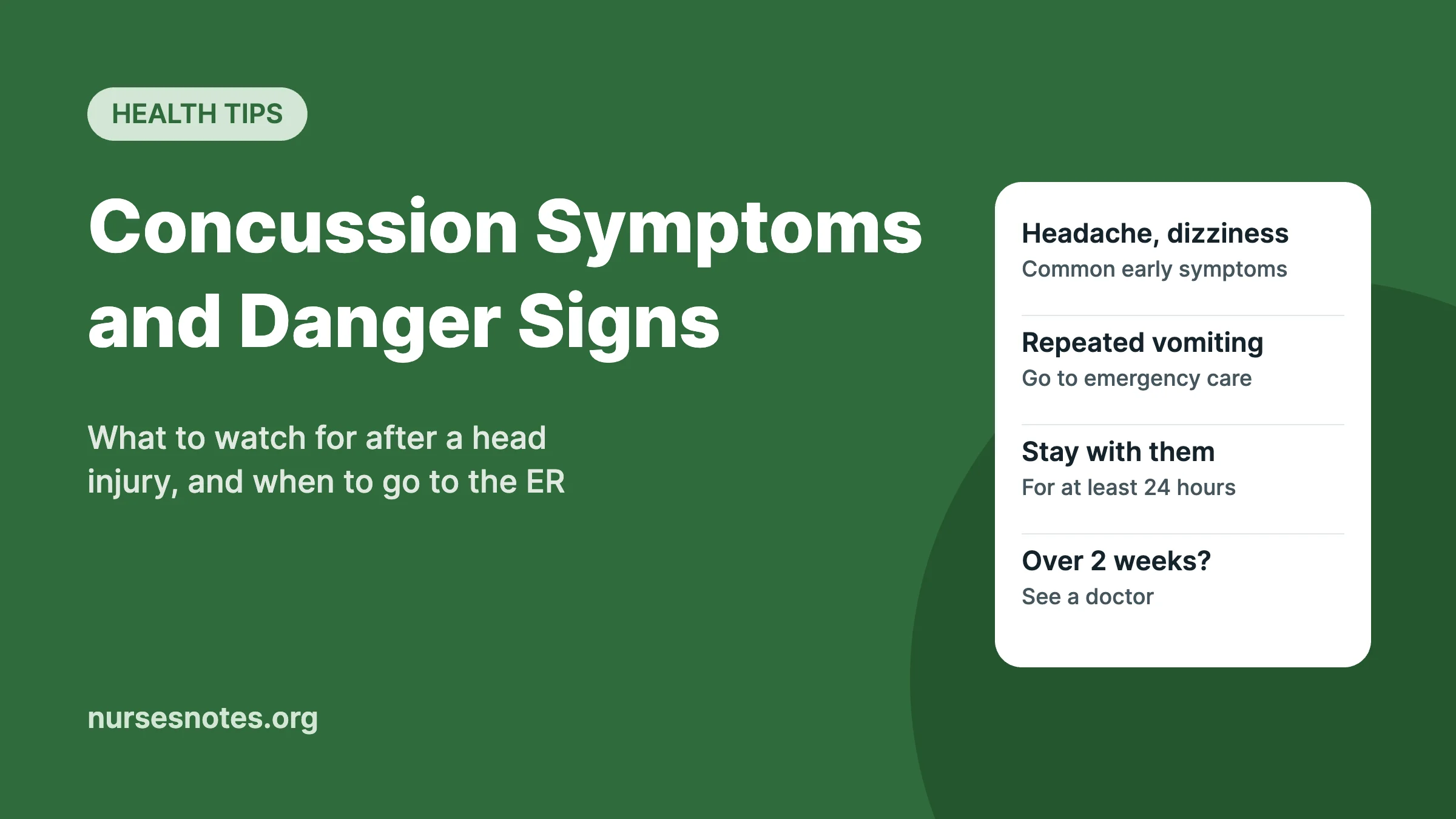
- Seizures, repeated vomiting, a worsening headache, slurred speech, or being hard to wake are emergencies.
- An adult should stay with the injured person for at least the first 24 hours.
What is a concussion?
The CDC describes a concussion as a type of traumatic brain injury caused by a bump, blow, or jolt to the head. The sudden movement can make the brain bounce or twist inside the skull, causing chemical changes and sometimes stretching brain cells.
Concussions are called “mild” because they are usually not life-threatening, but the effects can last days, weeks, or longer.
Concussion symptoms to look for
The CDC groups symptoms into four areas:
| Type | Common symptoms |
|---|---|
| Physical | Headache, dizziness or balance problems, nausea or vomiting, blurred or double vision, tiredness, and sensitivity to light or noise |
| Thinking and memory | Feeling foggy or slowed down, trouble concentrating, memory problems, and difficulty thinking clearly |
| Emotional | Irritability, anxiety, sadness, or feeling more emotional than usual |
| Sleep | Sleeping more or less than usual, or trouble falling asleep |
Symptoms are usually worst right after the injury or a day or two later. Mayo Clinic notes that some symptoms, such as irritability, sleep problems, and sensitivity to light and noise, can appear days afterwards.
When to go to the emergency room
Call your local emergency number or go to the nearest emergency department if the person has any of these danger signs (CDC and NHS):
- A seizure (shaking or twitching)
- Was knocked out and has not woken up, or is very drowsy and cannot stay awake
- A headache that gets worse and does not go away
- Repeated vomiting
- Slurred speech, weakness, numbness, or poor coordination
- One pupil larger than the other, or double vision
- Increasing confusion, restlessness, agitation, or unusual behaviour
- Not recognising people or places
- Clear fluid or blood coming from the nose or ears, or bruising behind the ears
- A fall from more than 1 metre or 5 stairs, a high-speed accident, or a dent in the skull
The NHS also advises getting urgent medical advice after a head injury if the person takes blood-thinning medicine or has a bleeding disorder, was drinking alcohol or using drugs at the time, or is vomiting or dizzy. Do not drive yourself to hospital. Mayo Clinic advises seeing a doctor within 1 to 2 days after any head injury, even if emergency care is not needed.
First aid and home care for a concussion
If the person has no danger signs, these steps help recovery (NHS, Cleveland Clinic, and MedlinePlus):
- Stay with them. A responsible adult should stay with the person for at least the first 24 hours and watch for danger signs.
- Use a cold pack. Hold an ice pack or a bag of frozen peas wrapped in a towel on the bump for short periods.
- Rest for the first day or two. Limit screens, reading, work, and exercise. It is fine to sleep if tired; ask a doctor whether the person needs to be woken.
- Choose painkillers carefully. The NHS suggests paracetamol for headaches. MedlinePlus advises avoiding aspirin, ibuprofen, and other NSAIDs, because they can increase bleeding risk; ask a doctor or pharmacist first.
- Return slowly. Add normal activities back step by step. If symptoms return, rest and try again later.
- Avoid risks. No alcohol or recreational drugs, no driving until fully recovered, and no sleeping pills unless a doctor advises them.
How long does a concussion take to heal?
The NHS says symptoms may last up to 2 weeks, and Cleveland Clinic notes most concussions last a few weeks, up to about a month. Avoid contact sports for at least 3 weeks (NHS) and do not return to sport until a doctor says it is safe, because a second injury before healing can be more serious.
See a doctor if symptoms last longer than 2 weeks, or if you are unsure when it is safe to drive, work, or play sport. A worsening headache is never something to wait out; compare with our guide to migraine symptoms and seek help if a headache is sudden, severe, or new.
When to get medical help
- Emergency now: any danger sign listed above, or sudden weakness or speech problems (also see signs of stroke).
- Urgent advice the same day: head injury in someone on blood thinners, a child under 5, or anyone vomiting or dizzy after the injury.
- Routine doctor visit: symptoms lasting more than 2 weeks, or problems with memory, mood, or sleep that affect daily life.
Frequently asked questions
How do I know if a concussion is serious?
Warning signs of a serious head injury include a seizure, repeated vomiting, a headache that keeps getting worse, slurred speech, weakness or numbness, unequal pupils, and being very hard to wake. Clear fluid from the nose or ears is also a danger sign. If any of these appear, call your local emergency number right away.
Can you sleep after a concussion?
Yes. The NHS and Cleveland Clinic say there is no need to keep someone awake if they are tired, and rest helps recovery. A responsible adult should stay with them for the first 24 hours to watch for danger signs. Ask the doctor whether the person needs to be woken during the night.
How long do concussion symptoms last?
Most people feel better within a few days to a few weeks. The NHS says symptoms may last up to 2 weeks, and you should see a doctor if they go on longer. A small number of people have symptoms for months, so ongoing headaches, poor concentration, or mood changes deserve a medical review.
Related on Nurses Notes
- Signs of stroke: what to look for and what to do
- Migraine symptoms and when a headache needs a doctor
- Glasgow Coma Scale explained for nurses
- All health tips on Nurses Notes
Sources
- Concussion Basics. HEADS UP, Centers for Disease Control and Prevention, 2025.
- Signs and Symptoms of Concussion. HEADS UP, Centers for Disease Control and Prevention, 2025.
- Head injury and concussion. NHS, 2025.
- Concussion – Symptoms and causes. Mayo Clinic, 2026.
- Concussion. Cleveland Clinic, 2024.
- Concussion in adults – discharge. MedlinePlus Medical Encyclopedia, U.S. National Library of Medicine, 2026.
This article is for education only and does not replace advice from your own doctor, nurse, or other qualified health professional.